
Close Menu
    Facebook X (Twitter) Instagram
    SciTechDaily
    • Biology
    • Chemistry
    • Earth
    • Health
    • Physics
    • Science
    • Space
    • Technology
    Facebook X (Twitter) Pinterest YouTube RSS
    SciTechDaily
    Home»Science»New Reptile Species Was One of Largest Ever Flying Animals
    Science

    New Reptile Species Was One of Largest Ever Flying Animals

    By Queen Mary University of LondonSeptember 10, 2019No Comments3 Mins Read
    Facebook Twitter Pinterest Telegram LinkedIn WhatsApp Email Reddit
    Share
    Facebook Twitter LinkedIn Pinterest Telegram Email Reddit
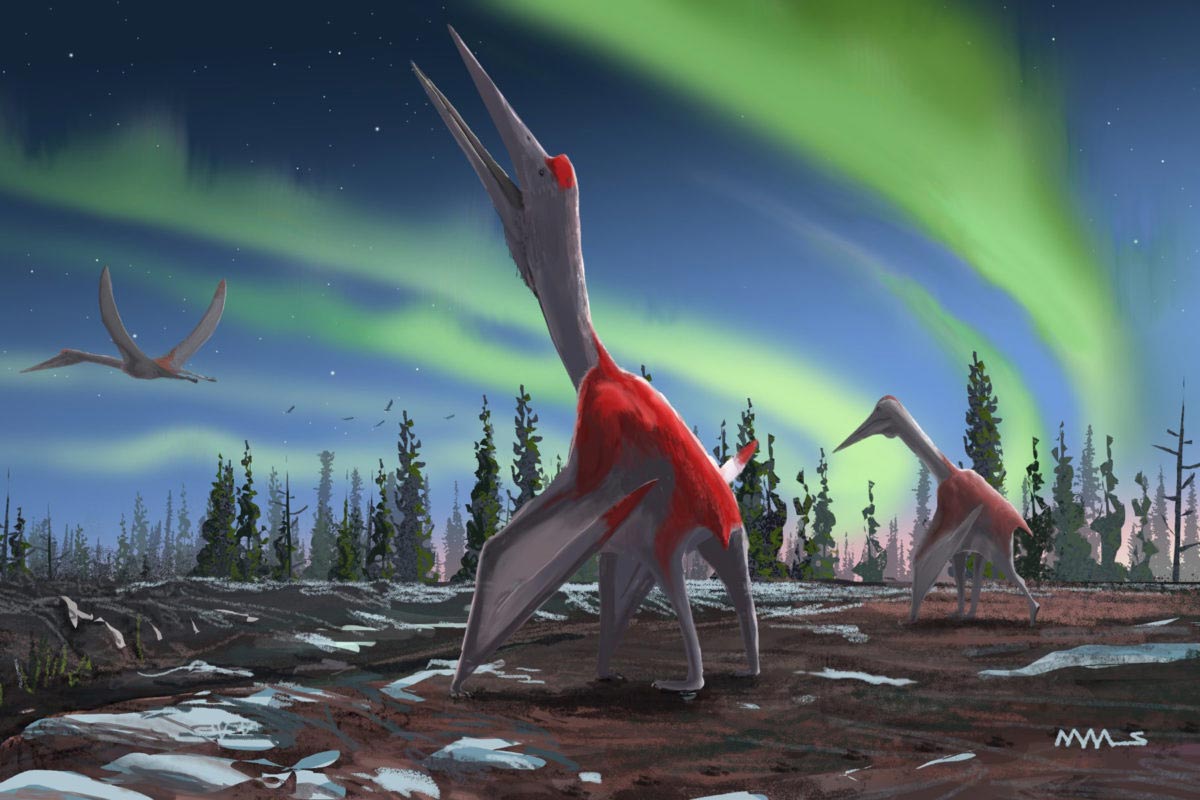
    Pterosaur Cryodrakon Boreas
    Illustration of new species of pterosaur, Cryodrakon boreas. Credit: David Maas

    A newly identified species of pterosaur is among the largest ever flying animals, according to a study from Queen Mary University of London.

    Cryodrakon boreas, from the Azhdarchid group of pterosaurs (often incorrectly called ‘pterodactyls’), was a flying reptile with a wingspan of up to 10 meters (33 feet) which lived during the Cretaceous period around 77 million years ago.

    Its remains were discovered 30 years ago in Alberta, Canada, but paleontologists had assumed they belonged to an already known species of pterosaur discovered in Texas, USA, named Quetzalcoatlus.

    The study, published in the Journal of Vertebrate Paleontology, reveals it is actually a new species and the first pterosaur to be discovered in Canada.

    Dr. David Hone, the lead author of the study from Queen Mary University of London, said: “This is a cool discovery, we knew this animal was here but now we can show it is different to other azhdarchids and so it gets a name.”

    A young animal

    Although the remains — consisting of a skeleton that has part of the wings, legs, neck, and a rib — were originally assigned to Quetzalcoatlus, study of this and additional material uncovered over the years shows it is a different species in light of the growing understanding of azhdarchid diversity.

    The main skeleton is from a young animal with a wingspan of about 5 meters (16 feet) but one giant neck bone from another specimen suggests an adult animal would have a wingspan of around 10 meters (33 feet).

    This makes Cryodrakon boreas comparable in size to other giant azhdarchids including the Texan Quetzalcoatlus which could reach 10.5 m (34 feet) in wingspan and weighed around 250 kg (550 pounds). Like other azhdarchids, these animals were carnivorous and predominantly predated on small animals which would likely include lizards, mammals, and even baby dinosaurs.

    A better picture

    Dr. Hone added: “It is great that we can identify Cryodrakon as being distinct to Quetzalcoatlus as it means we have a better picture of the diversity and evolution of predatory pterosaurs in North America.”

    Unlike most pterosaur groups, azhdarchids are known primarily from terrestrial settings and, despite their likely capacity to cross oceanic distances in flight, they are broadly considered to be animals that were adapted for, and lived in, inland environments.

    Despite their large size and distribution across North and South America, Asia, Africa, and Europe, few azhdarchids are known from more than fragmentary remains. This makes Cryodrakon an important animal since it has very well-preserved bones and includes multiple individuals of different sizes.

    For more on this discovery, see New Species of Giant Flying Reptile Identified.

    Reference: “Cryodrakon boreas, gen. et sp. nov., a Late Cretaceous Canadian azhdarchid pterosaur” by David W. E. Hone, Michael B. Habib and François Therrien, 9 September 2019, Journal of Vertebrate Paleontology.
    DOI: 10.1080/02724634.2019.1649681

    Never miss a breakthrough: Join the SciTechDaily newsletter.
    Follow us on Google and Google News.

    Dinosaurs Queen Mary University of London
    Share. Facebook Twitter Pinterest LinkedIn Email Reddit

    Related Articles

    New Research Reignites Debate Around the Behavior of the Giant Dinosaur Spinosaurus

    Microraptor Feathers Were Black With Iridescent Sheen

    Jurassic Period Super-Sized Fleas Had Armored Mouthparts to Attack the Thick Hide of Dinosaurs

    Researchers Conclude Torosaurus and Triceratops Are Different Species of Horned Dinosaurs

    Oldest Dinosaur Nesting Site Discovered

    First Plant-Eating Dinosaur Discovered in Antarctica

    New Dinosaur Species Announced

    ‘Skin Bones’ Helped Large Dinosaurs Survive In Harsh Times

    Nest of Juvenile Protoceratops Andrewsi Dinosaurs Discovered

    Leave A Reply Cancel Reply

    • Facebook
    • Twitter
    • Pinterest
    • YouTube

    Don't Miss a Discovery

    Subscribe for the Latest in Science & Tech!

    Trending News

    First-of-Its-Kind Discovery: Homer’s Iliad Found Embedded in a 1,600-Year-Old Egyptian Mummy

    Beyond Inflammation: Scientists Uncover New Cause of Persistent Rheumatoid Arthritis

    A Simple Molecule Could Unlock Safer, Easier Weight Loss

    Scientists Just Built a Quantum Battery That Charges Almost Instantly

    Researchers Unveil Groundbreaking Sustainable Solution to Vitamin B12 Deficiency

    Millions of People Have Osteopenia Without Realizing It – Here’s What You Need To Know

    Researchers Discover Boosting a Single Protein Helps the Brain Fight Alzheimer’s

    World-First Study Reveals Human Hearts Can Regenerate After a Heart Attack

    Follow SciTechDaily
    • Facebook
    • Twitter
    • YouTube
    • Pinterest
    • Newsletter
    • RSS
    SciTech News
    • Biology News
    • Chemistry News
    • Earth News
    • Health News
    • Physics News
    • Science News
    • Space News
    • Technology News
    Recent Posts
    • New Research Challenges Long-Held Beliefs About How the Brain Makes Decisions
    • Breakthrough Technology Reveals New Treatment Targets for Cancer
    • Scientists Discover New Way To Make Drug-Resistant Cancer Treatable Again
    • This Simple Exercise Trick Builds Muscle With Less Effort, Study Finds
    • Middle Age Is Becoming a Breaking Point in America, Study Reveals
    Copyright © 1998 - 2026 SciTechDaily. All Rights Reserved.
    • Science News
    • About
    • Contact
    • Editorial Board
    • Privacy Policy
    • Terms of Use

    Type above and press Enter to search. Press Esc to cancel.