
Close Menu
    Facebook X (Twitter) Instagram
    SciTechDaily
    • Biology
    • Chemistry
    • Earth
    • Health
    • Physics
    • Science
    • Space
    • Technology
    Facebook X (Twitter) Pinterest YouTube RSS
    SciTechDaily
    Home»Health»New Research Reveals That Wood Surfaces Could Reduce COVID-19 Transmission
    Health

    New Research Reveals That Wood Surfaces Could Reduce COVID-19 Transmission

    By American Chemical SocietyAugust 31, 20241 Comment3 Mins Read
    Facebook Twitter Pinterest Telegram LinkedIn WhatsApp Email Reddit
    Share
    Facebook Twitter LinkedIn Pinterest Telegram Email Reddit
    Wooden Table Flooring
    Wood has natural antiviral properties that can shorten the lifespan of viruses on surfaces, with types like pine and spruce showing significant effectiveness in under an hour, suggesting wood as a viable material for natural antiviral applications.

    Research shows that wood has natural antiviral properties effective against viruses such as the coronavirus, potentially making it a sustainable option for reducing surface transmission.

    Viruses, such as the coronavirus responsible for COVID-19, can be transmitted from person to person through contact with contaminated surfaces. However, could certain surfaces naturally reduce this risk without the need for household disinfectants? According to a study published in ACS Applied Materials & Interfaces, wood possesses inherent antiviral properties that can decrease the duration viruses remain active on its surface. Furthermore, some types of wood are more effective than others in reducing viral infectivity.

    Enveloped viruses, like the coronavirus, can live up to five days on surfaces; nonenveloped viruses, including enteroviruses linked to the common cold, can live for weeks, in some cases even if the surfaces are disinfected. Previous studies have shown that wood has antibacterial and antifungal properties, making it an ideal material for cutting boards. However, wood’s ability to inactivate viruses has yet to be explored, which is what Varpu Marjomäki and colleagues set out to study.
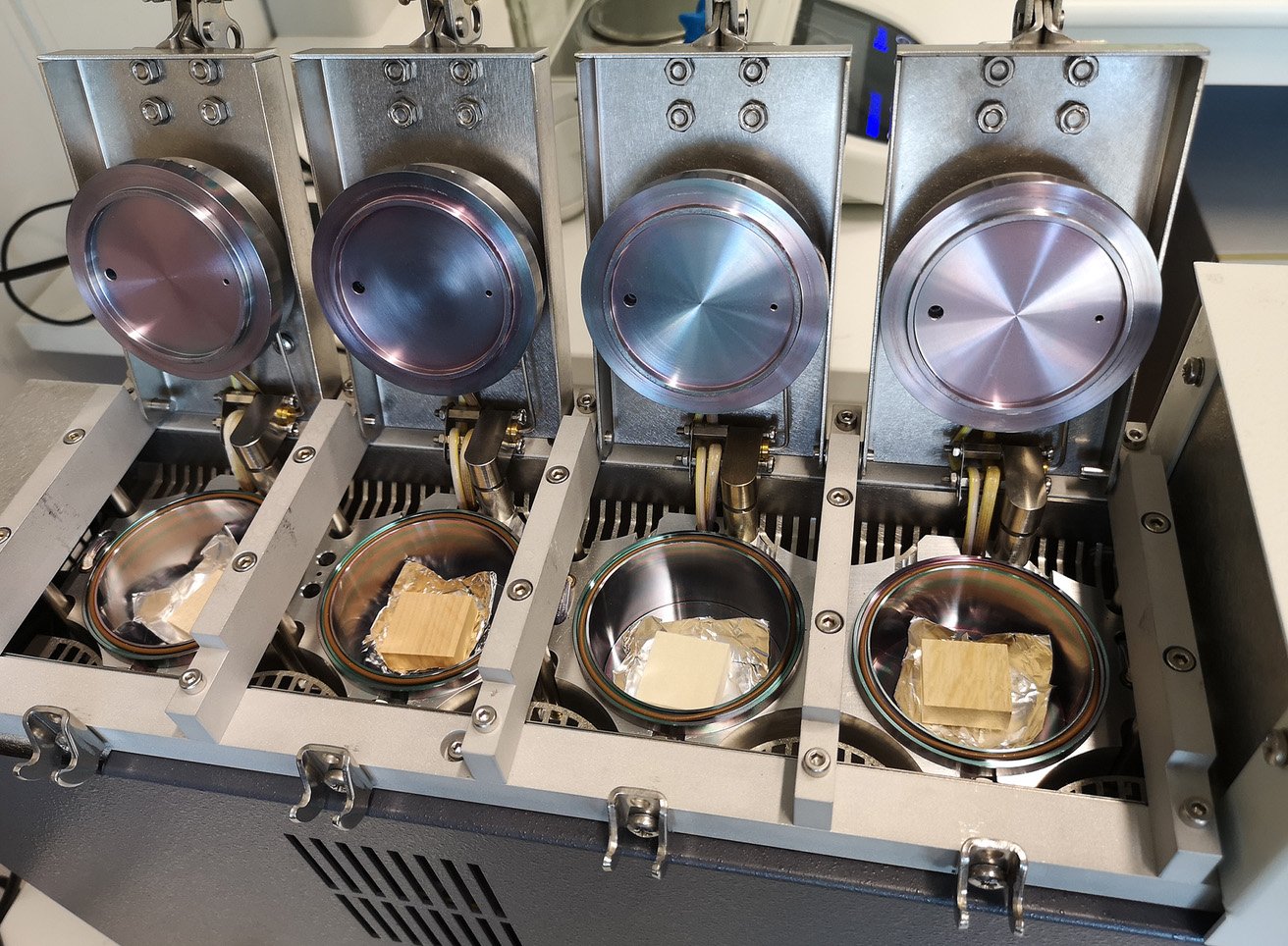
    Wooden Surfaces May Have Natural Antiviral Properties Experimental Setup
    Researchers looked at how long viruses remained infectious on different species of wood and found that some are promising candidates for sustainable, natural antiviral materials. Credit: Adapted from ACS Applied Materials & Interfaces 2024, DOI: 10.1021/acsami.4c02156

    Research Methodology

    The researchers looked at how long enveloped and nonenveloped viruses remained infectious on the surface of six types of wood: Scots pine, silver birch, gray alder, eucalyptus, pedunculate oak, and Norway spruce. To determine viral activity, they flushed a wood sample’s surface with a liquid solution at different time points and then placed that solution in a petri dish that contained cultured cells. After incubating the cells with the solution, they measured the number (if any) infected with the virus.

    Results from their demonstrations with an enveloped coronavirus showed that pine, spruce, birch, and alder need one hour to completely reduce the virus’ ability to infect cells, with eucalyptus and oak needing two hours. Pine had the fastest onset of antiviral activity, beginning after five minutes. Spruce came in second, showing a sharp drop in infectivity after 10 minutes.

    Study Findings on Viral Infectivity

    For a nonenveloped enterovirus, the researchers found that incubation on oak and spruce surfaces resulted in a loss of infectivity within about an hour, with oak having an onset time of 7.5 minutes and spruce after 60 minutes. Pine, birch, and eucalyptus reduced the virus’ infectivity after four hours, and alder showed no antiviral effect.

    Based on their study data, the researchers concluded that the chemical composition of a wood’s surface is primarily responsible for its antiviral functionality. While determining the exact chemical mechanisms responsible for viral inactivation will require further study, they say these findings point to wood as a promising potential candidate for sustainable, natural antiviral materials.

    Reference: “Tree Species-Dependent Inactivation of Coronaviruses and Enteroviruses on Solid Wood Surfaces” by Sailee Shroff, Anni Perämäki, Antti Väisänen, Pertti Pasanen, Krista Grönlund, Ville H. Nissinen, Janne Jänis, Antti Haapala and Varpu Marjomäki, 28 May 2024, ACS Applied Materials & Interfaces.
    DOI: 10.1021/acsami.4c02156

    The authors acknowledge funding from the Research Council of Finland and the Jane and Aatos Erkko Foundation.

    Never miss a breakthrough: Join the SciTechDaily newsletter.
    Follow us on Google and Google News.

    American Chemical Society COVID-19 Infectious Diseases Virus
    Share. Facebook Twitter Pinterest LinkedIn Email Reddit

    Related Articles

    Coronavirus Particles Likely Travel Farther Than Thought – Infectious Up to 200 Feet

    Increased Infectivity Drives COVID Evolution – Mutations That Allow the Virus To Escape Vaccines Become Dominant

    Wearable Air Sampler Measures Personal COVID Virus Exposure

    Synthetic Peptide Mimics: Possible New Antivirals Against COVID-19 and Herpes

    Ending the COVID-19 Pandemic: Progress Toward One Drug To Treat All Coronaviruses

    COVID-19: Sneeze Cam Reveals Best Fabric Combos for Cloth Masks

    COVID, One Year Later: What Do We Know Now? [Video]

    Not Sure if You’ve Already Had Coronavirus? This Test Might Tell You (Video)

    How Effective Are Cloth Masks Against Coronavirus? [Video]

    1 Comment

    1. Boba on September 1, 2024 4:53 pm

      Don’t know if you’ve heard, but… the COVID scare is over, folks.

      There’s no danger anymore. The thing is now milder than the common flu, and odds are it always was just a flu.

      So who cares about transmissions?

      Reply
    Leave A Reply Cancel Reply

    • Facebook
    • Twitter
    • Pinterest
    • YouTube

    Don't Miss a Discovery

    Subscribe for the Latest in Science & Tech!

    Trending News

    Bone-Strengthening Discovery Could Reverse Osteoporosis

    Scientists Uncover Hidden Trigger Behind Stem Cell Aging

    Scientists Find Way to Reverse Fatty Liver Disease Without Changing Diet

    Could Humans Regrow Limbs? New Study Reveals Promising Genetic Pathway

    Scientists Reveal Eating Fruits and Vegetables May Increase Your Risk of Lung Cancer

    Scientists Reverse Brain Aging With Simple Nasal Spray

    Scientists Uncover Potential Brain Risks of Popular Fish Oil Supplements

    Scientists Discover a Surprising Way To Make Bread Healthier and More Nutritious

    Follow SciTechDaily
    • Facebook
    • Twitter
    • YouTube
    • Pinterest
    • Newsletter
    • RSS
    SciTech News
    • Biology News
    • Chemistry News
    • Earth News
    • Health News
    • Physics News
    • Science News
    • Space News
    • Technology News
    Recent Posts
    • Wind Farms Are Disrupting Ocean Currents, Moving Millions of Tons of Mud Each Year
    • Scientists Discover Massive Magma Reservoir Beneath Tuscany
    • Scientists Create “Neurobots” – Living Machines With Their Own Nervous Systems
    • Europe’s Most Active Volcano Just Got Stranger – Here’s Why Scientists Are Rethinking It
    • Why Are Giant Ants Letting Tiny Ants Crawl All Over Them?
    Copyright © 1998 - 2026 SciTechDaily. All Rights Reserved.
    • Science News
    • About
    • Contact
    • Editorial Board
    • Privacy Policy
    • Terms of Use

    Type above and press Enter to search. Press Esc to cancel.