
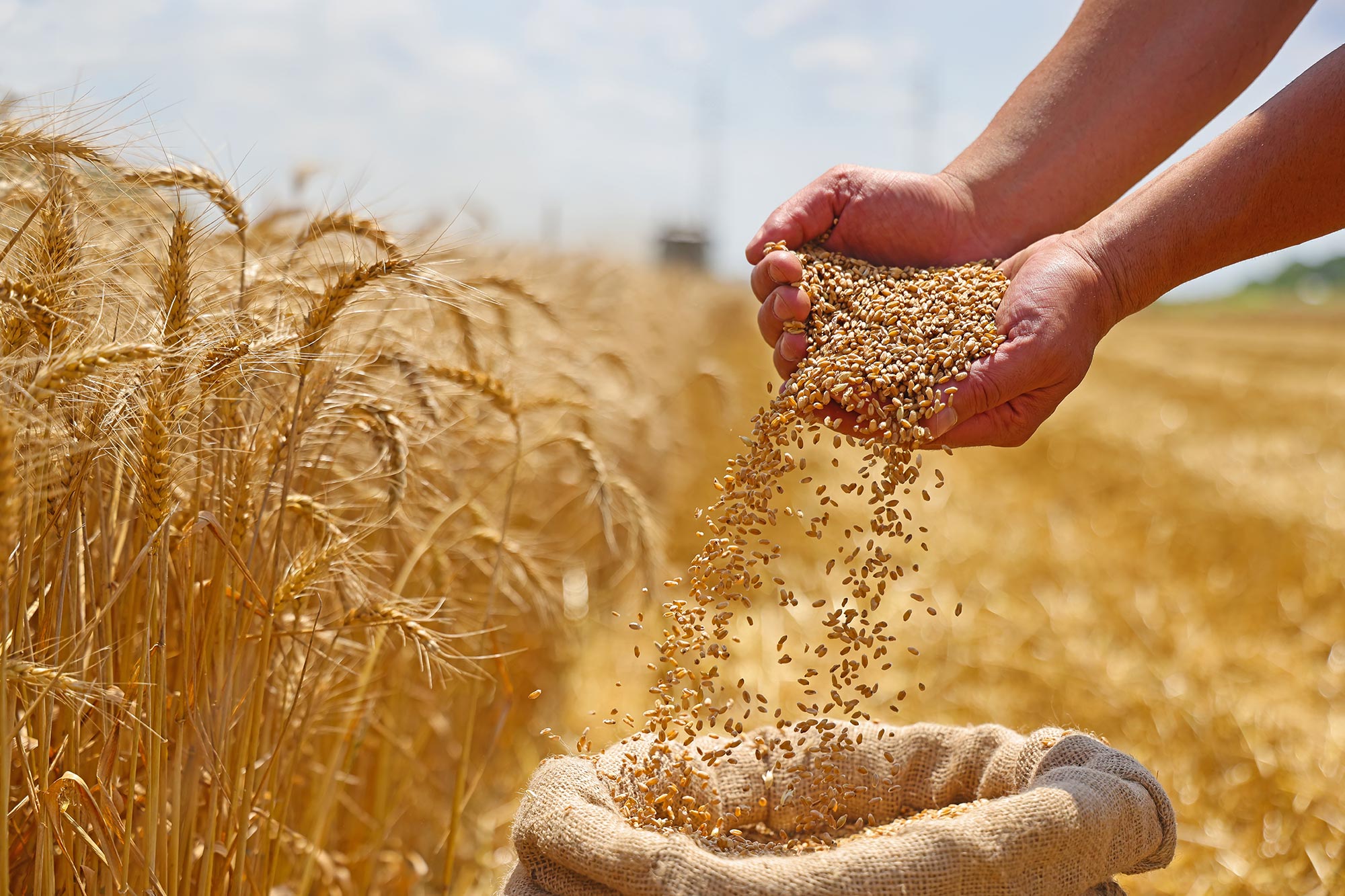
UC Davis scientists created wheat that can partially fertilize itself by releasing a chemical that activates nitrogen-fixing bacteria in the soil.
The modified plants use this microbial help to tap atmospheric nitrogen, reducing the need for synthetic fertilizers. This breakthrough could cut pollution, lower farm expenses, and improve crop growth in nutrient-poor regions. It may also pave the way for similar advances in other major cereal crops.
Wheat Engineered to Help Generate Its Own Fertilizer
Scientists at the University of California, Davis, have created wheat plants that can encourage the formation of their own natural fertilizer. This advance could reduce air and water pollution worldwide while lowering the amount farmers need to spend on conventional fertilizers.
The project was led by Eduardo Blumwald, a distinguished professor in the Department of Plant Sciences. His team used the gene-editing tool CRISPR to increase the wheat plant’s production of one of its naturally occurring compounds. When the plant releases the extra amount of this compound into surrounding soil, it supports soil bacteria that convert nitrogen from the air into a form plants can easily absorb. This process is known as nitrogen fixation.
The findings were published online in Plant Biotechnology Journal.
Potential Impact on Global Food Security
In many developing regions, this discovery could provide a major boost to crop reliability and food supply.
“In Africa, people don’t use fertilizers because they don’t have money, and farms are small, not larger than six to eight acres,” Blumwald said. “Imagine, you are planting crops that stimulate bacteria in the soil to create the fertilizer that the crops need, naturally. Wow! That’s a big difference!”
This new wheat variety builds on earlier progress the team achieved in rice, and additional studies are exploring how the approach can be applied to other cereal crops.
The Fertilizer Challenge
Wheat is the world’s second-largest cereal crop by yield and accounts for about 18% of global nitrogen fertilizer use. More than 800 million tons of fertilizer were produced worldwide in 2020, according to the United Nations Food and Agriculture Organization.
However, plants typically absorb only 30 to 50% of the nitrogen present in fertilizer. The remainder often washes into waterways, contributing to “dead zones” where oxygen levels fall too low to support aquatic life. Excess nitrogen left in soil can also generate nitrous oxide, a powerful greenhouse gas.
Understanding the Biological Barrier
Nitrogen-fixing bacteria rely on an enzyme called nitrogenase, the “fixer” central to nitrogen fixation. This enzyme exists only inside these bacteria and can function only in very low-oxygen conditions.
Legumes such as peas and beans naturally solve this issue by forming root nodules, which create a low-oxygen environment that protects nitrogen-fixing bacteria.
Wheat and most other crops do not form such nodules, which is why farmers depend on nitrogen-based fertilizers.
“For decades, scientists have been trying to develop cereal crops that produce active root nodules, or trying to colonize cereals with nitrogen-fixing bacteria, without much success. We used a different approach,” Blumwald said. “We said the location of the nitrogen-fixing bacteria is not important, so long as the fixed nitrogen can reach the plant, and the plant can use it.”
Finding a New Way to Support Nitrogen-Fixing Bacteria
To identify a potential solution, the research team evaluated 2,800 chemicals naturally produced by plants. They identified 20 that not only benefit the plant but also help bacteria form biofilms. These sticky protective layers create a low-oxygen environment that allows nitrogenase to function. The researchers then determined how plants make these compounds and which genes regulate their production.
Using CRISPR, the team engineered wheat to produce higher levels of a flavone called apigenin. Because the modified plants generate more apigenin than they need, the surplus is released from their roots into the soil. In experiments, the extra apigenin encouraged soil bacteria to build biofilms that protect nitrogenase, allowing the bacteria to fix nitrogen in a form the wheat can use.
When grown under very low nitrogen fertilizer conditions, the modified wheat produced higher yields than control plants.
Major Economic Benefits for Farmers
Farmers in the United States spent nearly $36 billion on fertilizers in 2023, according to U.S. Department of Agriculture estimates. Blumwald notes that close to 500 million acres in the country are planted with cereals.
“Imagine, if you could save 10% of the amount of fertilizer being used on that land,” he pondered. “I’m calculating conservatively: That should be a savings of more than a billion dollars every year.”
Reference: “Increased Apigenin in DNA-Edited Hexaploid Wheat Promoted Soil Bacterial Nitrogen Fixation and Improved Grain Yield Under Limiting Nitrogen Fertiliser” by Hiromi Tajima, Akhilesh Yadav, Javier Hidalgo Castellanos, Dawei Yan, Benjamin P. Brookbank, Eiji Nambara and Eduardo Blumwald, 6 August 2025, Plant Biotechnology Journal.
DOI: 10.1111/pbi.70289
Other authors include Hiromi Tajima, Akhilesh Yadav, Javier Hidalgo Castellanos, Dawei Yan, Benjamin P. Brookbank and Eiji Nambara.
A patent application has been filed by the University of California and is pending. Bayer Crop Science and the UC Davis Will Lester Endowment have supported the research.
Never miss a breakthrough: Join the SciTechDaily newsletter.
Follow us on Google and Google News.
1 Comment
thank you