
Close Menu
    Facebook X (Twitter) Instagram
    SciTechDaily
    • Biology
    • Chemistry
    • Earth
    • Health
    • Physics
    • Science
    • Space
    • Technology
    Facebook X (Twitter) Pinterest YouTube RSS
    SciTechDaily
    Home»Earth»New Space Satellite Pinpoints Methane Leaks and Industrial Emissions
    Earth

    New Space Satellite Pinpoints Methane Leaks and Industrial Emissions

    By European Space Agency (ESA)September 15, 2020No Comments5 Mins Read
    Facebook Twitter Pinterest Telegram LinkedIn WhatsApp Email Reddit
    Share
    Facebook Twitter LinkedIn Pinterest Telegram Email Reddit
    Methane Plume Caspian Sea
    Captured by GHGSat’s Claire mission on May 21, 2020, this image shows methane emissions from an onshore oil & gas facility in the Caspian Sea Region. GHGSat is a New Space initiative that draws on Copernicus Sentinel-5P data for mapping methane hotspots. Its Claire satellite has now collected more than 60,000 methane measurements of industrial facilities around the world. Credit: GHGSat (background © 2020 Google map data)

    Methane may not be as abundant in the atmosphere as carbon dioxide, but with a global warming potential many times greater than carbon dioxide, monitoring and controlling industrial emissions of this potent gas is imperative to helping combat climate change. GHGSat is a New Space initiative that draws on Copernicus Sentinel-5P data for mapping methane hotspots – and its Claire satellite has now collected more than 60,000 methane measurements of industrial facilities around the world.

    Copernicus Sentinel-5P’s role is to map a range of atmospheric gases around the globe every 24 hours. Its Tropomi spectrometer delivers data with a resolution as high as 7 km × 5.5 km for methane, but these data can’t be used to pinpoint specific facilities responsible for emissions.

    However, GHGSat’s demonstration satellite ‘Claire’ can, but it is helped with a bit of guidance from Sentinel-5P.
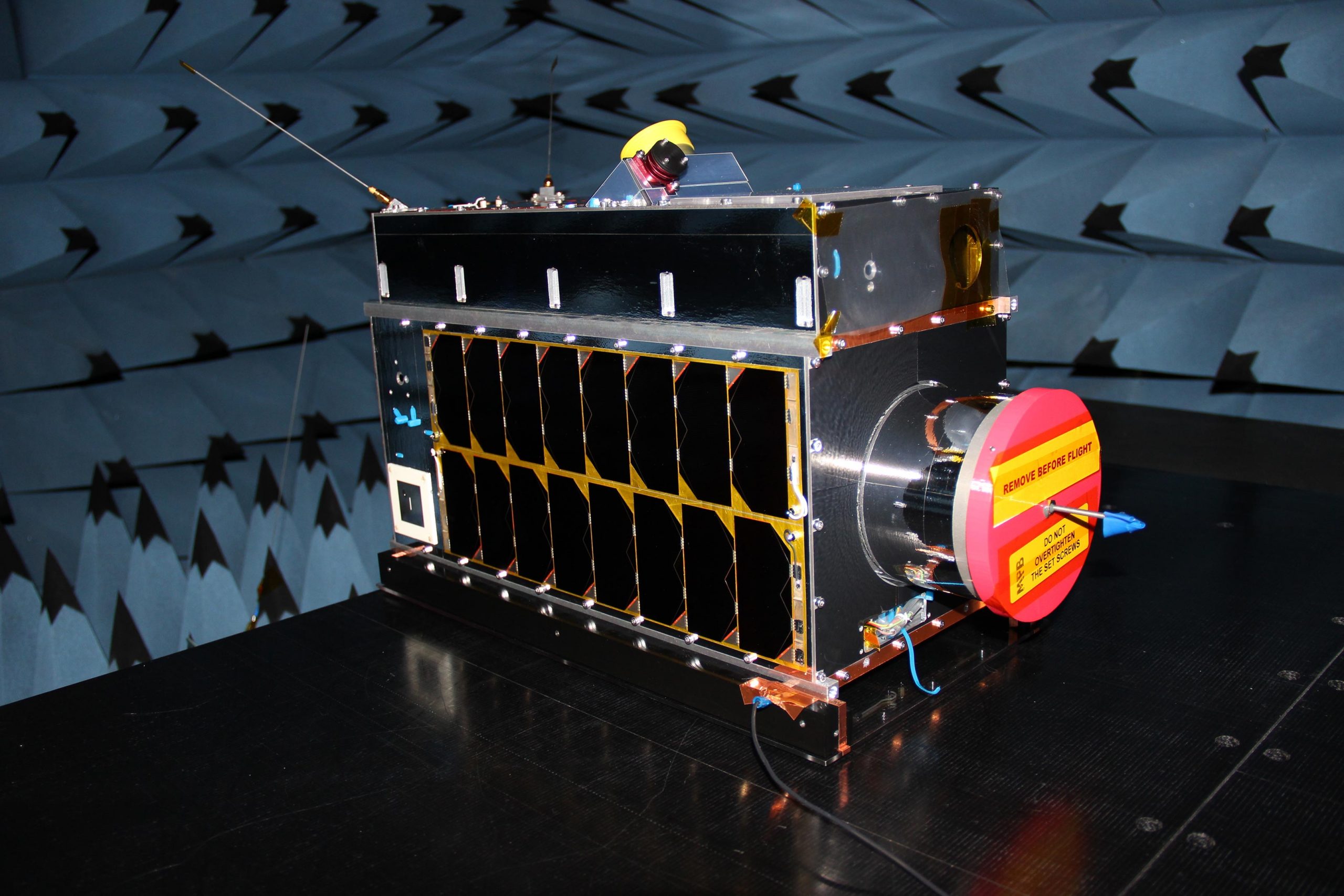
    GHGSat Iris
    GHGSat’s commercialization satellite ‘Iris’ during testing. Iris is scheduled to launch in August 2020 and will measure sources of the potent greenhouse gas, methane, at higher resolution than has previously been possible. Industrial site operators will use Iris measurements alongside Copernicus Sentinel-5P and Claire measurements to better understand their greenhouse gas emissions, enabling them to control and, ultimately, reduce them. Credit: GHGSat

    Drawing on Sentinel-5P data, the GHGSat tasks Claire to home in on methane point sources. Using this approach, GHGSat has been able to attribute large methane leaks to specific industrial facilities. This is catching the attention of managers responsible for emissions from industries such as oil and gas, waste management, mining, agriculture, and power generation.

    The Climate Investments arm of the Oil & Gas Climate Initiative (OGCI) has taken particular interest, including an investment in GHGSat.

    Managing Director of Ventures for OGCI Climate Investments, Rhea Hamilton, says, “GHGSat’s methane monitoring product has achieved impressive results and is attractive to oil and gas operators.

    “The company has identified significant methane leaks and supported operators in understanding the results, prompting corrective action. OGCI Climate Investments looks forward to watching GHGSat grow to serve more operators.”
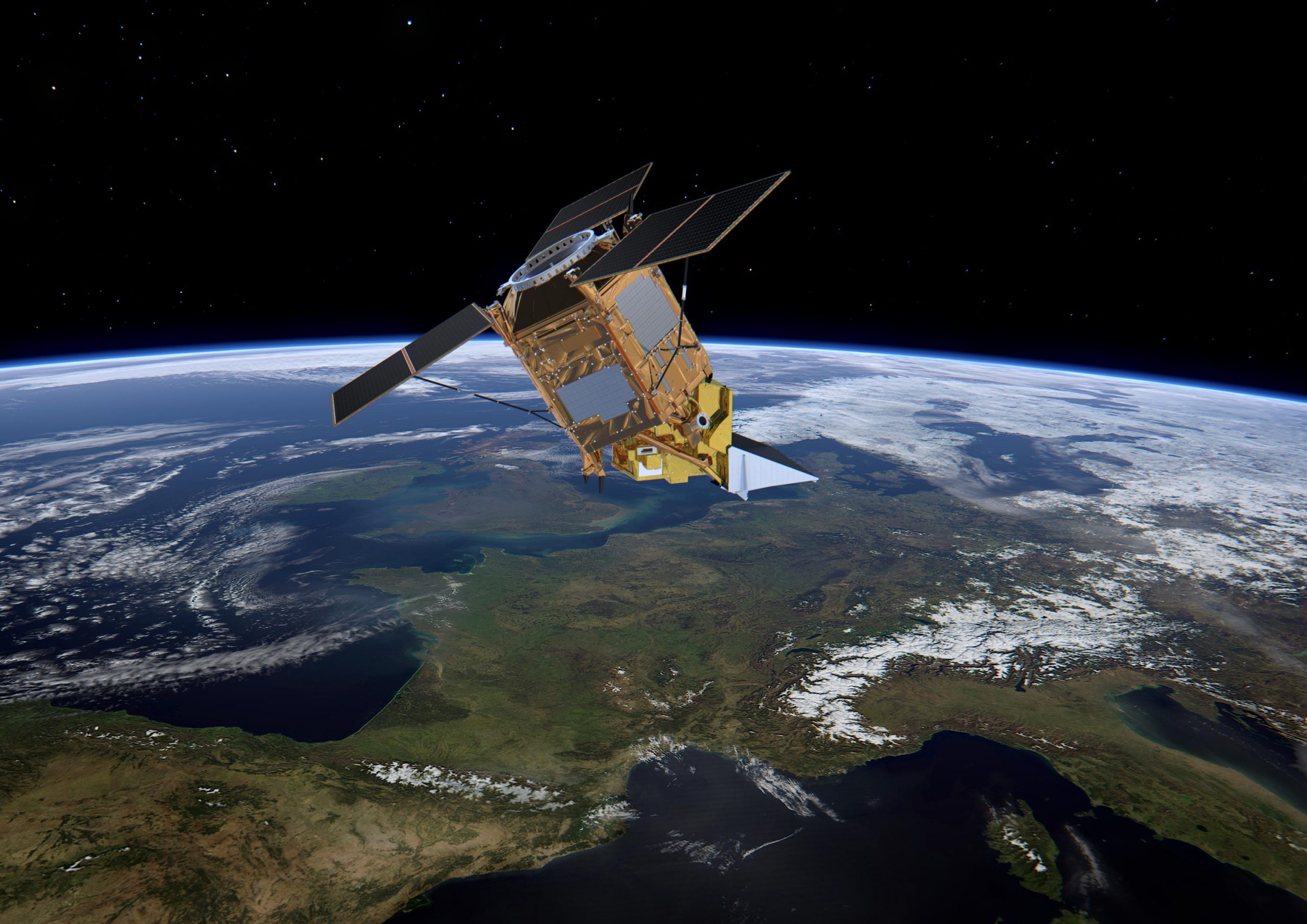
    Copernicus Sentinel 5P
    Sentinel-5 Precursor is the first Copernicus mission dedicated to monitoring our atmosphere. With air pollution a major concern, this new satellite carries the state-of-the-art Tropomi instrument to map a multitude of trace gases such as nitrogen dioxide, ozone, formaldehyde, methane, carbon monoxide, and aerosols – all of which affect the air we breathe and our climate. Data will be used for the Copernicus Atmosphere Monitoring Service, for monitoring air quality, for global emission inventories & for UV warnings. Data will also support volcanic ash monitoring services for aviation safety. Credit: ESA/ATG medialab

    Following on from the Claire demonstrator, GHGSat plans to have a constellation of 10 satellites operating by 2022. The next satellite, Iris, which will be able to spot even smaller methane leaks, is one of the 53 satellites that will be launched on the Vega VV16 flight, scheduled for mid-August.

    ESA’s Director of Earth Observation Programmes, Josef Aschbacher, commented, “Copernicus Sentinel-5P and Claire working together is a prime example of institutional satellites working hand in hand with commercial satellites, a concept that is taking Earth observation into a new era.

    “We are very much looking forward to seeing Iris launch as a next step towards better greenhouse gas monitoring.”

    Iris will offer a spatial resolution of 25 m (82 ft) compared to Claire’s 50 m (164 ft) resolution, therefore allowing methane to be traced even more accurately.

    ESA Monitors Greenhouse Gases
    Working together to monitor greenhouse gases. Back row from left to right: Giuseppe Ottavianelli, ESA’s Earth Observation Proba-1 and Third Party Mission Manager, Simonetta Cheli, Head of Strategy, Programme & Coordination Office for ESA’s Earth Observation Programmes, Johann-Dietrich Wörner, ESA Director General and Adina Gillespie, Director of Business Development, Europe at GHGSat Inc. Front row: Josef Aschbacher, ESA’s Director of Earth Observation Programmes and Stéphane Germain, President, and Chief Executive Officer at GHGSat Inc. Credit: ESA, CC BY-SA 3.0 IGO

    Alongside augmented satellite performance coming from Iris, GHGSat is addressing a growing demand for analytics services and predictive models. For example, dedicated methane analytics and reporting is possible for asset managers and stakeholders responsible for environmental, social, and governance (ESG) factors for understanding investment risk and growth opportunity.

    GHGSat President and CEO, Stephane Germain, makes analytics a priority to answer specific market needs. He comments, “GHGSat’s analytics are of growing interest for industrial operators in all sectors, as they are accelerating their efforts to mitigate emissions. With this in mind, GHGSat is building on its expertise in Canada and has advanced plans for an international analytics center delivering for ESG in the financial sector.”

    In anticipation of the data from Iris, ESA, the Canadian Space Agency and GHGSat have teamed up through an announcement of an opportunity to make 5% of Iris data freely available for research purposes.

    Never miss a breakthrough: Join the SciTechDaily newsletter.
    Follow us on Google and Google News.

    European Space Agency
    Share. Facebook Twitter Pinterest LinkedIn Email Reddit

    Related Articles

    Search for Extra-Terrestrial Life Takes Mars Scientists on Expedition to Australia

    Space Storm Hunter Captures First Images and Data

    Jakobshavn Glacier Sheds a Massive Chunk of Ice

    CryoSat Satellite Shows Increased Volume of Arctic Sea Ice

    Satellite-Based Assessment of Ocean Acidification

    Satellites Reveal Dip in Gravity from West Antarctica Ice Loss

    MSG-3 Weather Satellite Captures Its First Image of Earth

    Image of the Aurora Australis Over Concordia Station

    Cryosat Mission Took Detailed Data of Polar Ice Caps

    Leave A Reply Cancel Reply

    • Facebook
    • Twitter
    • Pinterest
    • YouTube

    Don't Miss a Discovery

    Subscribe for the Latest in Science & Tech!

    Trending News

    Scientists Uncover Potential Brain Risks of Popular Fish Oil Supplements

    Scientists Discover a Surprising Way To Make Bread Healthier and More Nutritious

    After 60 Years, Scientists Uncover Unexpected Brain Effects of Popular Diabetes Drug Metformin

    New Research Uncovers Hidden Side Effects of Popular Weight-Loss Drugs

    Scientists Rethink Extreme Warming After Surprising Ocean Discovery

    Landmark Study Links Never Marrying to Significantly Higher Cancer Risk

    Researchers Discover Unknown Beetle Species Just Steps From Their Lab

    Largest-Ever Study Finds Medicinal Cannabis Ineffective for Anxiety, Depression, PTSD

    Follow SciTechDaily
    • Facebook
    • Twitter
    • YouTube
    • Pinterest
    • Newsletter
    • RSS
    SciTech News
    • Biology News
    • Chemistry News
    • Earth News
    • Health News
    • Physics News
    • Science News
    • Space News
    • Technology News
    Recent Posts
    • Researchers Uncover Source of Strange Deformation in Earth’s Largest Continental Rift
    • Scientists Solve Mystery of Where the Colorado River Vanished Millions of Years Ago
    • Not Just Alzheimer’s: Scientists Uncover Clues to a Second, Overlooked Disorder
    • Scientists Uncover Dangerous Connection Between Serotonin and Heart Valve Disease
    • Scientists Discover a “Protector” Protein That Could Help Reverse Hair Loss
    Copyright © 1998 - 2026 SciTechDaily. All Rights Reserved.
    • Science News
    • About
    • Contact
    • Editorial Board
    • Privacy Policy
    • Terms of Use

    Type above and press Enter to search. Press Esc to cancel.