
Close Menu
    Facebook X (Twitter) Instagram
    SciTechDaily
    • Biology
    • Chemistry
    • Earth
    • Health
    • Physics
    • Science
    • Space
    • Technology
    Facebook X (Twitter) Pinterest YouTube RSS
    SciTechDaily
    Home»Science»New Spray Gel Could Help Heal Frostbite
    Science

    New Spray Gel Could Help Heal Frostbite

    By American Chemical SocietyDecember 14, 2019No Comments3 Mins Read
    Facebook Twitter Pinterest Telegram LinkedIn WhatsApp Email Reddit
    Share
    Facebook Twitter LinkedIn Pinterest Telegram Email Reddit
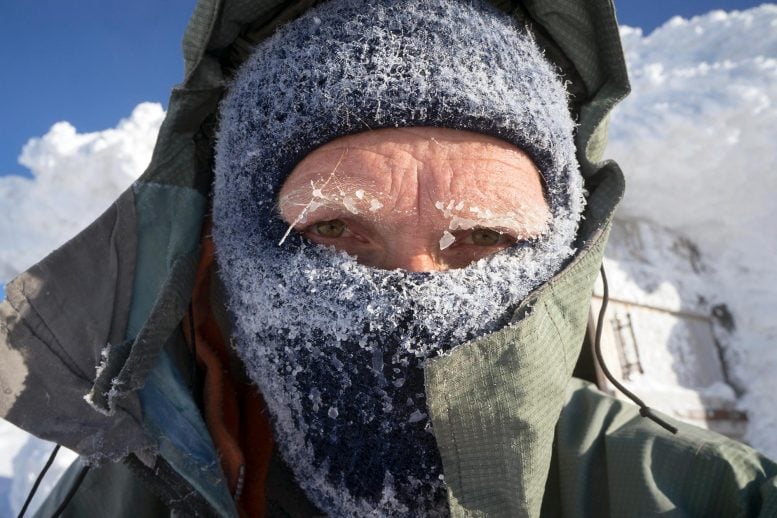
    Icy Mountain Conditions
    Researchers have developed an easy-to-use gel that can be sprayed into frostbite wounds to speed up healing.

    Mountaineers and winter sports enthusiasts know the dangers of frostbite — the tissue damage that can occur when extremities, such as the nose, ears, fingers, and toes, are exposed to very cold temperatures. However, it can be difficult to get treated quickly in remote, snowbound areas. Now, researchers reporting in ACS Biomaterials Science & Engineering have developed a convenient gel that could be sprayed onto frostbite injuries when they occur, helping wounds heal.

    Frostbite causes fluids in the skin and underlying tissues to freeze and crystallize, resulting in inflammation, decreased blood flow, and cell death. Extremities are the most affected areas because they are farther away from the body’s core and already have reduced blood flow. If frostbite is not treated soon after the injury, it could lead to gangrene and amputation of the affected parts. Conventional treatments include immersing the body part in warm water, applying topical antibiotic creams or administering vasodilators and anti-inflammatory drugs, but many of these are unavailable in isolated snowy areas, like mountaintops. Others, such as topical medications, could end up freezing themselves. Rahul Verma and colleagues at the Institute of Nano Science and Technology wanted to develop a cold-stable spray gel that could be administered on-site for the immediate treatment of frostbite injuries.

    To develop their spray, the researchers packaged heparin, an anticoagulant that improves blood flow by reducing clotting and aiding in blood vessel repair, into liposomes. These lipid carriers helped deliver heparin deep inside the skin. They embedded the heparin-loaded liposomes in a sprayable hydrogel that also contained ibuprofen (a painkiller and anti-inflammatory drug) and propylene glycol, which helped keep the spray from freezing at very low temperatures. When the researchers tested the spray gel on rats with frostbite, they found that the treatment completely healed the injuries within 14 days, whereas untreated injuries were only about 40% healed, and wounds treated with an antibiotic cream were about 80% healed. The spray reduced levels of inflammatory cytokines at the wound site and in the blood circulation, which likely accelerated healing, the researchers say.

    Reference: “Heparin-Encapsulated Metered-Dose Topical “Nano-Spray Gel” Liposomal Formulation Ensures Rapid On-Site Management of Frostbite Injury by Inflammatory Cytokines Scavenging” by Kalpesh Vaghasiya, Ankur Sharma, Kushal Kumar, Eupa Ray, Suneera Adlakha, Om Prakash Katare, Sunil Kumar Hota and Rahul K. Verma, 6 November 2019, ACS Biomaterials Science & Engineering.
    DOI: 10.1021/acsbiomaterials.9b01486

    The authors acknowledge funding from the Defence Institute of High Altitude Research.

    Never miss a breakthrough: Join the SciTechDaily newsletter.
    Follow us on Google and Google News.

    American Chemical Society Dermatology
    Share. Facebook Twitter Pinterest LinkedIn Email Reddit

    Related Articles

    What Does a Mummy Smell Like? Scientists Uncover Surprising Truth

    Brighten Skin and Reduce Wrinkles: Scientists Discover Highly Effective, Bizarre New Skincare Ingredient

    Concerning Findings: New Research Reveals That Washing Your Fruit Doesn’t Remove All Pesticides

    Alzheimer’s Imaging Breakthrough: Fluorescent Sensors Penetrate Blood-Brain Barrier

    Why Is an Espresso So Good? Food Chemists Unravel Hidden Dynamics of Milk in Coffee

    Superfood in a Glass: The Surprising Health Benefits of Blueberry Wine

    New Research Reveals That Some Plant-Based Steaks and Cold Cuts Are Lacking in Protein

    Science’s Latest Marvel: Electronic Material That Grows Tougher on Impact

    Out of This World Nutrition: Designing the “Perfect” Meal To Feed Long-Term Space Travelers

    Leave A Reply Cancel Reply

    • Facebook
    • Twitter
    • Pinterest
    • YouTube

    Don't Miss a Discovery

    Subscribe for the Latest in Science & Tech!

    Trending News

    Your Blood Pressure Reading Could Be Wrong Because of One Simple Mistake

    Astronomers Stunned by Ancient Galaxy With No Spin

    Physicists May Be on the Verge of Discovering “New Physics” at CERN

    Scientists Solve 320-Million-Year Mystery of Reptile Skin Armor

    Scientists Say This Daily Walking Habit May Be the Secret to Keeping Weight Off After Dieting

    New Therapy Rewires the Brain To Restore Joy in Depression Patients

    Giant Squid Detected off Western Australia in Stunning Deep-Sea Discovery

    Popular Sugar-Free Sweetener Linked to Liver Disease, Study Warns

    Follow SciTechDaily
    • Facebook
    • Twitter
    • YouTube
    • Pinterest
    • Newsletter
    • RSS
    SciTech News
    • Biology News
    • Chemistry News
    • Earth News
    • Health News
    • Physics News
    • Science News
    • Space News
    • Technology News
    Recent Posts
    • New Stroke Study Challenges Decades-Old Medical Beliefs
    • These Simple Plant Foods Are Linked to Lower Blood Pressure
    • Common Blood Pressure Drug Supercharges Cancer Treatment in Surprising New Study
    • Key Magic Mushroom Ingredient Increases Laziness and Reduces Aggression
    • Researchers Solve 15-Year Mystery Behind Cancer-Causing Gut Toxin
    Copyright © 1998 - 2026 SciTechDaily. All Rights Reserved.
    • Science News
    • About
    • Contact
    • Editorial Board
    • Privacy Policy
    • Terms of Use

    Type above and press Enter to search. Press Esc to cancel.