
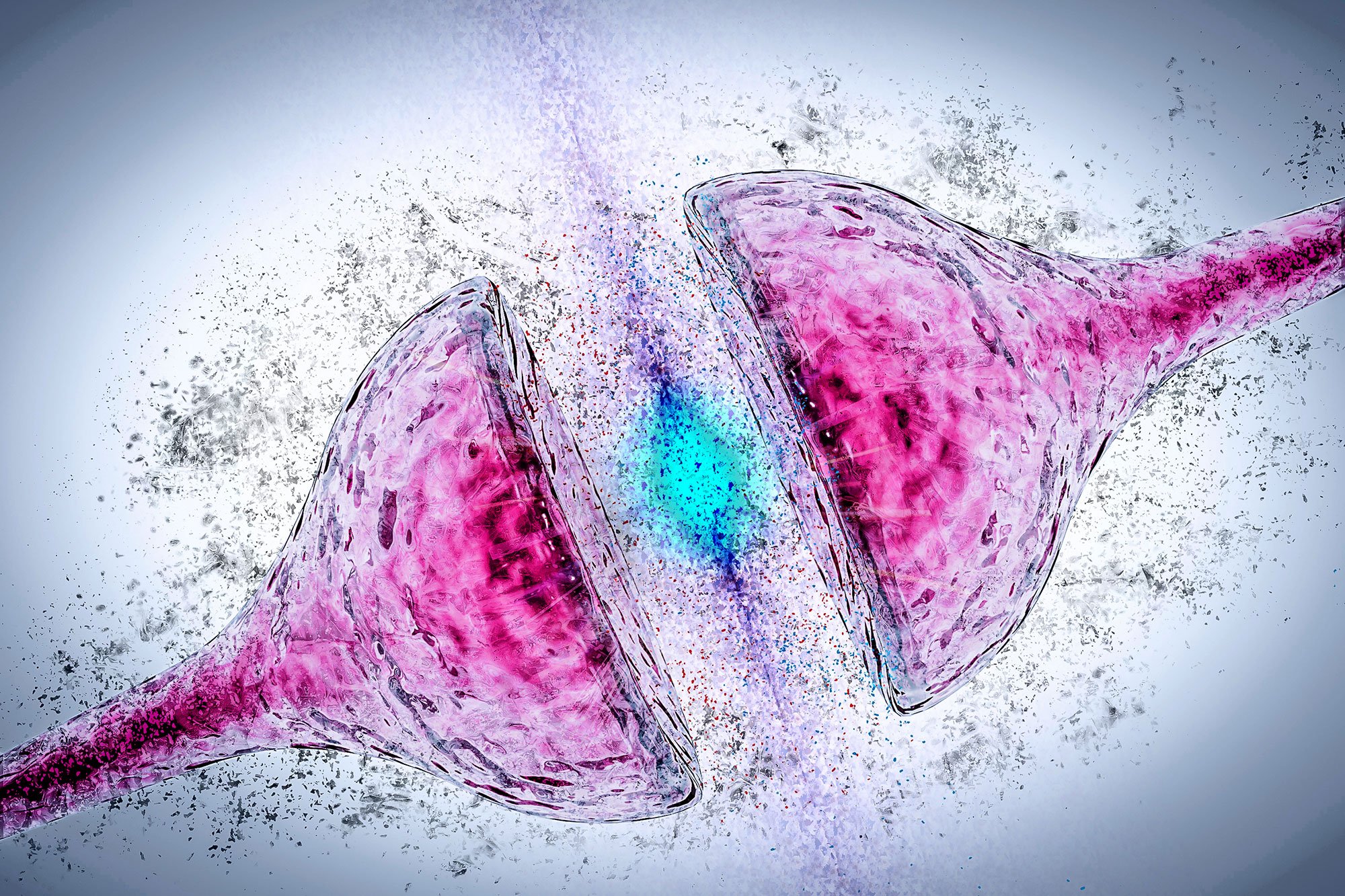
A pioneering clinical trial is exploring whether lab-engineered stem cells can restore dopamine production in people with Parkinson’s disease.
In Parkinson’s disease, the problem starts deep in the brain, where a small group of cells gradually fails. The condition is progressive and affects more than one million people in the United States, with roughly 90,000 new diagnoses each year. Today’s treatments can make symptoms easier to live with, but there is still no cure and no therapy proven to slow the underlying disease.
A key driver is a drop in dopamine release. Dopamine is a neurotransmitter that helps the brain coordinate smooth, purposeful movement and also supports memory, mood, and other functions. As Parkinson’s disease advances, dopamine-producing brain cells steadily die, especially in regions that help control motion. That loss disrupts the brain’s signaling, leading to tremors, stiffness, slowed movement, and other familiar symptoms.

Keck Medicine of USC is testing an approach meant to address that root shortage rather than only boosting the brain’s remaining dopamine. In an early-phase clinical trial, researchers are evaluating the safety and effectiveness of implanting specialized stem cells into the brain. These cells are programmed to replace damaged brain cells and produce dopamine, with the goal of rebuilding part of the circuitry that breaks down over time.
“If the brain can once again produce normal levels of dopamine, Parkinson’s disease may be slowed down and motor function restored,” said Brian Lee, MD, PhD, a neurosurgeon with Keck Medicine and principal investigator of the study.
Unique stem cell therapy
The treatment relies on induced pluripotent stem cells (iPSCs), a lab generated cell type designed for flexibility. Unlike embryonic stem cells, iPSCs are created by taking adult cells, such as skin or blood cells, and reprogramming them back into a versatile “blank slate” state that can develop into many kinds of cells. That matters because, in principle, the same starting material can be directed toward dopamine producing brain cells, offering a potential way to replace what Parkinson’s disease progressively takes away.

“We believe that these iPSCs can reliably mature into dopamine-producing brain cells, and offer the best chance of jump-starting the brain’s dopamine production,” said Xenos Mason, MD, a neurologist who specializes in Parkinson’s disease and other movement disorders with Keck Medicine and co-principal investigator of the study.
During the procedure, Lee drills a small hole in the patient’s skull to access the brain, then precisely implants the stem cells into the basal ganglia, a part of the brain that controls movement, under the guidance of magnetic resonance imaging (MRI).
After surgery, patients are monitored for 12-15 months for any changes in their Parkinson’s disease symptoms and for possible side effects, including dyskinesia — excess movements — or infection. The doctors will continue to monitor the patients and their Parkinson’s disease symptoms for up to five years.
“Our ultimate goal is to pioneer a technique that can repair patients’ motor function and offer them a better quality of life,” said Lee.
Keck Medicine is one of three organizations in the United States participating in the clinical trial. The multisite study includes a total of 12 participants with moderate to moderate-severe Parkinson’s disease.
Never miss a breakthrough: Join the SciTechDaily newsletter.
Follow us on Google and Google News.
2 Comments
I am very interested in learning more about this study and others going on. I would be interested in volunteering to participate in a clinical study. I consider myself at a moderate Parkinson’s level. Could you let my know what hospitals in the US are advancing in Parkinson’s Disease? I live in New Albany, Indiana. My main symptoms include extreme discomfort with my eyes. Eye specialists don’t seem to know how to treat this. In addition I suffer from extreme fatigue. My quality of life isn’t good. Thank You.
Thomas Brown
812-697-0040
Please contact me about this study interested in enrolling