
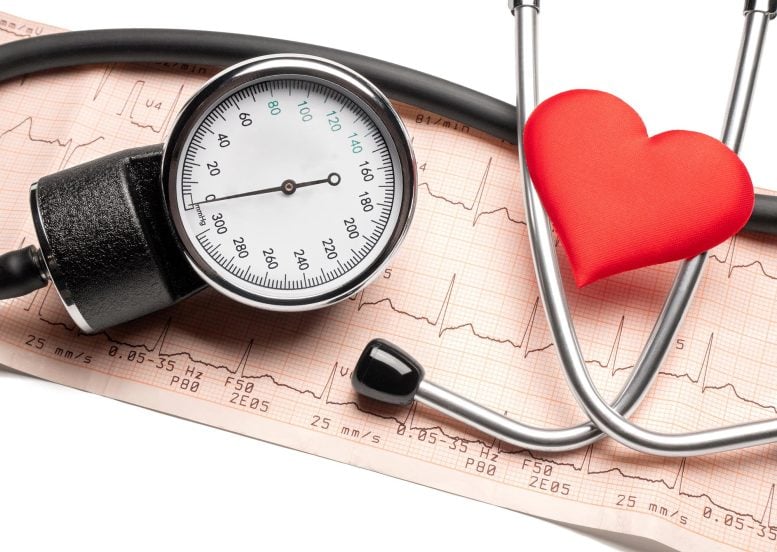
Most everyone can lower blood pressure by reducing salt intake, even those on BP drugs.
Nearly everyone can lower their blood pressure, even people currently on blood pressure-reducing drugs, by lowering their sodium intake. This is according to a new research study from Vanderbilt University Medical Center (VUMC), Northwestern Medicine, and the University of Alabama at Birmingham.
“In the study, middle-aged to elderly participants reduced their salt intake by about one teaspoon a day compared with their usual diet. The result was a decline in systolic blood pressure by about 6 millimeters of mercury (mm Hg), which is comparable to the effect produced by a commonly utilized first-line medication for high blood pressure,” said Deepak Gupta, M.D., MSCI, associate professor of Medicine at VUMC and co-principal investigator.
“We found that 70-75% of all people, regardless of whether they are already on blood pressure medications or not, are likely to see a reduction in their blood pressure if they lower the sodium in their diet,” said co-principal investigator Norrina Allen, Ph.D., MPH, professor of Preventive Medicine at Northwestern University Feinberg School of Medicine.
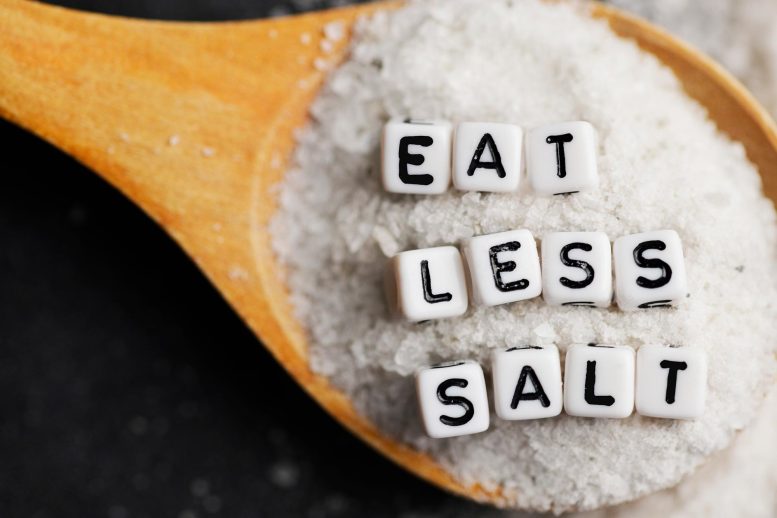
This is one of the largest studies to investigate the effect of reducing sodium in the diet on blood pressure to include people with hypertension and already on medications.
“We previously didn’t know if people already on blood pressure medication could actually lower their blood pressure more by reducing their sodium,” said Allen, also the Quentin D. Young Professor of Health Policy, and director of the Center for Epidemiology and Population Health at Northwestern.
The study was published on November 11 in the Journal of the American Medical Association and was simultaneously presented at the American Heart Association Scientific Sessions 2023 in Philadelphia.

The total daily sodium intake recommended by the AHA is to be below 1,500 milligrams, and this study was designed to decrease it even lower than that, Allen said. “It can be challenging, but reducing your sodium in any amount will be beneficial,” she said.
High blood pressure is the leading cause of morbidity and mortality in the world. “High blood pressure can lead to heart failure, heart attacks, and strokes because it puts extra pressure on your arteries,” Allen said. “It affects the heart’s ability to work effectively and pump blood.”
How the Study Worked
Middle-age to elderly individuals in their 50s to 70s from Birmingham, Alabama, and Chicago were randomized to either a high-sodium diet (2,200 mg per day on top of their usual diet) or low-sodium diet (500 mg in total per day) for one week, after which they crossed over to the opposite diet for one week.
On the day before each study visit, participants wore blood pressure monitors and collected their urine for 24 hours. Among 213 participants, systolic blood pressure was significantly lowered by 7 to 8 mm Hg when they ate the low-sodium diet compared with high-sodium diet, and by 6 mm Hg compared with their usual diet.
Overall, 72% of participants experienced a lowering of their systolic blood pressure on the low-sodium diet compared with their usual diet.
Results and Conclusions
“The effect of reduction in dietary sodium on blood pressure lowering was consistent across nearly all individuals, including those with normal blood pressure, high blood pressure, treated blood pressure, and untreated blood pressure,” Gupta said.
“Just as any physical activity is better than none for most people; any sodium reduction from the current usual diet is likely better than none for most people with regards to blood pressure,” he said.
“This reinforces the importance of reduction in dietary sodium intake to help control blood pressure, even among individuals taking medications for hypertension,” Allen added.
The blood pressure-lowering effect of dietary sodium reduction was achieved rapidly and safely within one week.
Public Health Implications
“The fact that blood pressure dropped so significantly in just one week and was well tolerated is important and emphasizes the potential public health impact of dietary sodium reduction in the population, given that high blood pressure is such a huge health issue worldwide,” said co-investigator Cora Lewis, MD, MSPH, professor and chair of the Department of Epidemiology, and professor of Medicine at the University of Alabama at Birmingham.
“It is particularly exciting that the products we used in the low sodium diet are generally available, so people have a real shot at improving their health through improving their diet in this way,” Lewis said.
Reference: “Effect of Dietary Sodium on Blood Pressure: A Crossover Trial” by Deepak K. Gupta, Cora E. Lewis, Krista A. Varady, Yan Ru Su, Meena S. Madhur, Daniel T. Lackland, Jared P. Reis, Thomas J. Wang, Donald M. Lloyd-Jones and Norrina B. Allen, 11 November 2023, JAMA.
DOI: 10.1001/jama.2023.23651
Other authors include Krista Varady, Ph.D., Yan Ru Su, M.D., Meena Madhur, M.D., Ph.D., Daniel Lackland, Ph.D., Jared Reis, Ph.D., Thomas Wang, M.D., and Donald Lloyd-Jones, M.D.
The research was supported by grant R01HL148661 and contracts 75N92023D00005 and 75N92023D00004 from the National Heart Lung and Blood Institute of the National Institutes of Health.
The content is solely the responsibility of the authors and does not necessarily represent the official views of the National Institutes of Health.
Never miss a breakthrough: Join the SciTechDaily newsletter.
Follow us on Google and Google News.
1 Comment
Now do the study showing the increase in all-cause mortality on low-sodium diets.