
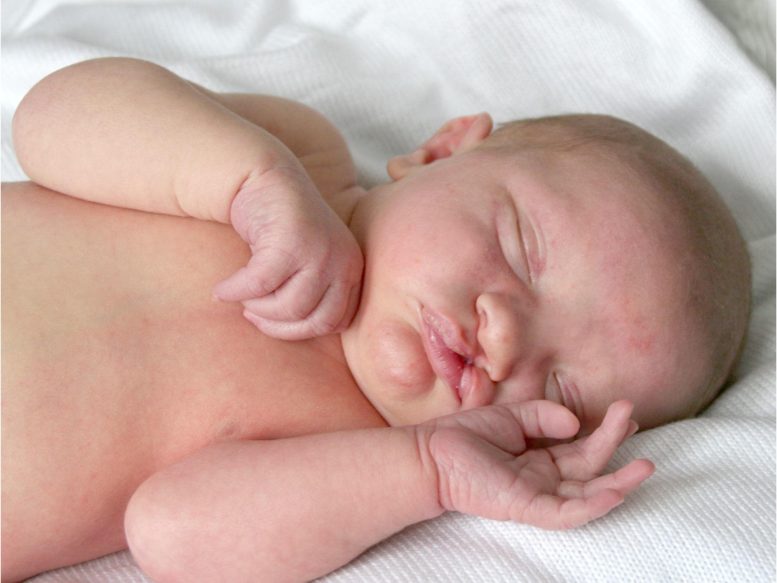
Researchers at the University of Bonn have uncovered clues to the underlying causes of the condition.
Cleft lip and palate are common congenital malformations that have been linked to genetic causes, although the specific genes involved have not yet been identified. A recent study led by the University of Bonn has uncovered new correlations, finding that mutations near known genes such as SPRY1 may contribute to an increased risk of the condition. Additionally, the study suggests a causal role for the transcription factor Musculin. These findings have recently been published in the journal Human Genetics and Genomics Advances.
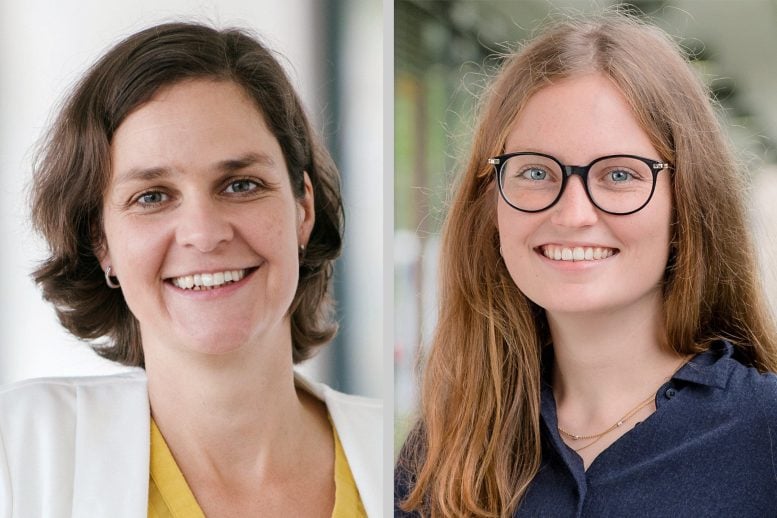
In cleft lip and palate, the formation of the mouth region is impaired during embryonic development. To date, more than 45 genetic segments are known to contain common risk variants. “We now also found an enrichment of rare variants, especially new mutations, at two of these regions,” says Dr. Kerstin U. Ludwig, head of an Emmy Noether group at the Institute of Human Genetics at the University Hospital Bonn.
The researchers furthermore used novel data analysis methods to find evidence that the transcription factor Musculin also plays a role. “This suggests an involvement of embryonic development of facial muscles in cleft lip and palate,” says lead author Hanna Zieger, a member of Ludwig’s team. “This had previously been suspected, but not yet demonstrated.”
Many genetic studies focus primarily on the regions of the genome that contain the code for making proteins. “We combined different approaches to interpret rare variants in the 98 percent that do not directly encode proteins,” Ludwig reports. One of these approaches looks at those regions of the genome to which transcription factors can bind. These are proteins that recognize specific base sequences of DNA, dock to them and thereby influence the readout of neighboring genes. One such transcription factor is Musculin.
With her specially tailored evaluation methods, Zieger was able to show that the base sequence of the binding sites of Musculin is altered more often and to a greater extent in patients than in the control group. “The evaluation script written by Ms. Zieger can also be used for other diseases,” says Ludwig, who is a member of the Cluster of Excellence ImmunoSensation2.
Like a Needle in a Haystack
The team used publicly available genome sequencing data from the Gabriella Miller Kids First program of more than 200 children with cleft lip and palate and their parents. Together with the Berlin Institute of Health and the Max Delbrück Center for Molecular Medicine (Berlin), the researchers filtered out genetic variants that occur only in the affected children but not in their parents. More than 13,000 of these “new mutations” were collected this way. The researchers compared these with around 17,000 new mutations from families without the condition.
The aim was now to identify those new mutations in patients with cleft lip and palate that were significantly more common in the patients than in the control subjects. “This way, we were able to identify a section on chromosome 4. This section is close to the SPRY1 gene, which was already known to be a gene for cleft lip and palate due to common variants,” Ludwig summarizes.
The research group leader highlights the accomplishments of Hanna Zieger, who performed the study as lead author during her doctorate in medicine, much of it during the Coronavirus pandemic: “She has been learning the basics of data analytics at a tremendous speed and has programmed or adapted many of the analytics tools.” Currently, Hanna Zieger is completing a section of her practical year in Dresden before graduating with her third state examination in medicine in the spring. She also plans to pursue research after the completion of her studies.
These study results provide new insights into the biological mechanisms that contribute to cleft lip and palate. Next, the research team plans to further evaluate the Gabriella Miller Kids First program data set and use additional patient groups to clarify in more detail whether and how other transcription factors are also involved in cleft lip and palate and how the risk variants interact with each other.
Reference: “Prioritization of non-coding elements involved in non-syndromic cleft lip with/without cleft palate through genome-wide analysis of de novo mutations” by Hanna K. Zieger, Leonie Weinhold, Axel Schmidt, Manuel Holtgrewe, Stefan A. Juranek, Anna Siewert, Annika B. Scheer, Frederic Thieme, Elisabeth Mangold, Nina Ishorst, Fabian U. Brand, Julia Welzenbach, Dieter Beule, Katrin Paeschke, Peter M. Krawitz and Kerstin U. Ludwig, 5 December 2022, Human Genetics and Genomics Advances.
DOI: 10.1016/j.xhgg.2022.100166
In addition to the Institute of Human Genetics, the study involved the Institute of Medical Biometry, Informatics, and Epidemiology, the Department of Oncology, of the Medical Clinic III and the Institute for Genomic Statistics and Bioinformatics of the University Hospital Bonn, as well as the Berlin Institute of Health and the Max Delbrück Center for Molecular Medicine (Berlin). The BONFOR program of the Medical Faculty of the University of Bonn and the German Research Foundation funded the study.
Never miss a breakthrough: Join the SciTechDaily newsletter.
Follow us on Google and Google News.