

The Fulani’s ancestry links to North and West Africa, the Green Sahara period, and ancient Berber groups, shaped by migration, trade, and pastoralism.
Researchers have traced the origins and genetic diversity of the Fulani, one of Africa’s largest pastoralist groups. Their findings reveal a complex ancestry shaped by historical migrations, with genetic influences from both North and West Africa. These migrations have significantly shaped the Fulani’s genetic makeup over time.

The Fulani speak languages from the Niger-Congo family and are widely dispersed across the Sahel and Savannah regions, from the Atlantic Ocean to Lake Chad. Despite their broad distribution, their ancestral origins remain uncertain. This uncertainty is largely due to their predominantly nomadic lifestyle, which relies on temporary camps and mobile tents, leaving little to no archaeological evidence.
“Even though the Fulani are a huge population group of more than 40 million people, they are still largely underrepresented in genomics research. Therefore, this study has important implications for our understanding of the Fulani population’s history in particular and human diversity in Africa in general,” says Cesar Fortes-Lima, a population geneticist at Johns Hopkins University and Uppsala University and first author of the study.
The study, published in the American Journal of Human Genetics, was conducted in seven African countries from the Sahel belt in collaboration with Fulani communities and local researchers. The researchers collected biological samples and anthropological information from over 460 Fulani participants across 18 locations in Africa.
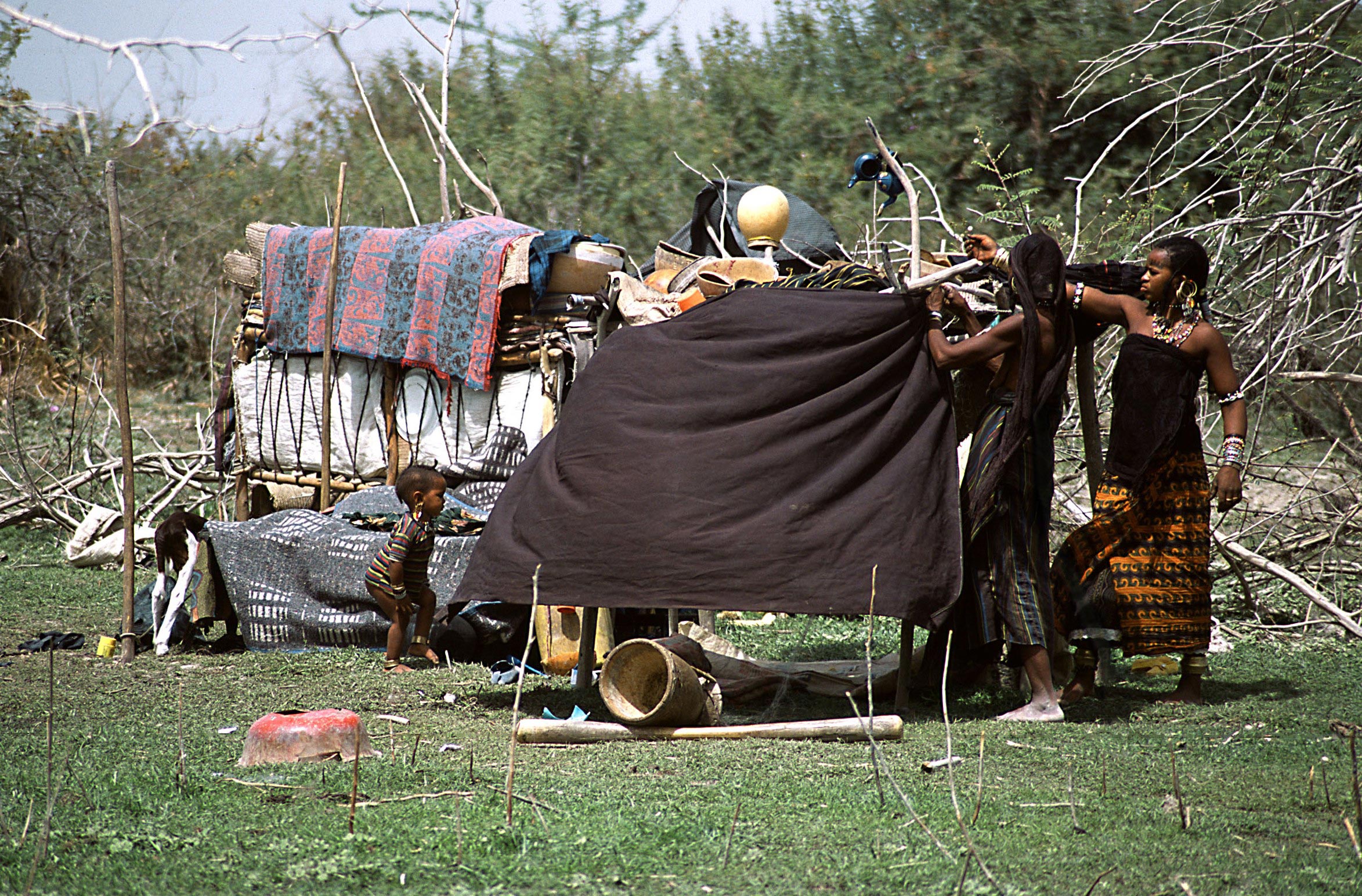
Genetics shaped by interactions with different local groups
The team found correlations between culture, geography, and genetics matching the distribution of Fulani groups.
“Our analysis revealed genetic differences between local Fulani populations following a west-east cline, highlighting their complex genetic history, which was shaped by interactions with different local groups and various demographic events,” says Mame Yoro Diallo, a PhD candidate from Charles University, Prague, who was involved in the study.
The study underscores the importance of the lifestyle of Fulani populations. Their subsistence strategies as nomadic pastoralists have influenced the genetic diversity among local Fulani populations along with their geographic distribution.
Can be traced back to the Green Sahara period
The authors also revealed a genetic component closely associated with all studied Fulani populations, suggesting a shared ancestral component possibly linked to the beginning of African pastoralism during the Green Sahara period, 12,000–5,000 years before the present.
“Comparisons between genetic data of Fulani and ancient individuals identified the presence of a genetic component in all Fulani populations associated with ancient groups from North Africa, providing additional insights into their deep genetic history and ancient contacts, particularly with Moroccan populations such as the Berber,” says Carina Schlebusch, an evolutionary geneticist at Uppsala University and senior author of the study.
Furthermore, Fulani populations have shown genetic contributions from other African groups from western, central, and eastern sub-Saharan Africa.
“During the last 500 years, the trans-Saharan trade could also have played a pivotal role in facilitating the development of extensive trade networks for the Fulani, further allowing the spread of pastoralism in Africa in different directions across the Sahel belt and beyond,” says Schlebusch.
Reference: “Population history and admixture of the Fulani people from the Sahel” by Cesar A. Fortes-Lima, Mame Y. Diallo, Václav Janoušek, Viktor Černý and Carina M. Schlebusch, 6 February 2025, The American Journal of Human Genetics.
DOI: 10.1016/j.ajhg.2024.12.015
Funding: European Research Council, Knut och Alice Wallenbergs Stiftelse, The Agency of the Czech Republic, The Czech Academy of Sciences award Praemium Academiae, Swedish Bertil Lundman Foundation, The Swedish Marcus Borgström Foundation, The Royal Physiographic Society in Lund.
Never miss a breakthrough: Join the SciTechDaily newsletter.
Follow us on Google and Google News.