
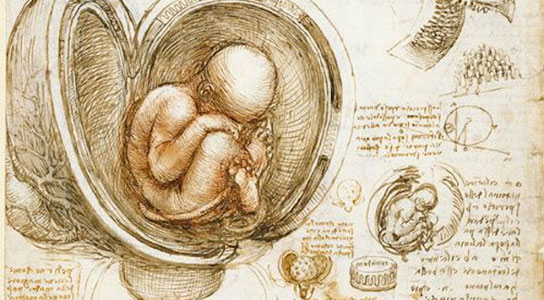
Syncytin is a gene that was found in the human genome, but is bears all of the hallmarks of originating from a virus. Back in 2000, a team of Bostonian scientists discovered it. The cells of syncytin were located only where the placenta made contact with the uterus. They fused together to form a single cellular layer, which is called the syncytiotrophoblast, essential for a fetus to draw nutrients from its mother.
In order to fuse, the cells must make syncytin. Viruses insinuated themselves into the genome of our ancestors millions of years ago, by infecting eggs or sperm and inserting their own DNA into ours. There are 100,000 known virus fragments in the human genome, making up about 8% of our DNA. Most of this DNA has been mutated so much that it’s been rendered ineffective, yet there are still some viral genes that make up proteins in our bodies.
Syncytin isn’t unique to humans. Other mammals, like chimpanzees, gorillas, and monkeys have it. The gene is similar in each of these species, including humans. Syncytin 2 was discovered, and it helps tamp down a mother’s immune system so that it doesn’t attack the baby as foreign tissue.
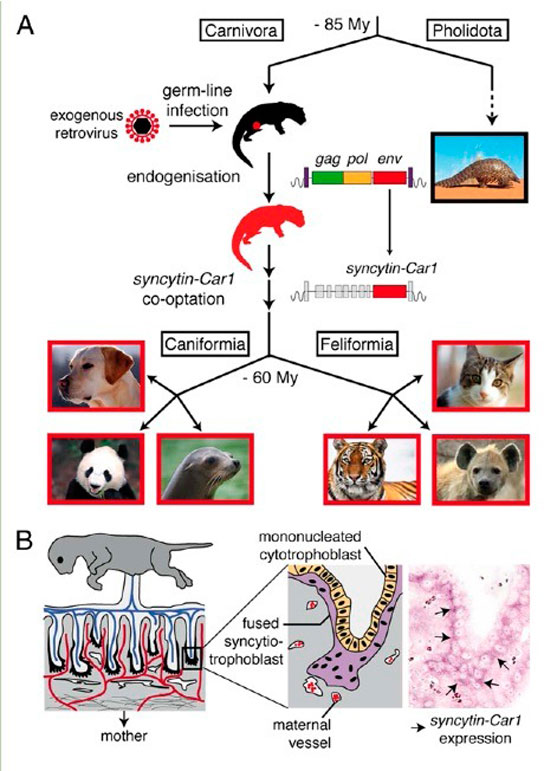
In 2005, syncytin was discovered in mice, but it’s different from the one found in primates. Since then, it’s also been discovered in rabbits. The latest version has been discovered in dogs, cats, pandas, hyenas, and other mammals that belong to the taxonomic order Carnivora.
After the ancestors of Carnivora split from mammals, about 85 million years ago, they also got infected with a virus, which is called syncytin-Car-1. On at least 6 different occasions, viruses have gotten snagged into mammalian hosts and have carried out the same function: building placentas. Pigs and horses don’t have this open layer in their placenta, which could imply that they’ve never gotten sick with the right virus.
Never miss a breakthrough: Join the SciTechDaily newsletter.
Follow us on Google and Google News.
4 Comments
Even human sperm is virus like in as much as it clings to an egg through its protein coat and delivers its DNA into it. Here it combines with the other DNA strand to share its job unlike ordinary viruses which caaptivates the host DNA double strand and dictates its production job. Umbilical cord should cling on to the infant from outerside of mother`s uterus in order to supply antibodies and nutrients alone from her blood. No blood mixing is allowed here. This action is that of virus only and the gene expression should come from virus. Moreover virus is primodial to all living beings being neither biology nor chemistry. A small amino acid DNA with a protein coat of its make adapted to its survival. No food is necessary. No breathing is necessary. Evolution from chemistry to biology stage stars from viruses. Our human genome will definitely have in its archives the formula from virus, aquatics, amphibians, aves, and chordata upto the present form. But only thing is that they will be non-functional and some functional and embryological apopstasis will weed out the unwanted organs. Appropriate switches for putting on and on different genes are embedded in the junk DNA probably. Thank You.
Last paragraph. Sentence that starts with “Evolution from chemistry to biology …” Did you mean to say starts or begins instead of “stars”?
Sorry. This was supposed to be a reply to the posting above
Viruses are harmful, yet that is how the placenta fused to the wall. Soo.. what was the way humans were originally ‘made’ to reproduce? How did a virus change the birth process and pollute our DNA apparently at Chromosome 21? Syncytin has been linked to harmful birth defects. Something obviously is amiss!