
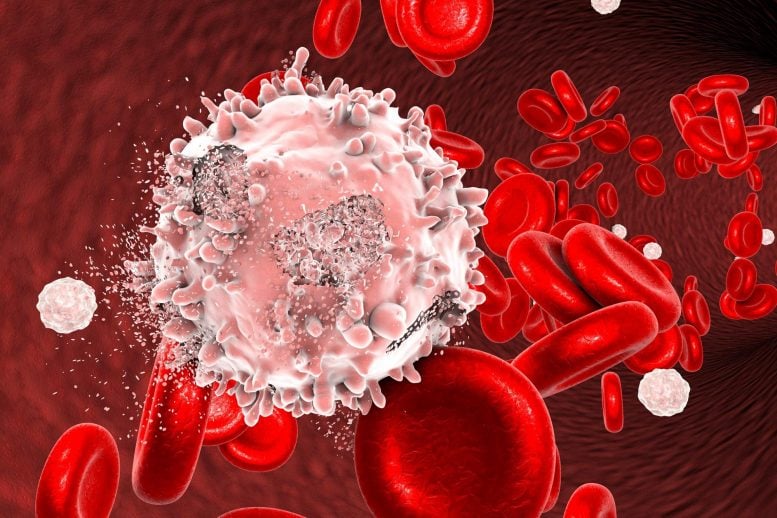
Researchers linked the TCL1A gene to clonal expansion in blood stem cells, identifying it as a potential target for blood cancer prevention.
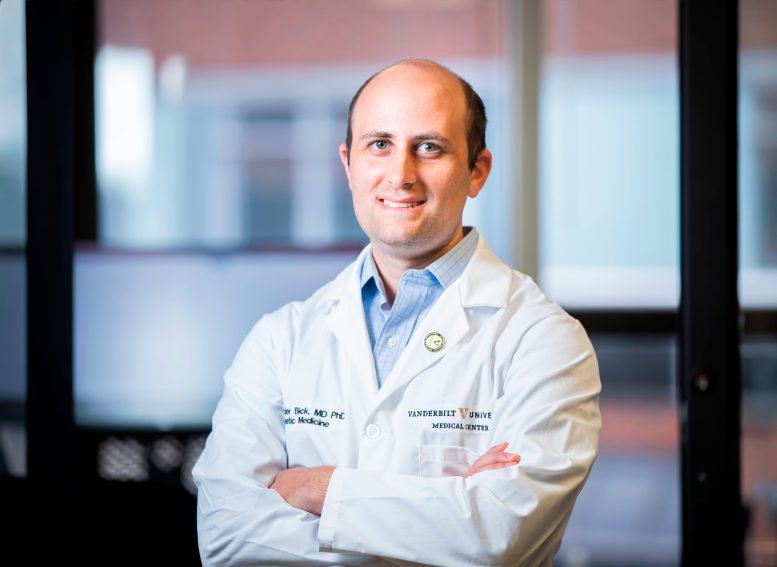
A team of global biomedical researchers, co-led by Alexander Bick, MD, Ph.D. of Vanderbilt University Medical Center, has found a new method for assessing the growth rate of of precancerous clones of blood stem cells. This breakthrough has the potential to assist physicians in reducing their patients’ probability of developing blood cancer in the future.
The technique, called PACER, resulted in the discovery of a gene responsible for driving clonal expansion. The study, published in Nature, indicates that drugs aimed at this gene, TCL1A, may have the ability to curb clonal growth and related cancers.
“We think that TCL1A is a new important drug target for preventing blood cancer,” said Bick, the study’s co-corresponding author with Stanford University’s Siddhartha Jaiswal, MD, Ph.D.
TCL1A in Clonal Expansion
More than 10% of older adults develop somatic (non-inherited) mutations in blood stem cells that can trigger explosive, clonal expansions of abnormal cells, increasing the risk for blood cancer and cardiovascular disease.
Since arriving at VUMC in 2020, Bick, assistant professor of Medicine in the Division of Genetic Medicine and director of the Vanderbilt Genomics and Therapeutics Clinic, has contributed to more than 30 scientific papers that are revealing the mysteries of clonal growth (hematopoiesis).
With age, dividing cells in the body acquire mutations. Most of these mutations are innocuous “passenger” mutations. But sometimes, a mutation occurs that drives the development of a clone and ultimately causes cancer.
Prior to this study, scientists would measure clonal growth rate by comparing blood samples taken decades apart. Bick and his colleagues figured out a way to determine the growth rate from a single time point, by counting the number of passenger mutations.
“You can think of passenger mutations like rings on a tree,” Bick said. “The more rings a tree has, the older it is. If we know how old the clone is (how long ago it was born) and how big it is (what percentage of blood it takes up), we can estimate the growth rate.”
The PACER technique for determining the “passenger-approximated clonal expansion rate” was applied to more than 5,000 individuals who had acquired specific, cancer-associated driver mutations in their blood stem cells, called “clonal hematopoiesis of indeterminate potential” or CHIP, but who did not have blood cancer.
Using a genome-wide association study, the investigators then looked for genetic variations that were associated with different clonal growth rates. To their surprise, they discovered that TCL1A, a gene that had not previously been implicated in blood stem cell biology, was a major driver of clonal expansion when activated.
Genetic Variants That Slow Clonal Expansion
The researchers also found that a commonly inherited variant of the TCL1A promoter, the DNA region which normally initiates transcription (and thus activation) of the gene, was associated with a slower clonal expansion rate and a markedly reduced prevalence of several driver mutations in CHIP, the second step in the development of blood cancer.
Experimental studies demonstrated that the variant suppresses gene activation.
“Some people have a mutation that prevents TCL1A from being turned on, which protects them from both faster clone growth and from blood cancer,” Bick said. That’s what makes the gene so interesting as a potential drug target.
The research is continuing with the hope of identifying additional important pathways relevant to precancerous growth in other tissues as well as blood, he added.
Reference: “Aberrant activation of TCL1A promotes stem cell expansion in clonal haematopoiesis” by Joshua S. Weinstock, Jayakrishnan Gopakumar, Bala Bharathi Burugula, Md Mesbah Uddin, Nikolaus Jahn, Julia A. Belk, Hind Bouzid, Bence Daniel, Zhuang Miao, Nghi Ly, Taralynn M. Mack, Sofia E. Luna, Katherine P. Prothro, Shaneice R. Mitchell, Cecelia A. Laurie, Jai G. Broome, Kent D. Taylor, Xiuqing Guo, Moritz F. Sinner, Aenne S. von Falkenhausen, Stefan Kääb, Alan R. Shuldiner, Jeffrey R. O’Connell, Joshua P. Lewis, Eric Boerwinkle, Kathleen C. Barnes, Nathalie Chami, Eimear E. Kenny, Ruth J. F. Loos, Myriam Fornage, Lifang Hou, Donald M. Lloyd-Jones, Susan Redline, Brian E. Cade, Bruce M. Psaty, Joshua C. Bis, Jennifer A. Brody, Edwin K. Silverman, Jeong H. Yun, Dandi Qiao, Nicholette D. Palmer, Barry I. Freedman, Donald W. Bowden, Michael H. Cho, Dawn L. DeMeo, Ramachandran S. Vasan, Lisa R. Yanek, Lewis C. Becker, Sharon L. R. Kardia, Patricia A. Peyser, Jiang He, Michiel Rienstra, Pim Van der Harst, Robert Kaplan, Susan R. Heckbert, Nicholas L. Smith, Kerri L. Wiggins, Donna K. Arnett, Marguerite R. Irvin, Hemant Tiwari, Michael J. Cutler, Stacey Knight, J. Brent Muhlestein, Adolfo Correa, Laura M. Raffield, Yan Gao, Mariza de Andrade, Jerome I. Rotter, Stephen S. Rich, Russell P. Tracy, Barbara A. Konkle, Jill M. Johnsen, Marsha M. Wheeler, J. Gustav Smith, Olle Melander, Peter M. Nilsson, Brian S. Custer, Ravindranath Duggirala, Joanne E. Curran, John Blangero, Stephen McGarvey, L. Keoki Williams, Shujie Xiao, Mao Yang, C. Charles Gu, Yii-Der Ida Chen, Wen-Jane Lee, Gregory M. Marcus, John P. Kane, Clive R. Pullinger, M. Benjamin Shoemaker, Dawood Darbar, Dan M. Roden, Christine Albert, Charles Kooperberg, Ying Zhou, JoAnn E. Manson, Pinkal Desai, Andrew D. Johnson, Rasika A. Mathias, NHLBI Trans-Omics for Precision Medicine (TOPMed) Consortium, Thomas W. Blackwell, Goncalo R. Abecasis, Albert V. Smith, Hyun M. Kang, Ansuman T. Satpathy, Pradeep Natarajan, Jacob O. Kitzman, Eric A. Whitsel, Alexander P. Reiner, Alexander G. Bick and Siddhartha Jaiswal, 12 April 2023, Nature.
DOI: 10.1038/s41586-023-05806-1
Researchers from more than 50 institutions across the United States, as well as Germany, Sweden, and the Netherlands participated in the study. Other VUMC co-authors were Taralyn Mack, Benjamin Shoemaker, MD, MSCI, and Dan Roden, MD.
The research at VUMC is supported by National Institutes of Health grant OD029586, a Burroughs Wellcome Fund Career Award for Medical Scientists, the E.P. Evans Foundation & RUNX1 Research Program, a Pew-Stewart Scholar for Cancer Research Award, the VUMC Brock Family Endowment, and a Young Ambassador Award from the Vanderbilt-Ingram Cancer Center.
Never miss a breakthrough: Join the SciTechDaily newsletter.
Follow us on Google and Google News.