
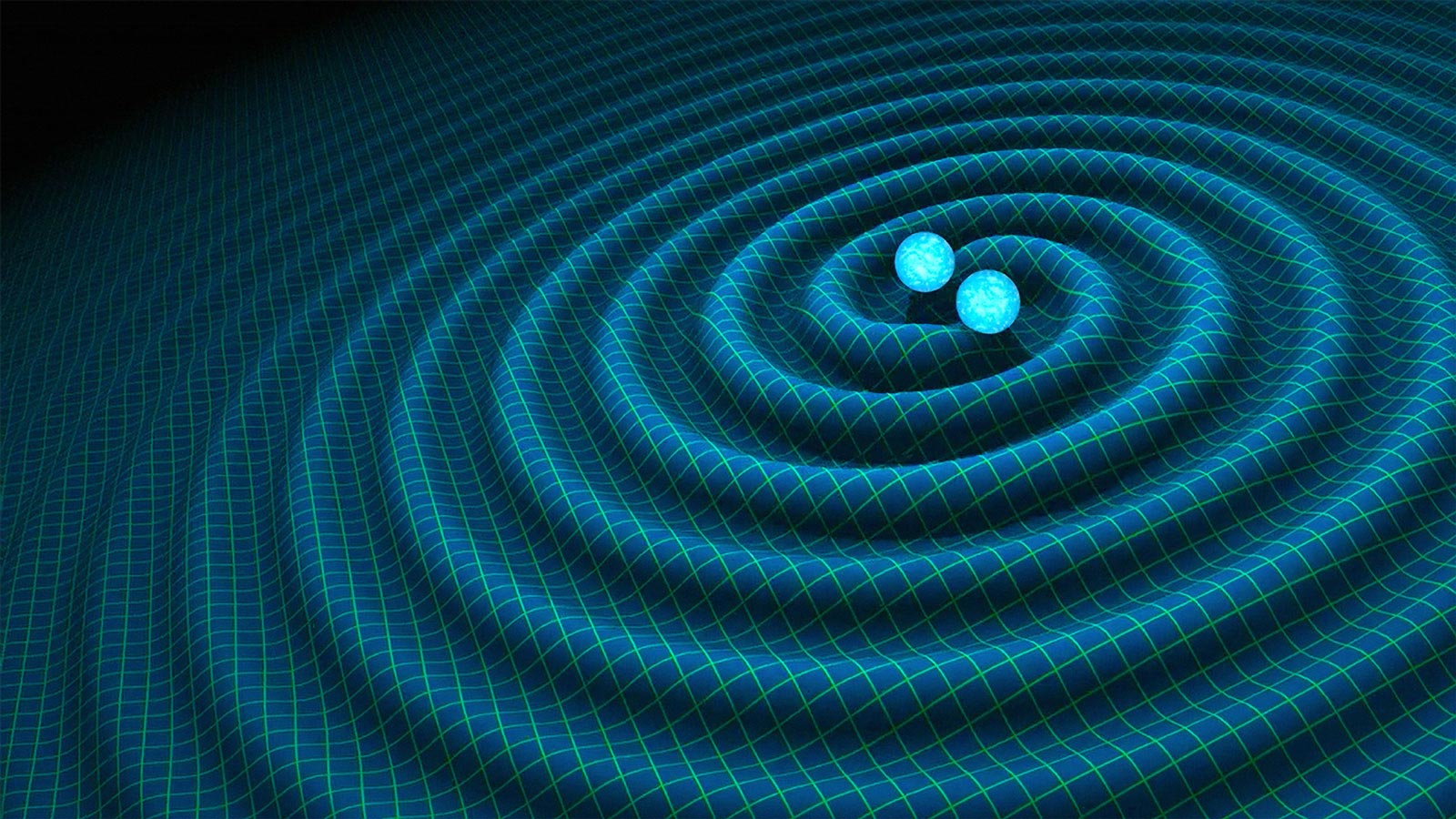
A new technology developed at UWA combines phonons and photons to enhance gravitational-wave detector sensitivity, enabling the observation of previously undetectable cosmic events.
A new technology that can improve gravitational-wave detectors, one of the most sensitive instruments used by scientific researchers, has been pioneered by physicists at the University of Western Australia (UWA) in collaboration with an international team of researchers.
The new technology allows the world’s existing gravitational wave detectors to achieve a sensitivity that was previously thought only to be achievable by building much bigger detectors.
Merging Phonons and Photons for Enhanced Sensitivity
The paper, published in Communications Physics, was led by the ARC Centre of Excellence for Gravitational Wave Discovery (OzGrav) at UWA, in collaboration with the ARC Centre of Excellence for Engineered Quantum Systems, the Niels Bohr Institute in Copenhagen, and the California Institute of Technology in Pasadena.
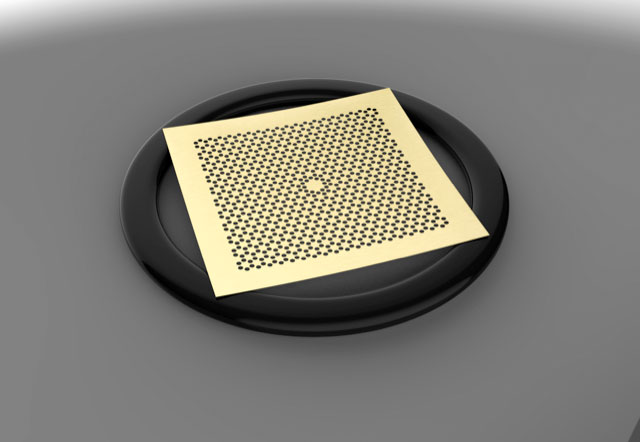
Emeritus Professor David Blair, from UWA’s Department of Physics, said the technology merged quantum particles of sound vibration called phonons with photons of laser light, to create a new type of amplification in which the merged particles cycled back and forth billions of times without being lost.
“More than a hundred years ago Einstein proved that light comes as little energy packets, which we now call photons,” Emeritus Professor Blair said.
One of the most sophisticated applications of photons are gravitational-wave detectors, which allow physicists to observe ripples in space and time caused by cosmic collisions.
“Phonons are much trickier to harness individually in their quantum form because they’re usually swamped by vast numbers of random phonons called thermal background.”
Emeritus Professor David Blair
“Two years after Einstein’s prediction of photons, he proposed that heat and sound also come in energy packets, which we now call phonons,” Emeritus Professor Blair said.
Harnessing Phonons to Amplify Gravitational Waves
“Phonons are much trickier to harness individually in their quantum form because they’re usually swamped by vast numbers of random phonons called thermal background.”
Emeritus Professor Blair was awarded the prestigious Prime Minister’s Prize for Science in 2020 for his contribution to the first detection of gravitational waves.
Lead author Dr. Michael Page said the trick was to combine phonons and photons together in such a way that a broad range of gravitational wave frequencies could be amplified simultaneously.
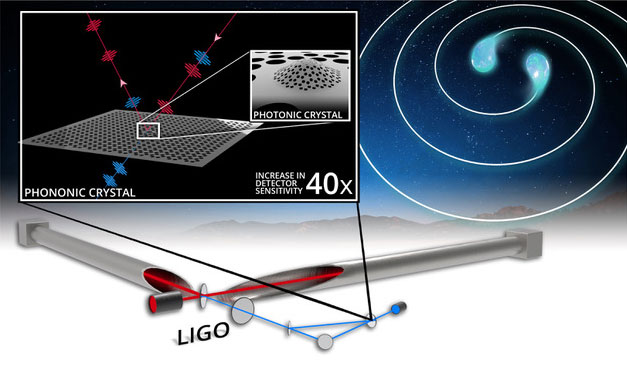
“The new breakthrough will let physicists observe the most extreme and concentrated matter in the known universe as it collapses into a black hole, which happens when two neutron stars collide,” Dr. Page said.
Emeritus Professor David Blair said the waveforms sounded like a brief scream that was pitched too high for current detectors to hear.
“Our technology will make those waveforms audible, and will also reveal whether the neutrons in neutron stars get split up into their constituents called quarks when they are in this extreme state,” Emeritus Professor Blair said.
“The most exciting thing about seeing nuclear matter turn into a black hole is that the process is like the reverse of the Big Bang that created the universe. Observing this happen will be like watching a movie of the Big Bang played backward.”
Emeritus Professor Blair said while the technology did not represent an instant solution to improving gravitational-wave detectors it offers a low-cost route to improvement.
Reference: “Gravitational wave detectors with broadband high frequency sensitivity” by Michael A. Page, Maxim Goryachev, Haixing Miao, Yanbei Chen, Yiqiu Ma, David Mason, Massimiliano Rossi, Carl D. Blair, Li Ju, David G. Blair, Albert Schliesser, Michael E. Tobar and Chunnong Zhao, 15 February 2021, Communications Physics.
DOI: 10.1038/s42005-021-00526-2
Never miss a breakthrough: Join the SciTechDaily newsletter.
Follow us on Google and Google News.
1 Comment
Përshëndetje! Valët gravitacionale nuk ekzistojnë, sepse në fizikë, vala shpërndahet nga veprimi i një mase mbi një masë tjetër. Për shëmbull, guri i hedhur në ujë, shpërndan valë rrethore të dukëshme, po kështu edhe me lëndët e tjera në ajër. Kjo është vala. Kurse ato që ne quajmë valë gravitacionale, tërhiqen midis masave pa u shpërndarë, por duke u mbledhur rreth aksit që bashkon dy lëndë, pra nuk shpërndahen si valët fizike. Atëhere pse i quajmë valë? Sipas Teorisë Re quhet fleshi gravitacional. Ai është funksion i lëndës së zezë të shpërndarë në kozmos, që ndodhet edhe pran nesh. Fleshi gravitacinal, i pa studjuar akoma, ka densitet shumë të lartë në aksin e tij që e zvogëlon shpejt në distancë nga aksi deri në i gaztë. Në aks, densiteti është disa fish më i madh se densiteti i lëndës më të rëndë që ndodhet në Tokë. Ai na sjellë shumë dëme në jetën e përditëshme. Ai rëzon avionat, raketat kozmike, trenat, ndërtesat, digat etj. Këto dëme janë enigmatike dhe faji u hidhet defekteve tenike, apo njerëzve si pilotat, konstruktorët etj. Është e pa pranushme që kaq shumë raketa kozmike që kanë pësuar katastrofë të kenë pasur defekte në trupin e tyre, duke ditur sofistikimin teknik të ndërtimit të tyre. Me këtë Teori në të adhmen do eleminohen katastrofat e raketave dhe avionave. Tema vazhdon edhe me shëmbuj që para – llogariten, por edhe pas llogariten pamvarësisht nga koha që ka kaluar. Vazhdon… Kështu që valët gravitacionale nuk ekzistojnë. Ekziston vetëm fleshi gravitacional. Njutoni ynë i madh, i emërtoi gabim ato si valë gravitacionale. Edhe ata që pretendojnë se i kanë zbuluar ato, ka mundësi të kenë interpretuar keq eksperimentin sepse valët gravitacionale nuk ekzistojnë, ekziston vetëm fleshi gravitacional që nuk ka aspak ngjashmëri me valën.
Frederik Bilca 2.3.2022 (Albanian)
Email: [email protected]