
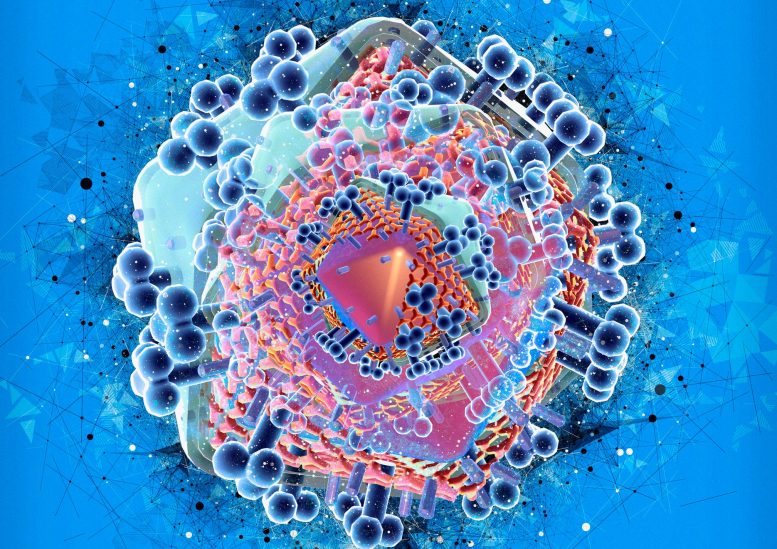
University of Otago researchers have discovered how viruses that specifically kill bacteria can outwit bacteria by hiding from their defenses, findings which are important for the development of new antimicrobials based on viruses and provide a significant advance in biological knowledge.
Lead researcher Professor Peter Fineran explains that the rise in multi-drug resistant bacteria is leading to the development of alternative therapeutics, including viruses that specifically kill bacteria, called bacteriophages, often referred to as “phages.” However, bacteria can become resistant to phages.

Phages are the most abundant biological entities on the planet and are important for global ecosystems, but they can also be used to kill bacterial pathogens. To defend themselves from the phage invasion, bacteria have developed CRISPR-Cas defense systems — immune systems within the bacteria. But the phages have come up with many ways to avoid these bacterial defenses.
In the study published on December 9, 2019, in Nature Microbiology, the team at the University of Otago discovered a widespread method used by phages to hide from bacterial defenses. They discovered a “jumbo” phage which, as the name suggests, is very big, with hundreds of genes. This phage is not recognized by CRISPR-Cas defenses that would normally cut up the genetic DNA instructions to make many new phages.
Ph.D. student in the Department of Microbiology and Immunology and first author of the study, Lucia Malone says it made the researchers question how this phage escapes recognition.
“We had molecular and genetic evidence for what was happening, but we really needed to see directly inside these tiny bacteria, which if 100 lined up side-by-side would be the width of a human hair,” Ms. Malone says.
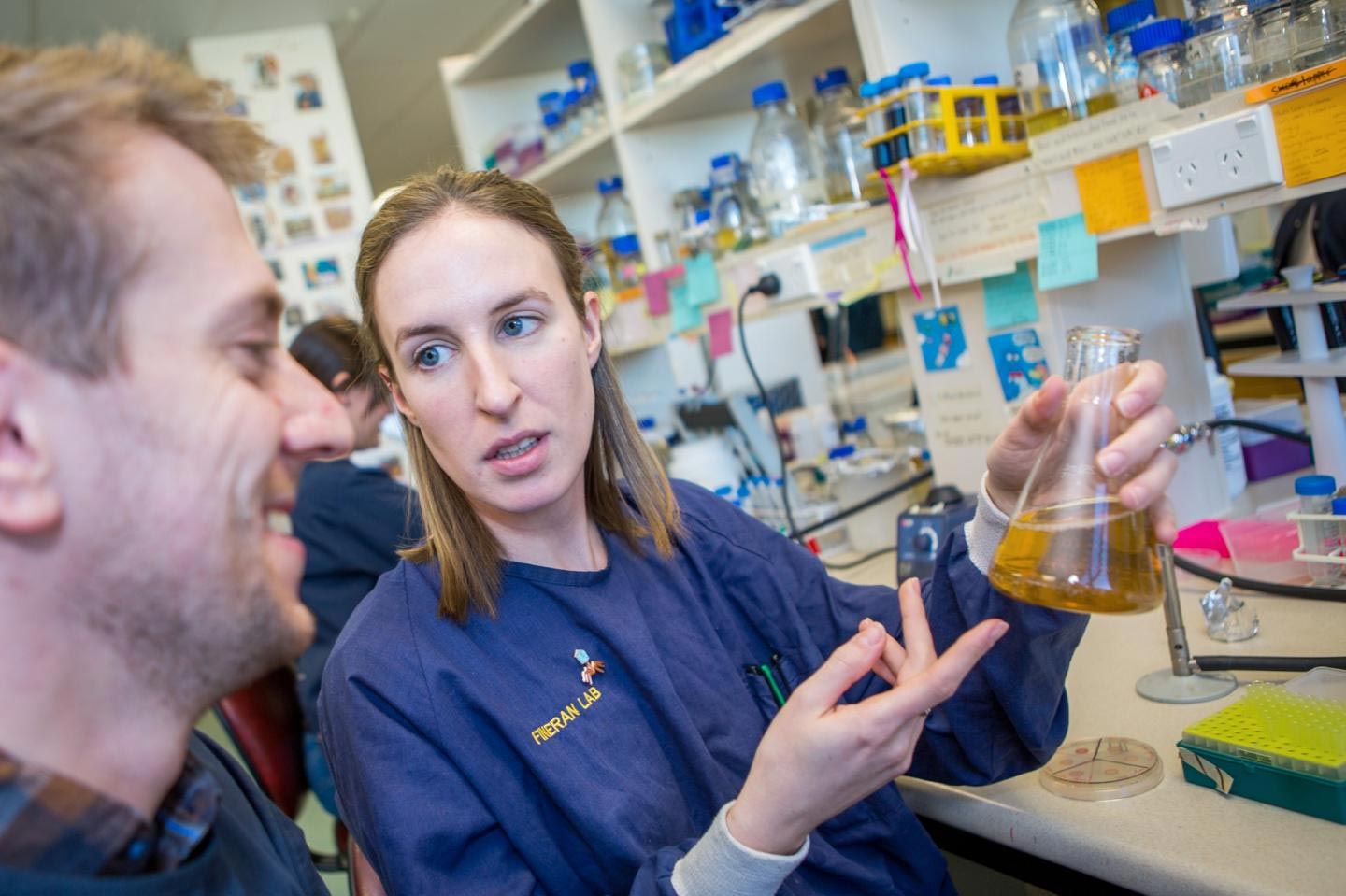
This was made possible using a new spinning disk confocal microscope for high-resolution imaging of live cells — the only one with this capability in New Zealand — that was recently set up by Dr. Laura Gumy, a new group leader at the University of Otago.
“When phages infected the bacteria, we could see their DNA was encased by a physical ‘shield’ and hidden from the CRISPR-Cas defense systems that couldn’t gain access,” Dr. Gumy explains.
However, bacteria have another trick up their sleeve. To take over the host, the phages must produce RNA messages that leave this protective compartment. “This is the Achilles heel of these phages and can be destroyed by a special group of CRISPR-Cas defenses that recognize RNA messages,” Ms. Malone says.
Dr. Fineran explains the study broadens the knowledge of intricate phage-host interactions and demonstrates that “jumbo” phages are less susceptible to bacterial defense systems than some other phages.
“From a biological perspective, our results provide exciting new insights into how phages evade bacterial defense systems.
“This is important because the rise of the multi-drug resistant bacteria is an issue of global concern, which has led to a renewed interest in using phages as anti-bacterials and jumbo phages may provide excellent therapeutics.”
Reference: “A jumbo phage that forms a nucleus-like structure evades CRISPR–Cas DNA targeting but is vulnerable to type III RNA-based immunity” by Lucia M. Malone, Suzanne L. Warring, Simon A. Jackson, Carolin Warnecke, Paul P. Gardner, Laura F. Gumy and Peter C. Fineran, 9 December 2019, Nature Microbiology.
DOI: 10.1038/s41564-019-0612-5
Never miss a breakthrough: Join the SciTechDaily newsletter.
Follow us on Google and Google News.
2 Comments
hi
This discovery made by the University of Otago researchers can revolutionize the medical world. Here you can visit https://assignment-help-au.com website which is quite helpful in the preparation of assignments. Being a student of Health physics, I am very much excited about that discovery and its advantages.