

A new model identifies nitrogen as key to helium accumulation, aiding the search for untapped reserves amid a helium shortage.
- Helium – essential for many medical and industrial processes – is in critically short supply worldwide. Production is also associated with significant carbon emissions, contributing to climate change.
- This study provides a new concept in gas field formation to explain why, in rare places, helium accumulates naturally in high concentrations just beneath the Earth’s surface.
- The findings could help locate new reservoirs of carbon-free helium – and potentially also hydrogen.
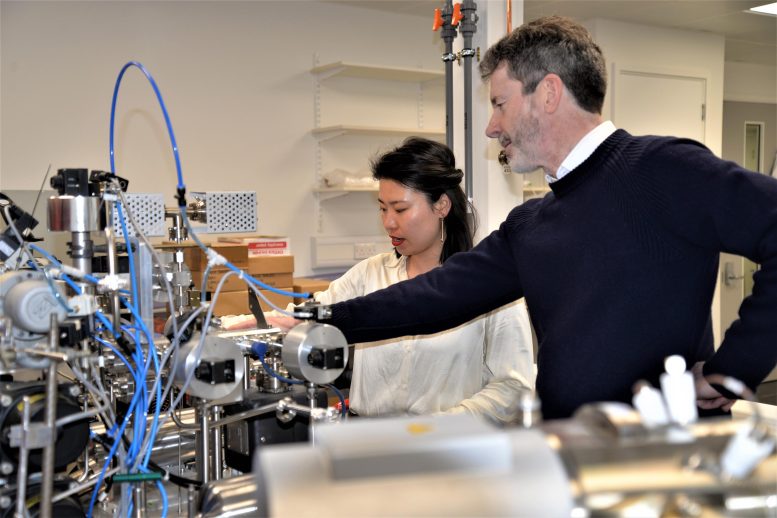
Research led by the University of Oxford could help overturn the current supply crisis of helium, a vital societal resource. The study proposes a new model to account for the existence of previously unexplained helium-rich reservoirs. The findings, published today (March 1, 2023) in the journal Nature, could help locate untapped reservoirs of accessible helium.
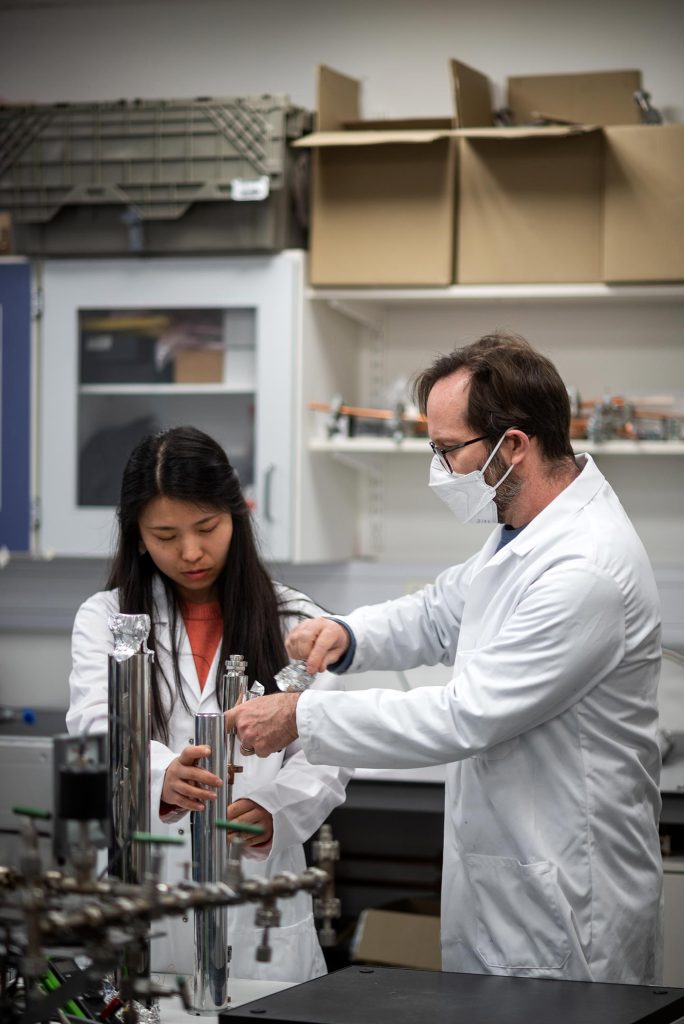
Dr. Anran Cheng (Department of Earth Sciences, University of Oxford), lead author of the study, said: “Our model shows the importance of factoring in the high diffusivity of helium and the long timescales needed to accumulate significant gas quantities, and the fact that the entire geological system acts dynamically to affect the process. This model provides a new perspective to help identify the environments that slow helium gases down enough to accumulate in commercial amounts.”
Nitrogen’s Role in Trapping Helium
Where rare helium-rich underground gas fields have been found, they always occur alongside high concentrations of nitrogen gas. Until now, there has been no explanation for this. For the first time, this new study, which also involved the University of Toronto and Durham University, provides an answer.
The research team built a model to account for these helium-rich deposits by (for the first time) factoring in the presence of nitrogen, which is also released from the deep crust along with helium. The authors identified the geological conditions where the concentration of nitrogen becomes high enough to create gas bubbles in the rock pore space.
Such a process can take hundreds of millions of years, but when it happens the associated helium escapes from the water into the gas bubbles. These bubbles rise, because of buoyancy, towards the surface until they hit a rock type that doesn’t allow the bubbles through. According to the model, the helium-rich gas bubbles then collect beneath the seal and form a substantial gas field. The nitrogen and helium-rich gases contain no methane or carbon dioxide so tapping them does not release carbon emissions.

When the researchers applied the model to an example system (Williston Basin, North America) using expected nitrogen concentration values, the model predicted the observed nitrogen/helium proportions in real life. The model could help identify areas likely to contain similar helium-rich deposits.
Helium’s Vital Role and the Global Shortage Crisis
Helium is a $6 billion (£5.3 billion) market, with the gas being essential for the operation of MRI scanners, computer chips and fiber optic manufacture, and state-of-the-art nuclear and cryogenic applications. A current global shortage has pushed supplies almost to a crisis point, with prices skyrocketing in recent years. The situation has been escalated by the Ukraine war, since this ruled out helium being supplied from the new Russian Amur plant, planned to supply 35% of the global helium demand.
In addition, almost all helium today is a by-product of methane or carbon dioxide natural gas production. This carries a significant carbon footprint and hinders ambitions to achieve net-zero carbon emissions by 2050.
Together, these reasons mean that identifying alternative, carbon-free sources of natural helium has become critically important.
Hydrogen’s Potential as a Byproduct of Helium Systems
The model also suggests regions where large amounts of hydrogen gas may accumulate underground, since the radioactivity that generates helium also splits water to form hydrogen. With a global market of $135 billion, hydrogen is used to create fertilizer and to produce many compounds essential for the food, petrochemical, and pharmaceutical industries. Virtually all hydrogen gas is currently produced from coal and natural gas (methane), and this alone accounts for 2.3% of global CO2 emissions. Hydrogen-rich underground deposits could provide an alternative carbon-free source.
Prof Chris Ballentine (Department of Earth Sciences, University of Oxford), co-author for the study, notes: “The amount of hydrogen generated by the continental crust over the last 1 billion years could power society’s energy needs for over 100,000 years.”
Prof Barbara Sherwood Lollar (Department of Earth Sciences, University of Toronto), co-author, adds: “Much of this hydrogen has escaped, been chemically reacted or used up by subsurface microbes – but we know from studying the gas in deep locations in the subsurface around the world that some of this hydrogen is indeed stored underground in significant quantities.”
Prof Jon Gluyas: (Durham Energy Institute/Department of Earth Sciences, Durham University), co-author, states “This new understanding of helium accumulation provides us with the critical start of a recipe to identify where significant amounts of geological hydrogen, as well as helium, might still be found.”
Reference: “Primary N2–He gas field formation in intracratonic sedimentary basins” by Anran Cheng, Barbara Sherwood Lollar, Jon G. Gluyas and Chris J. Ballentine, 1 March 2023, Nature.
DOI: 10.1038/s41586-022-05659-0
Never miss a breakthrough: Join the SciTechDaily newsletter.
Follow us on Google and Google News.