
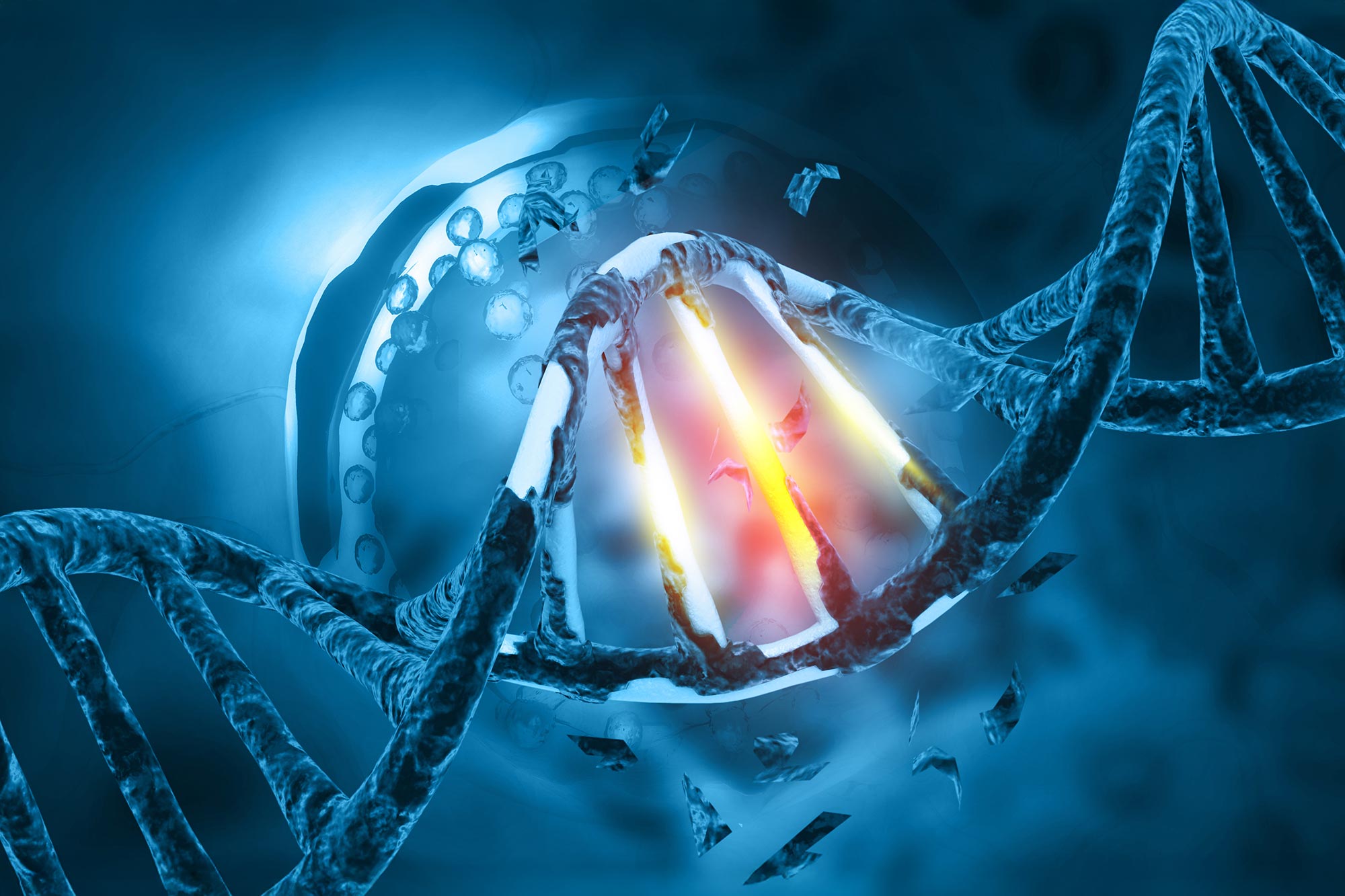
A new study reports that the locations where genes begin are particularly prone to mutations, and these genetic changes can be inherited by later generations.
Researchers have identified previously overlooked areas of the human genome that are especially likely to accumulate mutations. These vulnerable sections of DNA can be inherited by future generations, making them highly relevant for understanding both genetics and disease.
These regions sit at the beginnings of genes, known as transcription start sites, where the cell begins converting DNA into RNA. According to a study released in Nature Communications, the first 100 base pairs after a gene’s starting point show a 35 percent higher chance of mutation than expected by random chance.
“These sequences are extremely prone to mutations and rank among the most functionally important regions in the entire human genome, together with protein-coding sequences,” explains Dr. Donate Weghorn, corresponding author of the study and researcher at the Centre for Genomic Regulation in Barcelona.
The research also shows that many of these additional mutations emerge right after conception during the earliest rounds of cell division in the embryo. These alterations, called mosaic mutations, appear in only some cells rather than all of them, which has contributed to the difficulty of detecting this hotspot until now.
A parent may carry mosaic mutations that play a role in disease without ever showing symptoms, since the changes occur in only certain tissues. Despite this, the mutations can still be transmitted through egg or sperm cells. When that happens, the resulting child carries the mutation in every cell, which may lead to illness.
A Large-Scale Survey of Human Genomes
To uncover this pattern, the research team examined transcription start sites in 150,000 genomes from the UK Biobank and another 75,000 from the Genome Aggregation Database (gnomAD). These findings were then compared with data from eleven family studies that included detailed information about mosaic mutations.
Their analysis revealed that many gene start sites throughout the human genome carry more mutations than expected. A closer review showed that the most affected regions belong to genes involved in cancer, brain activity, and limb development problems.
The mutations are likely to be harmful. The study found a strong excess of mutations near start sites when looking at extremely rare variants, which are normally very recent mutations. That excess shrank when looking at older, more common variants, suggesting natural selection is filtering the mutations out. In other words, families with mutations in gene starting sites, particularly those linked to cancer and brain function, are less likely to pass them on. Over generations, the mutations do not stick around.
Avoiding false conclusions and finding missed clues
The study can help avoid false conclusions from mutational models. These are tools which help geneticists determine how many mutations are to be expected in specific regions of the genome if nothing special is going on. Clinically, that baseline is used to determine which variants should be paid attention to and which deprioritized.
Knowing that gene starting points are natural mutational hotspots means the true baseline in these regions is higher than previously thought and models need to be recalibrated to take that into account.
“If a model doesn’t know this region is naturally mutation-rich, it might expect, say, 10 mutations but observe 50. If the correct baseline is 80, then 50 means fewer than expected and is a sign harmful changes are being removed by natural selection. You would completely miss the importance of that gene,” explains Dr. Weghorn.
The study also has implications for genetic studies which only look for mutations present in the child and completely absent in parents. This works well for mutations that are present in every cell, but not for mosaic mutations which end up in a patchwork of different tissues. These studies are filtering out mosaic mutations and inadvertently losing important information about potential contributors to disease.
“There is a blind spot in these studies. To get around this, one could look at the co-occurrence patterns of mutations to help detect the presence of mosaic mutations. Or look at the data again and revisit discarded mutations that occur near the transcription starts of genes most strongly affected by the hotspot,” says Dr. Weghorn.
A new source of mutations
The process of transcribing DNA into RNA is hectic. The study explains that the mutational hotspot exists because the molecular machinery involved often pauses and restarts near the start line. It can even fire in both directions. At the same time, short-lived structures can form that briefly leave one strand of DNA exposed to possible damage.
All of this, the authors argue, makes transcription start sites more prone to mutations during the rapid cell divisions that follow conception. Cells can usually repair these alterations, but under the pressure of needing to grow fast, cells leave some mutations unpatched, like scars on the human genome.
The discovery adds a previously missing piece to how mutations arise in the first place. The obvious culprits, like errors during DNA replication or damage from ultraviolet rays, have been known about for decades. “Finding a new source of mutations, particularly those affecting the human germline, doesn’t happen often,” concludes Dr. Weghorn.
Reference: “Transcription start sites experience a high influx of heritable variants fueled by early development” by Miguel Cortés Guzmán, David Castellano, Clàudia Serrano Colomé, Vladimir Seplyarskiy and Donate Weghorn, 26 November 2025, Nature Communications.
DOI: 10.1038/s41467-025-66201-0
Never miss a breakthrough: Join the SciTechDaily newsletter.
Follow us on Google and Google News.