
Close Menu
    Facebook X (Twitter) Instagram
    SciTechDaily
    • Biology
    • Chemistry
    • Earth
    • Health
    • Physics
    • Science
    • Space
    • Technology
    Facebook X (Twitter) Pinterest YouTube RSS
    SciTechDaily
    Home»Science»Newly Discovered Prehistoric Armored Dinosaur May Have Been Able to Dig
    Science

    Newly Discovered Prehistoric Armored Dinosaur May Have Been Able to Dig

    By Scientific ReportsJuly 1, 2021No Comments2 Mins Read
    Facebook Twitter Pinterest Telegram LinkedIn WhatsApp Email Reddit
    Share
    Facebook Twitter LinkedIn Pinterest Telegram Email Reddit
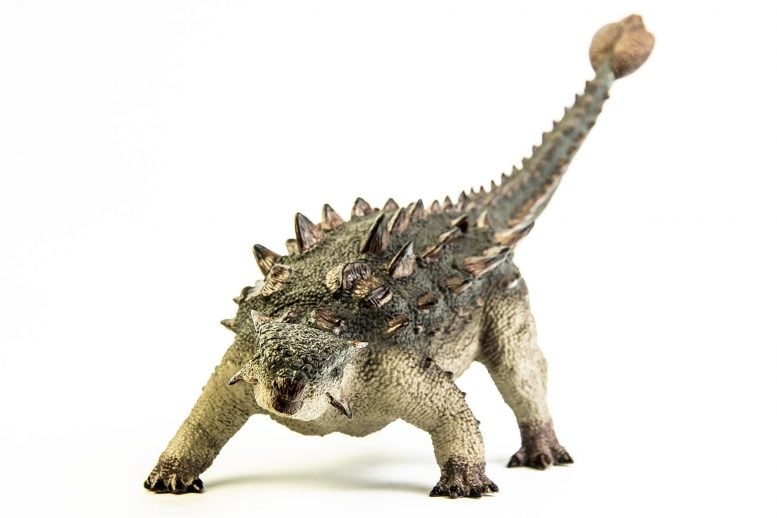
    Ankylosaurus Illustration
    Ankylosaurus Illustration

    A Late Cretaceous ankylosaurid fossil reveals traits adapted for digging, hinting that digging for food, water, or protection may have been widespread in this dinosaur family.

    Newly excavated skeletal remains of an ankylosaurid — a large armored herbivore that lived during the Cretaceous Period — may indicate that members of this family of dinosaurs were able to dig, according to a study published in Scientific Reports. The specimen, known as MPC-D 100/1359, may further our understanding of ankylosaurid behavior during the Late Cretaceous (84-72 million years ago).

    Yuong-Nam Lee and colleagues excavated the skeletal elements of MPC-D 100/1359 from a deposit of the Baruungoyot Formation in the southern Gobi Desert, Mongolia, where it was discovered in the 1970s. The authors suggest that several anatomical features of MPC-D 100/1359 could indicate that the ankylosaurid was adapted for digging. The bones in its forefeet are arranged in a shallow arc, which could have enabled it to dig soft earth. The fusion of several vertebrae and the decreased number of bones in its hindfeet, compared to other dinosaurs, may have helped anchor MPC-D 100/1359 when digging or moving its tail. The body shape of MPC-D 100/1359, which is wider in the middle and narrower at the front and rear, may have helped its body to remain straight when digging.

    The authors speculate that MPC-D 100/1359, may have dug the ground in order to reach water, minerals, or roots for food and may even have crouched in shallows pits to protect its soft underside from predators. As similar anatomical features have been reported in other ankylosaurids, the findings suggest that the ability to dig may have been common to other members of this family of dinosaurs as well.

    Reference: “A new ankylosaurid skeleton from the Upper Cretaceous Baruungoyot Formation of Mongolia: its implications for ankylosaurid postcranial evolution” by Jin-Young Park, Yuong-Nam Lee, Philip J. Currie, Michael J. Ryan, Phil Bell, Robin Sissons, Eva B. Koppelhus, Rinchen Barsbold, Sungjin Lee and Su-Hwan Kim, 18 March 2021, Scientific Reports.
    DOI: 10.1038/s41598-021-83568-4

    Never miss a breakthrough: Join the SciTechDaily newsletter.
    Follow us on Google and Google News.

    Dinosaurs Evolution Paleontology Scientific Reports
    Share. Facebook Twitter Pinterest LinkedIn Email Reddit

    Related Articles

    MIT’s New Evidence on Dinosaur Evolution

    Tiny Ancient Relative of Dinosaurs and Pterosaurs Discovered in Madagascar

    Chinese Pterodactyl Wings Its Way to England

    Evidence T. Rex’s Long Legs Evolved for Distance, Not Speed Like Previously Thought

    Jurassic Park Got It Wrong: Research Indicates Raptors Didn’t Hunt in Packs

    New Dinosaur Discovered in New Mexico Is One of the Last Known Surviving Raptors

    One-of-a-Kind Dinosaur Specimen Discovered in China Offers View Into Dinosaur-Bird Evolution

    It Seems There Were Too Many Meat-Eating Dinosaurs – This May Be the Explanation

    New Species of Giant Predatory Dinosaur Discovered in Thailand Provides a New Glimpse at Dinosaur Evolution

    Leave A Reply Cancel Reply

    • Facebook
    • Twitter
    • Pinterest
    • YouTube

    Don't Miss a Discovery

    Subscribe for the Latest in Science & Tech!

    Trending News

    First-of-Its-Kind Discovery: Homer’s Iliad Found Embedded in a 1,600-Year-Old Egyptian Mummy

    Beyond Inflammation: Scientists Uncover New Cause of Persistent Rheumatoid Arthritis

    A Simple Molecule Could Unlock Safer, Easier Weight Loss

    Scientists Just Built a Quantum Battery That Charges Almost Instantly

    Researchers Unveil Groundbreaking Sustainable Solution to Vitamin B12 Deficiency

    Millions of People Have Osteopenia Without Realizing It – Here’s What You Need To Know

    Researchers Discover Boosting a Single Protein Helps the Brain Fight Alzheimer’s

    World-First Study Reveals Human Hearts Can Regenerate After a Heart Attack

    Follow SciTechDaily
    • Facebook
    • Twitter
    • YouTube
    • Pinterest
    • Newsletter
    • RSS
    SciTech News
    • Biology News
    • Chemistry News
    • Earth News
    • Health News
    • Physics News
    • Science News
    • Space News
    • Technology News
    Recent Posts
    • Scientists Uncover Hidden Property of Light That Twists Matter Sideways
    • Artemis II Just Proved NASA Is Closer Than Ever to Returning to the Moon
    • NASA Powers Down Voyager 1 Instrument As It Fights To Survive Deep Space
    • Physicists Propose Strange Experiment Where Time Goes Quantum
    • Scientists Flip Immune System “Switch,” Uncover Surprising Path To Stop Gut Inflammation
    Copyright © 1998 - 2026 SciTechDaily. All Rights Reserved.
    • Science News
    • About
    • Contact
    • Editorial Board
    • Privacy Policy
    • Terms of Use

    Type above and press Enter to search. Press Esc to cancel.