
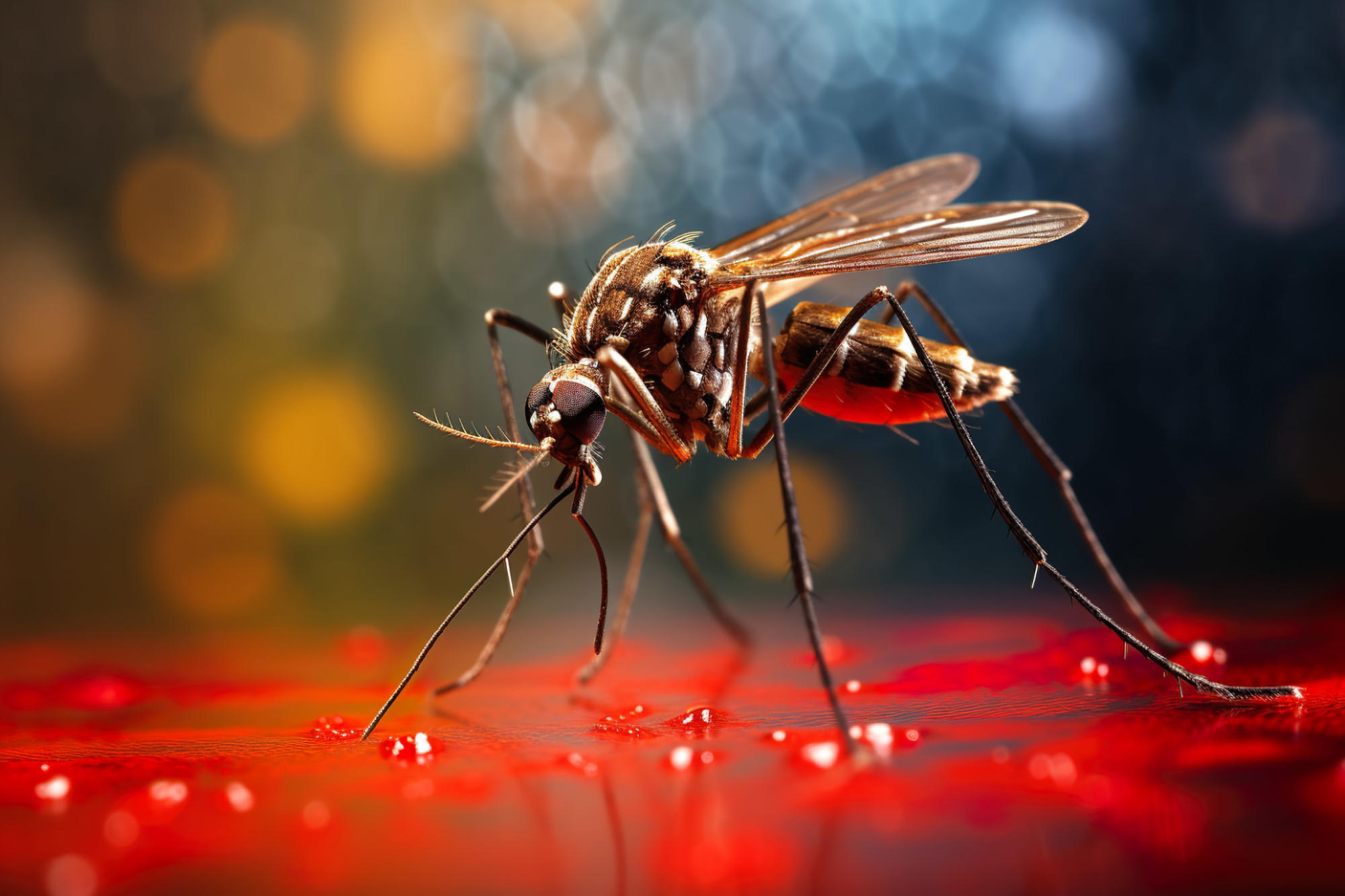
Novel antibodies have the potential to pave the way for the next generation of malaria interventions.
Researchers at the National Institutes of Health (NIH) have identified a novel class of antibodies that target a previously unexplored region of the malaria parasite, potentially paving the way for innovative prevention strategies. The study, published in Science, highlights the promise of these antibodies in the fight against malaria.
Among the newly identified antibodies, the most effective demonstrated protective effects against malaria parasites in animal models. These antibodies stand out because they bind to regions of the parasite not targeted by current malaria vaccines, offering a new avenue for combating this life-threatening disease.
Malaria, caused by Plasmodium parasites transmitted through infected mosquito bites, remains a significant global health threat. While rare in the United States, the disease had a devastating global toll in 2023, with the World Health Organization reporting an estimated 263 million cases and 597,000 deaths.
Of the five species of Plasmodium that cause malaria, Plasmodium falciparum is the most common in African countries where the burden of malaria is largest and where young children account for the majority of malaria deaths. Safe and effective countermeasures are critical for reducing the immense burden of this disease.
Advances in Malaria Interventions
In recent years, new interventions have been developed against malaria, including vaccines that currently are being rolled out for young children in regions where the disease is prevalent. Anti-malarial monoclonal antibodies (mAbs) are another promising new tool that have been shown to be safe and efficacious against infection with P. falciparum in adults and children in early clinical trials.
The anti-malarial mAbs evaluated in trials in malaria-endemic regions target the P. falciparum sporozoite—the life stage of the parasite that is transmitted from mosquitoes to people. By binding to and neutralizing the sporozoite, the mAbs prevent sporozoites from infecting the liver, where they otherwise develop into blood-stage parasites that infect blood cells and cause disease and death.

The most promising anti-malarial mAbs tested in humans to date bind to a protein on the sporozoite surface called the circumsporozoite protein (PfCSP) at locations near to or containing amino acid repeats in a region called the central repeat region. This portion of PfCSP also is included in the two available malaria vaccines. The researchers in the current study aimed to find mAbs that target new sites on the sporozoite surface.
Led by scientists at NIH’s National Institute of Allergy and Infectious Diseases (NIAID), the research team used a novel approach to find new portions—or epitopes—on the sporozoite surface where antibodies bind. They isolated human mAbs produced in response to whole sporozoites, rather than to specific parts of the parasite, and then tested the mAbs to see if they could neutralize sporozoites in a mouse model of malaria. One mAb, named MAD21-101, was found to be the most potent, providing protection against P. falciparum infection in mice.
Implications for Vaccine and Antibody Development
This new mAb binds to an epitope on PfCSP outside of the central repeat region that is conserved—or similar—between different strains of P. falciparum. Notably, the epitope, called pGlu-CSP, is exposed only after a specific step in the development of the sporozoite, but it is widely accessible on the sporozoite surface—a scenario that the researchers say could mean pGlu-CSP would be effective at eliciting a protective immune response if used in a vaccine.
As pGlu-CSP is not included in currently used malaria vaccines, mAbs targeting this epitope are unlikely to interfere with the efficacy of these vaccines if the vaccines and mAbs are co-administered. According to the scientists, this could provide an advantage because this new class of antibodies may be suitable to prevent malaria in at-risk infants who have not yet received a malaria vaccine, but may receive one in the future.
Findings from the study will inform future strategies for the prevention of malaria and may facilitate the development of new antibodies and vaccines against the disease, the researchers indicate. The scientists also note that more research is needed to examine the activity and effectiveness of the newly identified antibody class and epitope, according to their paper. The approach used in this study could also aid the development of a new generation of countermeasures against other pathogens, in addition to malaria.
Reference: “Protective antibodies target cryptic epitope unmasked by cleavage of malaria sporozoite protein” by Cherrelle Dacon, Re’em Moskovitz, Kristian Swearingen, Lais Da Silva Pereira, Yevel Flores-Garcia, Maya Aleshnick, Sachie Kanatani, Barbara Flynn, Alvaro Molina-Cruz, Kurt Wollenberg, Maria Traver, Payton Kirtley, Lauren Purser, Marlon Dillon, Brian Bonilla, Adriano Franco, Samantha Petros, Jake Kritzberg, Courtney Tucker, Gonzalo Gonzalez Paez, Priya Gupta, Melanie J. Shears, Joseph Pazzi, Joshua M. Edgar, Andy A. Teng, Arnel Belmonte, Kyosuke Oda, Safiatou Doumbo, Ludmila Krymskaya, Jeff Skinner, Shanping Li, Suman Ghosal, Kassoum Kayentao, Aissata Ongoiba, Ashley Vaughan, Joseph J. Campo, Boubacar Traore, Carolina Barillas-Mury, Wathsala Wijayalath, Azza Idris, Peter D. Crompton, Photini Sinnis, Brandon K. Wilder, Fidel Zavala, Robert A. Seder, Ian A. Wilson and Joshua Tan, 3 January 2025, Science.
DOI: 10.1126/science.adr0510
Never miss a breakthrough: Join the SciTechDaily newsletter.
Follow us on Google and Google News.
1 Comment
Jail Fauci is all I’m gonna say here.