
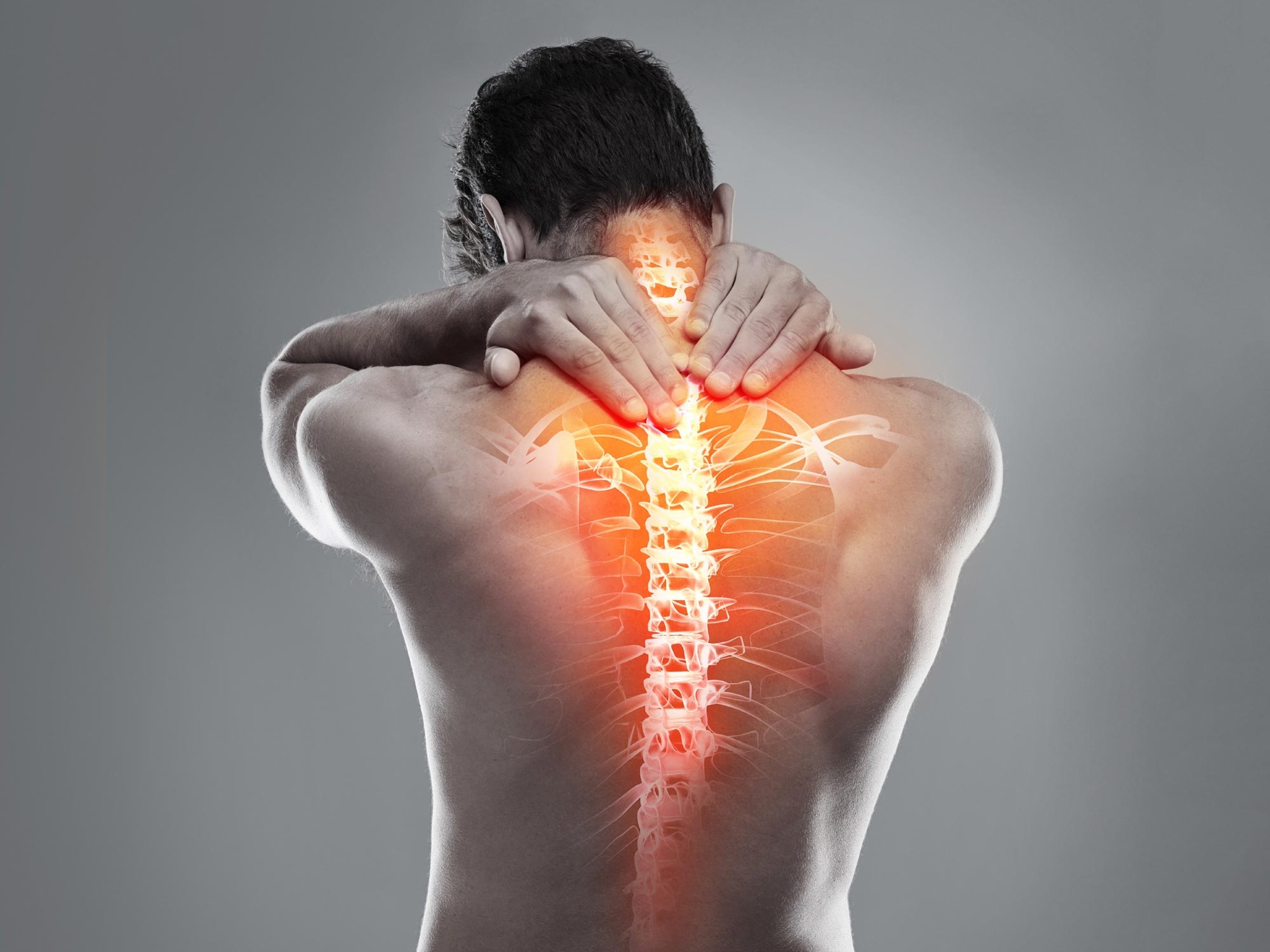
Engineers at the University of Utah created Diadem, a device that noninvasively targets deep brain areas to potentially interrupt the problematic signals associated with chronic pain.
Pain serves as a crucial biological warning system, but various conditions can cause these signals to malfunction. In chronic pain sufferers, the underlying issue often lies in faulty signals originating deep within the brain, triggering false alarms about an injury that has healed, a limb that has been amputated, or other complex and difficult-to-explain situations.
Patients with this kind of life-altering pain are constantly looking for new treatment options; now a new device from the University of Utah may represent a practical long-sought solution.
Researchers at the university’s John and Marcia Price College of Engineering and Spencer Fox Eccles School of Medicine have published promising findings about an experimental therapy that has given many participants relief after a single treatment session. They are now recruiting participants for a final round of trials.
At the core of this research is Diadem, a new biomedical device that uses ultrasound to noninvasively stimulate deep brain regions, potentially disrupting the faulty signals that lead to chronic pain.
Clinical Trial and Results
The findings from a recent clinical trial are published in the journal Pain. This study constitutes a translation of two previous studies, published in Nature Communications Engineering and IEEE Transactions on Biomedical Engineering, which describe the unique features and characteristics of the device and demonstrate its efficacy.
The study was conducted by Jan Kubanek, a professor in Price’s Department of Biomedical Engineering, and Thomas Riis, a postdoctoral researcher in his lab. They collaborated with Akiko Okifuji, professor of Anesthesiology in the School of Medicine, as well as Daniel Feldman, graduate student in the departments of Biomedical Engineering and Psychiatry, and laboratory technician Adam Losser.

The randomized sham-controlled study recruited 20 participants with chronic pain, who each experienced two 40-minute sessions with Diadem, receiving either real or sham ultrasound stimulation. Patients described their pain a day and a week after their sessions, with 60% of the experimental group receiving real treatment reporting a clinical meaningful reduction in symptoms at both points.
“We were not expecting such strong and immediate effects from only one treatment,” Riis said.
“The rapid onset of the pain symptom improvements as well as their sustained nature are intriguing, and open doors for applying these noninvasive treatments to the many patients who are resistant to current treatments,” Kubanek added.
Diadem’s Innovative Approach
Diadem’s approach is based on neuromodulation, a therapeutic technique that seeks to directly regulate the activity of certain brain circuits. Other neuromodulation approaches are based on electric currents and magnetic fields, but those methods cannot selectively reach the brain structure investigated in the researchers’ recent trial: the anterior cingulate cortex.
After an initial functional MRI scan to map the target region, the researchers adjusted Diadem’s ultrasound emitters to correct for the way the waves deflect off the skull and other brain structures. This procedure was published in Nature Communications Engineering.
The team is now preparing for a Phase 3 clinical trial, the final step before approval from the Food and Drug Administration to use Diadem as a treatment for the general public.
Reference: “Noninvasive targeted modulation of pain circuits with focused ultrasonic waves” by Thomas S. Riis, Daniel A. Feldman, Adam J. Losser, Akiko Okifuji and Jan Kubanek, 30 July 2024, PAIN.
DOI: 10.1097/j.pain.0000000000003322
Funding came from the National Institutes of Health and the University of Utah.
Never miss a breakthrough: Join the SciTechDaily newsletter.
Follow us on Google and Google News.
12 Comments
This sounds fantastic! Does it help with disabling peripheral neuropathy?
I’ve had some success with improving my peripheral neuropathy taking supplements Lion’s Mane & Blessed Thistle which has returned a lot of feeling to my feet. Maybe give this a try?
Someone please answer this !
Well done !
Never underestimate the Power of Imagination which inspires ALL of us to create a Slightly better world in our Own Small Way.
Probably inspired by Watching the Star Trek Serial On TV and Dr. McCoy curing the cadets on the Star Ship Enterprise.
Science and Scientific Research if performed with dedication and safely without endangering the people performing the research and the larger community , which includes the Whole World , when Viruses like COVID 19 are let loose on Humanity, can lead to a Slightly better World with discoveries and innovation in ALL fields of Knowledge.
However, in the rush to create monetary wealth, people resort to shortcuts and “infect thy neighbor” idiotic policies, forgetting that we are ALL living in a bubble called Planet Earth , which is the only one in the neighborhood we call the Solar System, which sustains Human and Other Life forms.
Congratulations again to the Team!. Best of luck for Phase 3 testing.
I have a slip disk and DDD ankylosis spondylitis does this help that
Chronic pain since 1999….broken neck, fibromyalgia etc. I’d love to try it. I’m sick of pills. In Southern Utah
I would love to do the 3 phase. I’m willing to be a participant and Offer my service to the trial. I’m at the end of my ropes. Done everything, tried ever Medicine they have giving me. The only one that helped they have different rules of giving them to you in certain states. So have had them changed to many times and nothing seems to be working. Maybe this can help me so css as n you please help me and let me participate in the 3rd phase of the trial.
I am the lead author on the study. @Penny DiPuma, we did see effects on people with peripheral neuropathy. The device is also being used in separate clinical trials for treatment-resistant depression and PTSD with similarly strong results (‘Durable effects of deep brain ultrasonic neuromodulation on major depression’). Generally, subjects reported feeling a deep sense of relaxation or like the pain was still there but they cared much less about it. Or subjects reported relieving of tension around the area that was driving the pain. Right now it is hard to draw firm conclusions about the chronic pain type this is best for since this is a relatively small study and chronic pain diagnoses are often so broad and overlapping, with many physical and psychological drivers of the pain…there were people who had migraines, back pain, and arthritis and the treatment helped for all three. There were also subjects with just migraines or just post cancer pain where it did not help. Overall we are excited about the potential for a drug-free, noninvasive treatment for chronic pain. Going forward, we will apply it to a more focused subset (Widespread Chronic Pain) in a large number of patients ~150 across multiple universities and hospitals to measure the safety and efficacy, and get FDA approval if we demonstrate both.
I am very interested in this trial. I can give you a big list of modalities
I am exhausted from the pain
Always hurting out arthritis
4 lumbar surgeries
2 cervical surgeries
I need help
My knee dr. Wants me to go to pt for steroid cream ultra sounds
The shots shoot my blood sugar through. The roof.
Depression
Anxiety
My sister has CRPS (chronic regional pain syndrome). Can Diadem approach help? She has been in constant pain for 15 years. Please help.
Earlier this year a segment on the show 60 Minutes demonstrated new ultrasound technology applied to specific sections of the brain that was able to slow Alzheimer’s. Also the technology can be used to permanently cure hard drug users with no surgery or other behavior modification! People should watch this segment. It’s amazing!
——–
Neurosurgeon works to slow Alzheimer’s progression, treat addiction with cutting-edge technology
60-minutes
By Sharyn Alfonsi
January 14, 2024 / 7:00 PM EST / CBS News
Anyone who has had experience with Alzheimer’s disease knows the agony of watching someone fade away as it steals memory and at the end – a person’s own identity. Tonight – we’ll show you an experimental way to try and beat back Alzheimer’s. It’s been tested on just a handful of patients – but it caught our attention because of the doctor involved, Dr. Ali Rezai, who 60 Minutes first met 20 years ago. Dr. Rezai is a neuroscience pioneer who has developed treatments for Parkinson’s disease and other brain disorders. Over the last year we followed this master of the mind as he attempted to delay the progression of Alzheimer’s disease and its worst symptoms using ultrasound. We saw a cutting-edge approach to brain surgery…without cutting.
…
https://www.cbsnews.com/news/neurosurgeon-works-to-slow-alzheimers-progression-treat-drug-addiction-60-minutes-transcript/
I have MSA and have been told that it comes from my brain. I am in constant pain. Cannot balance and am now in wheel chair. Please help