
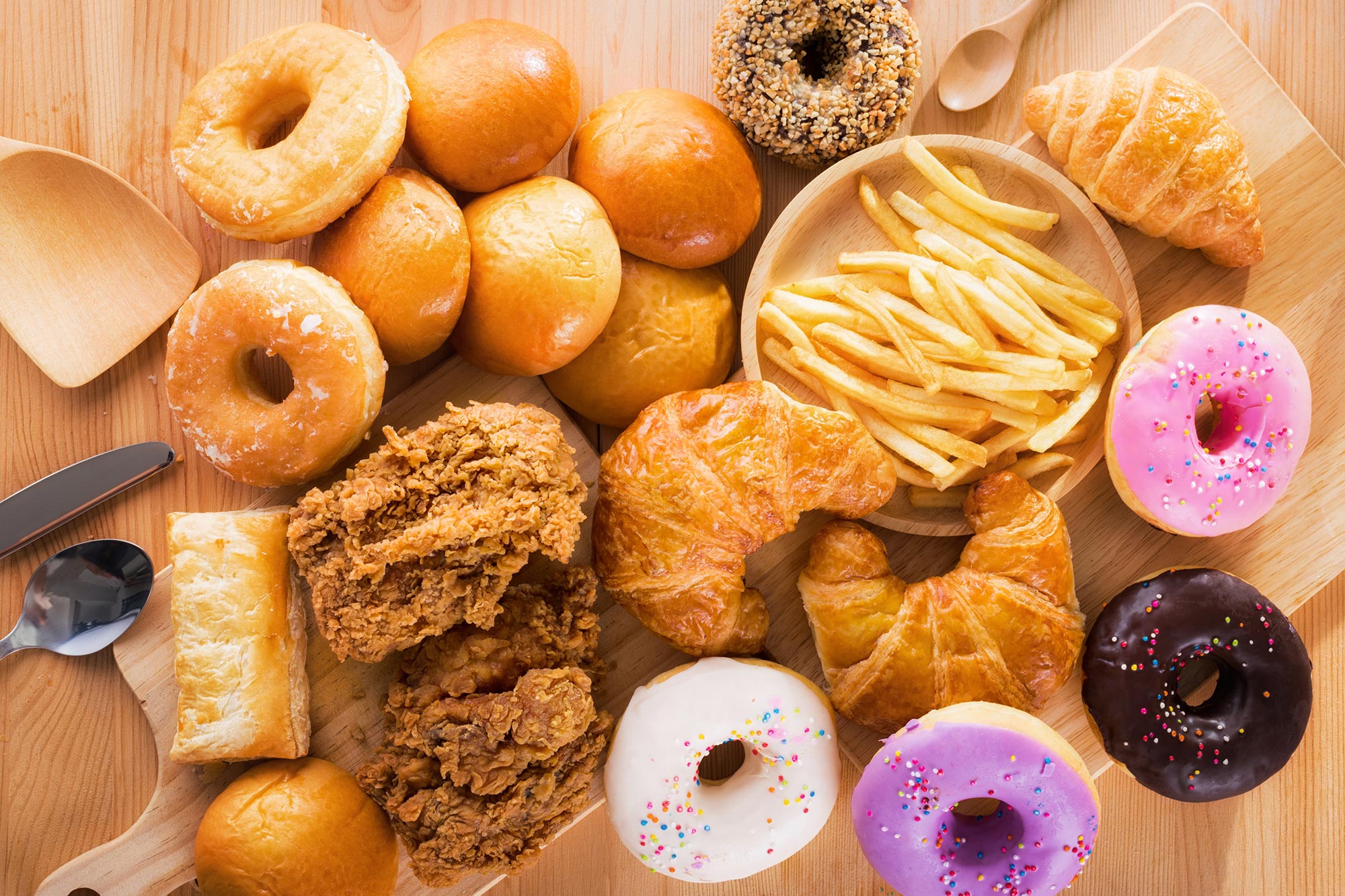
Consumption of ultra-processed foods is rising more rapidly within U.S. households than in settings outside the home.
Researchers at the Johns Hopkins Bloomberg School of Public Health have conducted a new analysis revealing that over half of the calories adults in the U.S. consume at home come from ultra-processed foods.
Ultra-processed foods are products containing additives with little to no nutritional value, such as artificial colors, emulsifiers, flavors, and sweeteners. This category includes a wide variety of items, ranging from chips and hot dogs to prepackaged meals. While it has been well-known that ultra-processed foods make up a significant part of the American diet, it was previously unclear how much of this consumption occurred in the home setting.
High consumption of ultra-processed foods is associated with serious health risks, including cardiovascular disease, obesity, and colorectal cancer. These findings highlight the need for initiatives that encourage healthier meal preparation options at home to reduce reliance on ultra-processed foods.
Study Overview and Methodology
The study was recently published in the Journal of Nutrition.
“The perception can be that ‘junk food’ and ultra-processed foods are equivalent,” says Julia Wolfson, PhD, MPP, associate professor in the Bloomberg School’s Department of International Health and the study’s lead author. “Yet ultra-processed foods encompass many more products than just junk food or fast food, including most of the foods in the grocery store. The proliferation and ubiquity of ultra-processed foods on grocery store shelves is changing what we are eating when we make meals at home.”
For their analysis, the researchers used data from the 2003–2018 National Health and Nutrition Examination Survey (NHANES), a nationally representative annual survey of more than 34,000 adults over 20 years of age.
On two separate days, NHANES participants were asked about the foods they had eaten in the past 24 hours and where they had consumed the food—at home or away from home. Using the Nova Food Group Classification—a well-established framework for grouping foods by level of processing—foods were assigned to one of four categories: 1) unprocessed or minimally processed, 2) processed culinary ingredient, 3) processed, 4) ultraprocessed.
The researchers compared ultra-processed to minimally processed food intake. Foods with artificial ingredients and colors, including many fast foods and prepacked meals available at grocery stores, were categorized as ultra-processed foods. Fruits, vegetables, and other whole foods, including frozen and dried foods without additional salt or other ingredients, were considered minimally processed foods.
Key Findings on Ultra-processed Food Consumption
Overall, ultra-processed foods comprised more than half of all calories consumed at home, rising from 51% in 2003 to 54% in 2018. The researchers found only minor differences in trends of ultra-processed food intake at home by sex, age, race/ethnicity, income, and education over the study period. Ultra-processed food intake at home was slightly lower than 50% in some years from 2003 to 2018 for two groups: Hispanics and higher-income households. The proportion of at-home calories from ultra-processed foods never fell below 49% for the high-income group or 47% among Hispanics.
About one-third of all calories came from eating foods away from home. For those with less than a high school degree, away-from-home consumption of ultra-processed foods rose nearly eight percentage points, from 59.2% in 2003 to 67.1% in 2018 of all away-from-home calories consumed in 2018. That proportion hovered around 60% for individuals with a high school degree or more.
Overall, the proportion of total calories from minimally processed foods fell nearly five percentage points from 33.2% in 2003 to 28.5% in 2018, and minimally processed food intake declined both at home and away from home for most groups. These results, the authors say, speak to the many challenges of procuring and preparing minimally processed, scratch ingredients such as fresh vegetables, meat, and fish. Ultra-processed foods tend to be easier and faster to prepare, and often are less expensive and more shelf-stable than scratch ingredients.
“We need strategies to help people choose less processed foods and avoid unhealthy ultra-processed foods for foods purchased for both at-home and away-from-home consumption,” adds Wolfson. “Additionally, strong nutrition labels warning of high ultra-processed food content may be warranted.”
The authors note that the study has limitations, including possible reporting bias—people may underreport eating foods that they believe are not good for them. The authors also note that the study period occurred before the pandemic and does not reflect changes in at-home food consumption during this period.
Reference: “Trends in Adults’ Intake of Un-processed/Minimally Processed, and Ultra-processed foods at Home and Away from Home in the United States from 2003–2018” by Julia A Wolfson, Anna Claire Tucker, Cindy W Leung, Casey M Rebholz, Vanessa Garcia-Larsen and Euridice Martinez-Steele, 2 November 2024, The Journal of Nutrition.
DOI: 10.1016/j.tjnut.2024.10.048
The study was supported by the National Institute of Diabetes and Digestive and Kidney Diseases(#K01DK119166) and the National Heart, Lung, and Blood Institute (R01 HL153178 and T32 HL007024).
Never miss a breakthrough: Join the SciTechDaily newsletter.
Follow us on Google and Google News.
1 Comment
If it’s true. It means Americans are being fed Poison! And committing Foodicide! Eating themselves to death. Daily! With those Poisons! Not to mention living in death traps! I mean homes!
Most of us are Contaminated!