
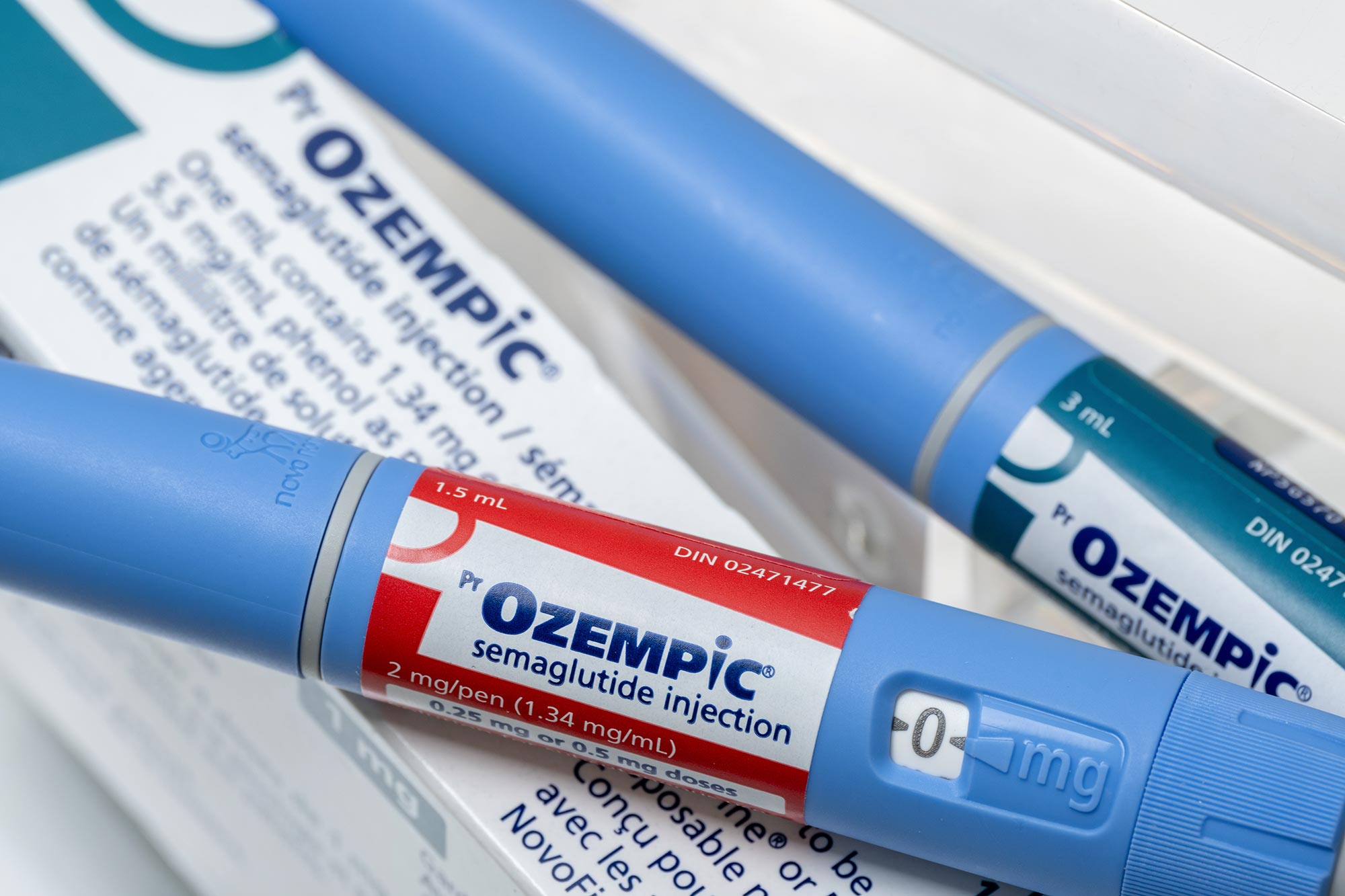
As GLP-1 weight-loss drugs become more common, their effects may be reshaping everyday food choices in ways that extend far beyond individual health.
When people in the United States begin using appetite-suppressing medications such as Ozempic and Wegovy, the effects can reach far beyond changes in body weight. New research from Cornell University suggests that these drugs are linked to noticeable declines in household food spending, affecting both grocery purchases and meals eaten outside the home.
The study, published in the Journal of Marketing Research, combines survey responses about GLP-1 receptor agonist use with detailed purchasing data from tens of thousands of American households. GLP-1 drugs were first developed to treat diabetes and are now commonly prescribed for weight loss. By pairing self-reported medication use with real transaction records, the researchers provide one of the most detailed real-world examinations so far of how adopting these drugs relates to everyday food-buying habits.
The results show a clear shift in spending patterns. On average, households spend 5.3% less on groceries within six months of starting a GLP-1 medication. The decline is even larger for higher-income households, where grocery spending drops by more than 8%. Spending also falls outside the home, with purchases at fast-food restaurants, coffee shops, and other limited-service eateries decreasing by roughly 8%.
For households that remain on the medication, reduced food spending continues for at least a year, although the size of the effect gradually weakens over time, says Sylvia Hristakeva, assistant professor of marketing.
“The data show clear changes in food spending following adoption,” Hristakeva said. “After discontinuation, the effects become smaller and harder to distinguish from pre-adoption spending patterns.”
Linking Medication Use to Real-World Purchases
Unlike previous studies that relied on self-reported eating habits, the new analysis draws on purchase data collected by Numerator, a market research firm that tracks grocery and restaurant transactions for a nationally representative panel of about 150,000 households. The researchers matched those records with repeated surveys asking whether household members were taking GLP-1 drugs, when they started, and why.
That combination allowed the team to compare adopters with similar households that did not use the drugs, isolating changes that occurred after medication began. The reductions were not evenly distributed across the grocery store.
Which Foods Decline—and Which Increase
Ultra-processed, calorie-dense foods – the kinds most closely associated with cravings – saw the sharpest declines. Spending on savory snacks dropped by about 10%, with similarly large decreases in sweets, baked goods, and cookies. Even staples like bread, meat, and eggs declined.
Only a handful of categories showed increases. Yogurt rose the most, followed by fresh fruit, nutrition bars, and meat snacks.
“The main pattern is a reduction in overall food purchases. Only a small number of categories show increases, and those increases are modest relative to the overall decline,” Hristakeva said.
Broader Implications for Industry and Policy
The effects extended beyond the supermarket. Spending at limited-service restaurants such as fast-food chains and coffee shops fell sharply as well. For food manufacturers, restaurants, and retailers, widespread GLP-1 adoption could mean long-term shifts in demand, particularly for snack foods and fast food. Package sizes, product formulations, and marketing strategies may need to change.
For policymakers and public-health experts, the results add context to ongoing debates about the role of medical treatments in shaping dietary behavior – and whether biologically driven appetite changes succeed where taxes and labels have struggled.
Reference: “EXPRESS: The No-Hunger Games: How GLP-1 Medication Adoption is Changing Consumer Food Demand” by Sylvia Hristakeva, Jūra Liaukonytė and Leo Feler, 18 December 2025, Journal of Marketing Research.
DOI: 10.1177/00222437251412834
Never miss a breakthrough: Join the SciTechDaily newsletter.
Follow us on Google and Google News.
3 Comments
It’s amazing! An appetite suppressant results in less food cost!
Can it be because we EAT LESS?
Damned geniuses…
What will be suggested next, use Ozempic as a mass public weight-loss solution?
For example, some nutter suggesting – add it to the public water supply (as per the Fluorine tooth-decay approach) !!
How about further promoting a healthy life-style and mandatory readily available healthy unprocessed foods instead. 8-)) …
Lower grocery bills are great, because GLP-1’s ARE TOO EXPENSIVE!!!