
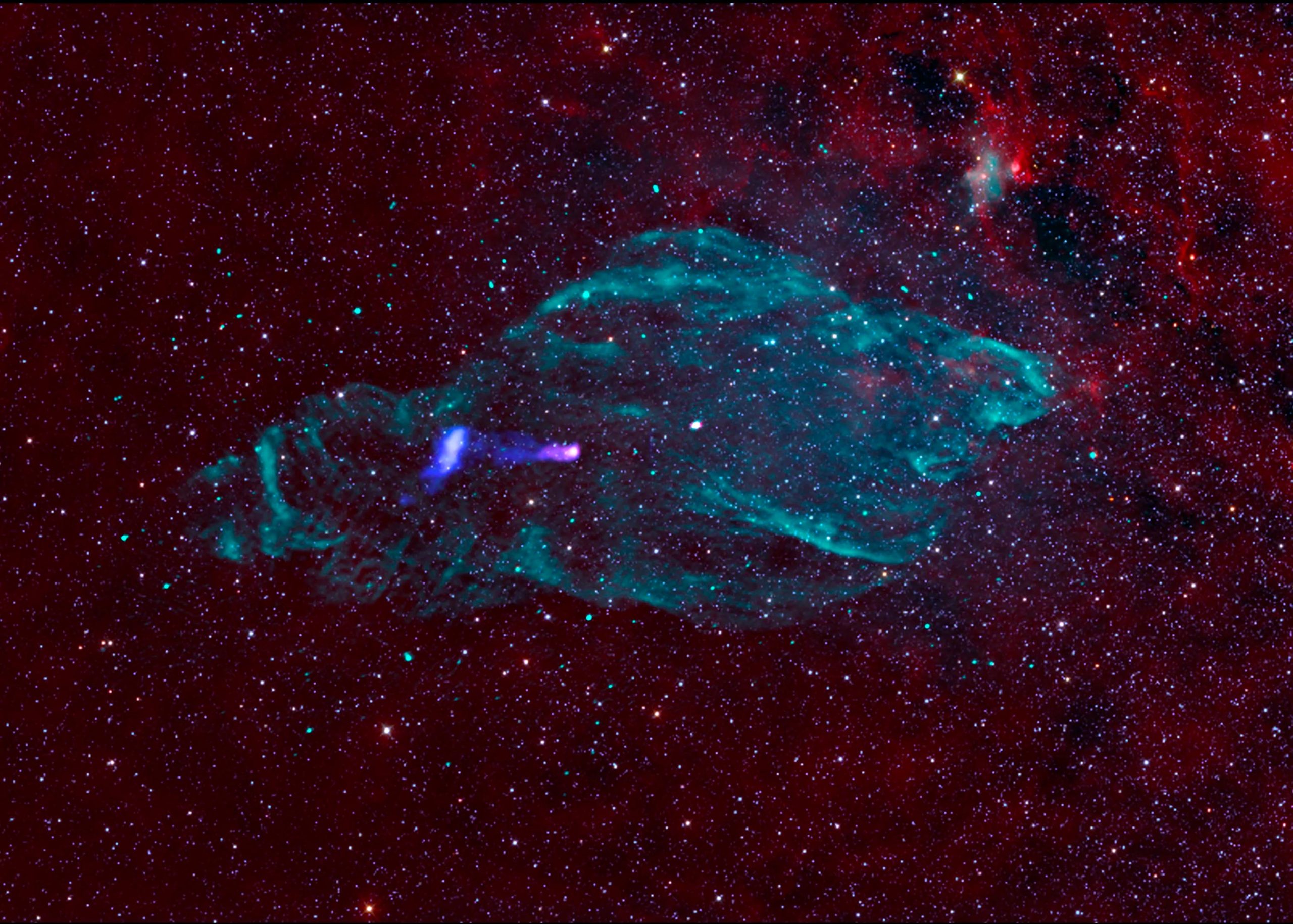
Insights from NASA’s IXPE mission have transformed our understanding of particle acceleration in black holes, using the microquasar SS 433 as a case study to reveal aligned magnetic fields within its jets.
The powerful gravity fields of black holes can devour whole planets’ worth of matter – often so violently that they expel streams of particles traveling near the speed of light in formations known as jets. Scientists understand that these high-speed jets can accelerate these particles, called cosmic rays, but little is definitively known about that process.
Recent findings by researchers using data from NASA’s IXPE (Imaging X-ray Polarimetry Explorer) spacecraft give scientists new clues as to how particle acceleration happens in this extreme environment. The observations came from a “microquasar,” a system comprised of a black hole siphoning off material from a companion star.
A Closer Look at SS 433
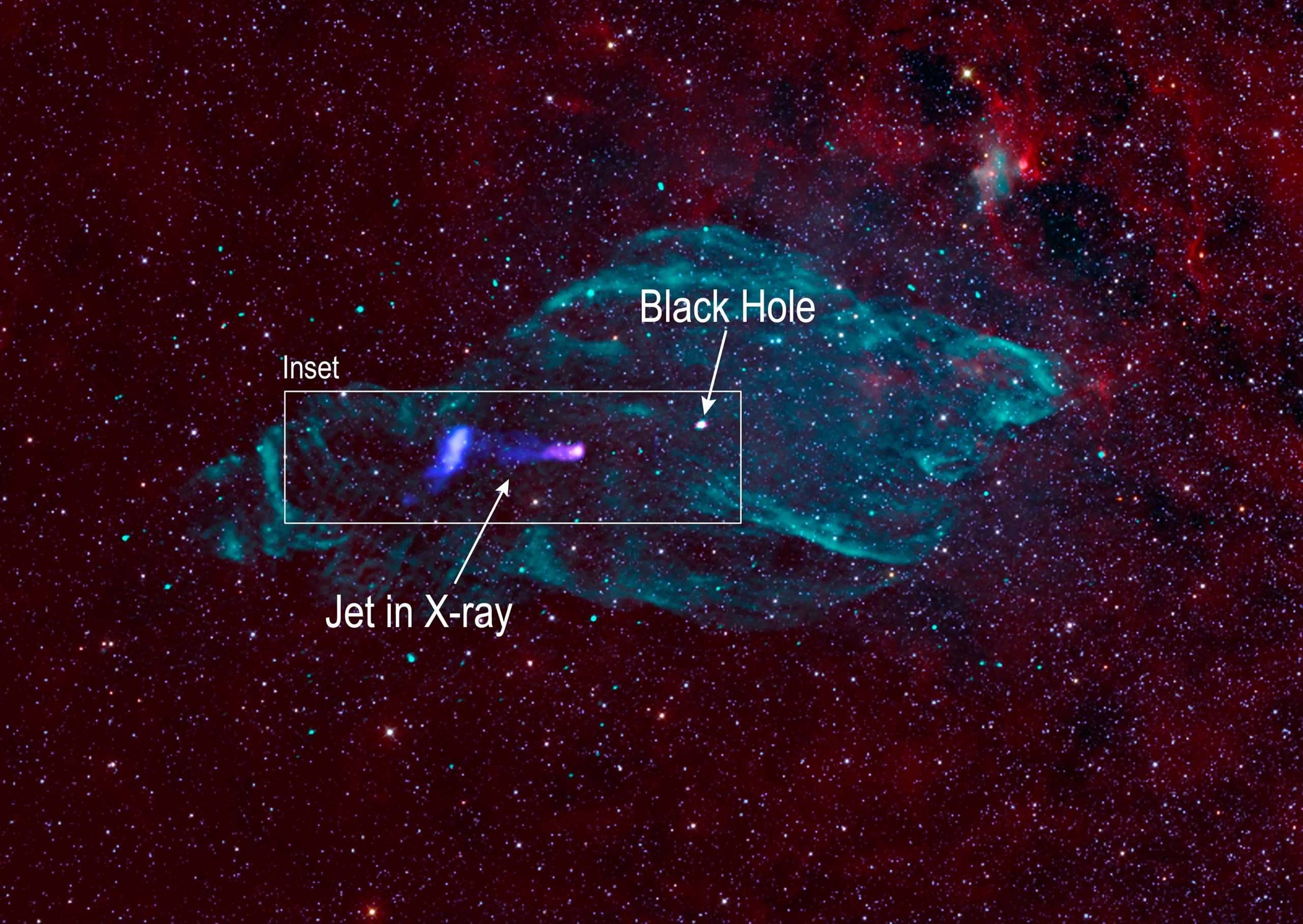
The microquasar in question – Stephenson and Sanduleak 433, or SS 433 – sits in the center of the supernova remnant W50 in the constellation Aquila, some 18,000 light-years from Earth. SS 433’s powerful jets, which distort the remnant’s shape and earned it the nickname the “Manatee Nebula,” have been clocked at roughly 26% of the speed of light, or more than 48,000 miles per second. Identified in the late 1970s, SS 433 is the first microquasar ever discovered.
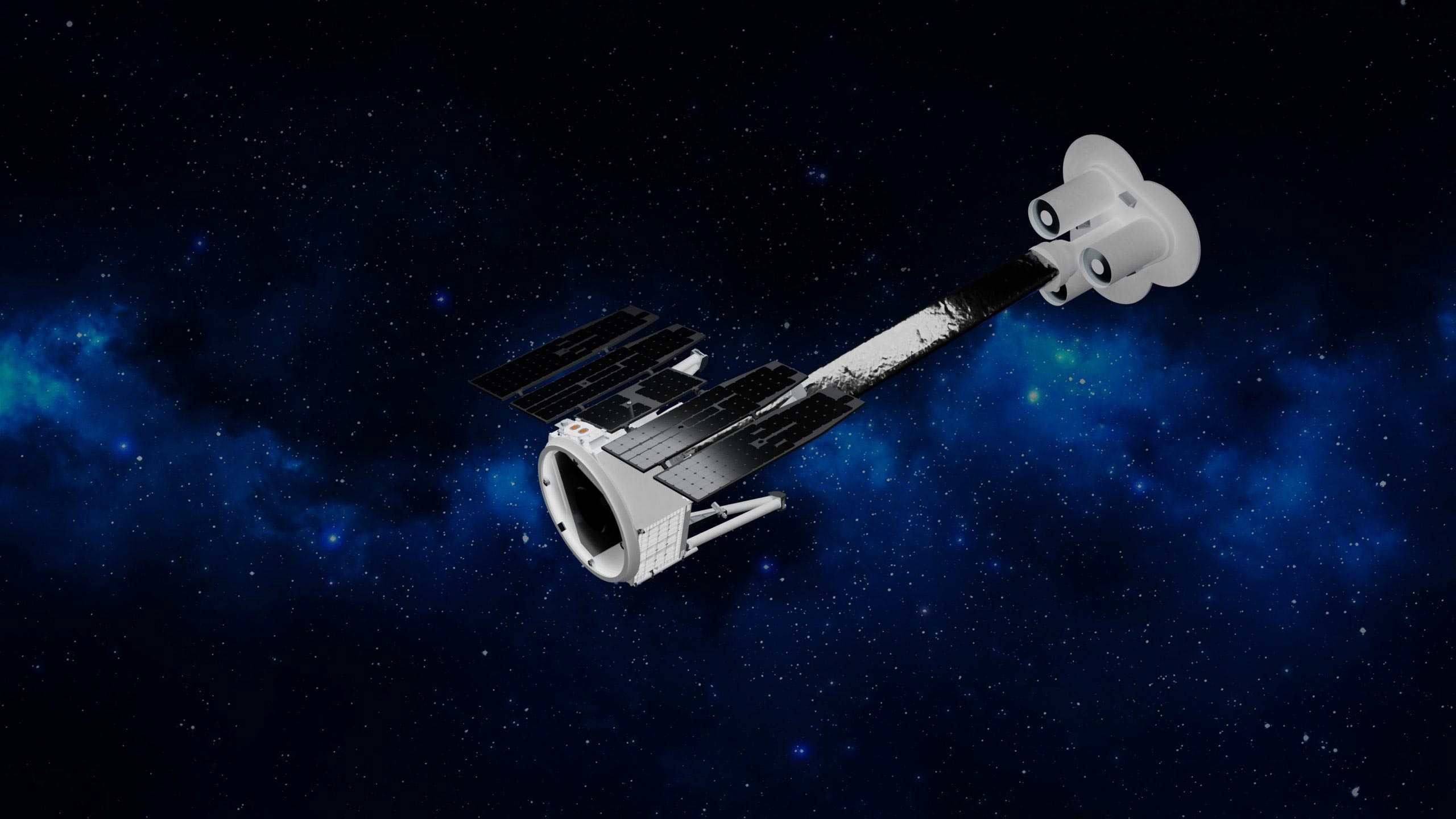
IXPE’s three onboard telescopes measure a special property of X-ray light called polarization, which tells scientists about the organization and alignment of electromagnetic waves at X-ray frequencies. X-ray polarization helps researchers understand the physical processes taking place within extreme regions of our universe such as the environment around black holes, and how particles get accelerated in these regions.
Groundbreaking Discoveries and Future Implications
IXPE spent 18 days in April and May of 2023 studying one such acceleration site in the eastern lobe of SS 433, where emissions are made by energetic electrons spiraling in a magnetic field – a process called synchrotron radiation.
“The IXPE data show that the magnetic field near the acceleration region points in the direction the jets are moving,” said astrophysicist Philip Kaaret of NASA’s Marshall Space Flight Center in Huntsville, Alabama, and principal investigator of the IXPE mission, along with lead author of a new paper about the findings at SS 433.
“The high level of polarization seen with IXPE shows that the magnetic field is well ordered, with at least half of the field aligned in the same direction,” Kaaret said.
That finding was unexpected, he said. Researchers have long theorized that the interaction between the jet and the interstellar medium – the environment of gas and dust between stars — likely creates a shock, leading to disordered magnetic fields.
The data suggests a new possibility, Kaaret said – that the magnetic fields within the powerful jets may be “trapped” and stretched when they collide with interstellar matter, directly impacting their alignment in the region of particle acceleration.
Since the 1980s, researchers have surmised that SS 433’s jets act as particle accelerators. In 2018, observers at the High-Altitude Water Cherenkov Observatory in Puebla, Mexico, verified the jets’ acceleration effect, and scientists used NASA’s NuSTAR (Nuclear Spectroscopic Telescope Array) and the European Space Agency’s XMM-Newton observatories to pinpoint the region of acceleration.
As researchers continue to assess IXPE findings and study new targets in space, its data also could help determine whether the same mechanism acts to align magnetic fields in outflows expelled by a variety of phenomena – from black hole jets streaming away from supernova remnants to debris ejected from exploded stars such as blazars.
“This very delicate measurement was made possible by the imaging capabilities of IXPE’s X-ray polarimeters, making possible the detection of the tenuous signal in a small region of the jet 95 light-years from the central black hole,” said Paolo Soffitta, Italian principal investigator for the IXPE mission.
The new paper, detailing IXPE’s observations at SS 433, is available in the latest edition of The Astrophysical Journal.
Reference: “X-Ray Polarization of the Eastern Lobe of SS 433” by Philip Kaaret, Riccardo Ferrazzoli, Stefano Silvestri, Michela Negro, Alberto Manfreda, Kinwah Wu, Enrico Costa, Paolo Soffitta, Samar Safi-Harb, Juri Poutanen, Alexandra Veledina, Alessandro Di Marco, Patrick Slane, Stefano Bianchi, Adam Ingram, Roger W. Romani, Nicolò Cibrario, Brydyn Mac Intyre, Romana Mikus̆incová, Ajay Ratheesh, James F. Steiner, Jiri Svoboda, Stefano Tugliani, Iván Agudo, Lucio A. Antonelli, Matteo Bachetti, Luca Baldini, Wayne H. Baumgartner, Ronaldo Bellazzini, Stephen D. Bongiorno, Raffaella Bonino, Alessandro Brez, Niccolò Bucciantini, Fiamma Capitanio, Simone Castellano, Elisabetta Cavazzuti, Chien-Ting Chen, Stefano Ciprini, Alessandra De Rosa, Ettore Del Monte, Laura Di Gesu, Niccolò Di Lalla, Immacolata Donnarumma, Victor Doroshenko, Michal Dovčiak, Steven R. Ehlert, Teruaki Enoto, Yuri Evangelista, Sergio Fabiani, Javier A. García, Shuichi Gunji, Kiyoshi Hayashida, Jeremy Heyl, Wataru Iwakiri, Svetlana G. Jorstad, Vladimir Karas, Fabian Kislat, Takao Kitaguchi, Jeffery J. Kolodziejczak, Henric Krawczynski, Fabio La Monaca, Luca Latronico, Ioannis Liodakis, Simone Maldera, Frédéric Marin, Andrea Marinucci, Alan P. Marscher, Herman L. Marshall, Francesco Massaro, Giorgio Matt, Ikuyuki Mitsuishi, Tsunefumi Mizuno, Fabio Muleri, Chi-Yung Ng, Stephen L. O’Dell, Nicola Omodei, Chiara Oppedisano, Alessandro Papitto, George G. Pavlov, Abel L. Peirson, Matteo Perri, Melissa Pesce-Rollins, Pierre-Olivier Petrucci, Maura Pilia, Andrea Possenti, Simonetta Puccetti, Brian D. Ramsey, John Rankin, Oliver J. Roberts, Carmelo Sgrò, Gloria Spandre, Douglas A. Swartz, Toru Tamagawa, Fabrizio Tavecchio, Roberto Taverna, Yuzuru Tawara, Allyn F. Tennant, Nicholas E. Thomas, Francesco Tombesi, Alessio Trois, Sergey S. Tsygankov, Roberto Turolla, Jacco Vink, Martin C. Weisskopf, Fei Xie and Silvia Zane, 16 January 2024, The Astrophysical Journal Letters.
DOI: 10.3847/2041-8213/ad103b
About the Mission
IXPE is a collaboration between NASA and the Italian Space Agency with partners and science collaborators in 12 countries. IXPE is led by NASA’s Marshall Space Flight Center. Ball Aerospace, headquartered in Broomfield, Colorado, manages spacecraft operations together with the University of Colorado’s Laboratory for Atmospheric and Space Physics in Boulder.
Never miss a breakthrough: Join the SciTechDaily newsletter.
Follow us on Google and Google News.