
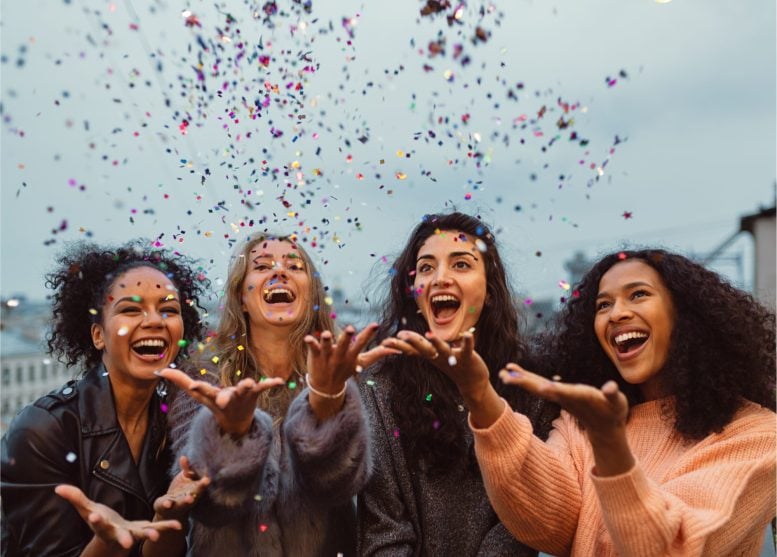
New research has found that celebrations that highlight accomplishments can boost the perception of social support.
New research shows that actively acknowledging positive life events and accomplishments while gathering for food and drink can increase feelings of social support.
The study, published in the Journal of Public Policy & Marketing, found that celebrations that involve a social gathering, eating or drinking, and the intentional recognition of a positive life event can increase perceived social support. Previous research has shown that perceived social support, or the belief that one has a network of people who care about them and are available to provide help and support, is linked to improved health and well-being outcomes, such as increased lifespan and reduced anxiety and depression.
Key Components of Meaningful Celebrations
“Many celebrations this time of year include two of the three conditions – eating and drinking while gathering together,” said Kelley Gullo Wight, assistant professor at the Indiana University Kelley School of Business and co-author of the study. “Adding the third condition, making an intentional effort to recognize other’s positive achievements, is key. For example, take the time to congratulate someone for getting accepted to their first-choice university, or a work project that went well, or a new job offer. This will maximize the benefits to your well-being and the well-being of all the attendees at that holiday party.”
Wight and her co-authors, including professors Danielle Brick of the University of Connecticut, and James Bettman, Tanya Chartrand, and Gavan Fitzsimons of Duke University, used behavioral experiments to survey thousands of participants over several years.
Virtual Gatherings and Their Well-Being Benefits
The research revealed that even if gatherings are virtual, if everyone has food and drink (no matter if it’s healthy or indulgent) and they’re celebrating positive events, this also increases a person’s perceived social support, and they can receive the same well-being benefits from it.
It also has implications for marketing managers or anyone looking to raise funds for a good cause.
“We found that when people feel supported socially after a celebration, they’re more ‘pro-social,’ and more willing to volunteer their time or donate to a cause,” said Danielle Brick, assistant professor of marketing at the University of Connecticut and co-author on the study. “This would be a good time for non-profits to market donation campaigns, around the time many people are celebrating positive life events, like holidays or graduations.”
The researchers note that hosting celebrations that increase perceived social support can be especially beneficial at places serving populations more at-risk of loneliness and isolation, like nursing homes or community centers.
They also note the importance of understanding the well-being benefits of celebrations for policymakers looking to implement regulations or measures that could impact social gatherings, like COVID lockdowns, to avoid negative consequences to mental health. They recommend that if organizers need to have virtual celebrations, they should involve some type of consumption and the marking of a separate, positive life event, so people leave the celebration feeling socially supported.
Reference: “Celebrate Good Times: How Celebrations Increase Perceived Social Support” by Danielle J. Brick, Kelley Gullo Wight, James R. Bettman, Tanya L. Chartrand and Gavan J. Fitzsimons, 1 December 2022, Journal of Public Policy & Marketing.
DOI: 10.1177/07439156221145696
Never miss a breakthrough: Join the SciTechDaily newsletter.
Follow us on Google and Google News.
1 Comment
Nice article thanks for sharing informative post