
Close Menu
    Facebook X (Twitter) Instagram
    SciTechDaily
    • Biology
    • Chemistry
    • Earth
    • Health
    • Physics
    • Science
    • Space
    • Technology
    Facebook X (Twitter) Pinterest YouTube RSS
    SciTechDaily
    Home»Biology»Penguins’ Survival Secrets – Scientists Uncover Bizarre 4-Second Sleep Strategy
    Biology

    Penguins’ Survival Secrets – Scientists Uncover Bizarre 4-Second Sleep Strategy

    By American Association for the Advancement of ScienceDecember 3, 2023No Comments3 Mins Read
    Facebook Twitter Pinterest Telegram LinkedIn WhatsApp Email Reddit
    Share
    Facebook Twitter LinkedIn Pinterest Telegram Email Reddit
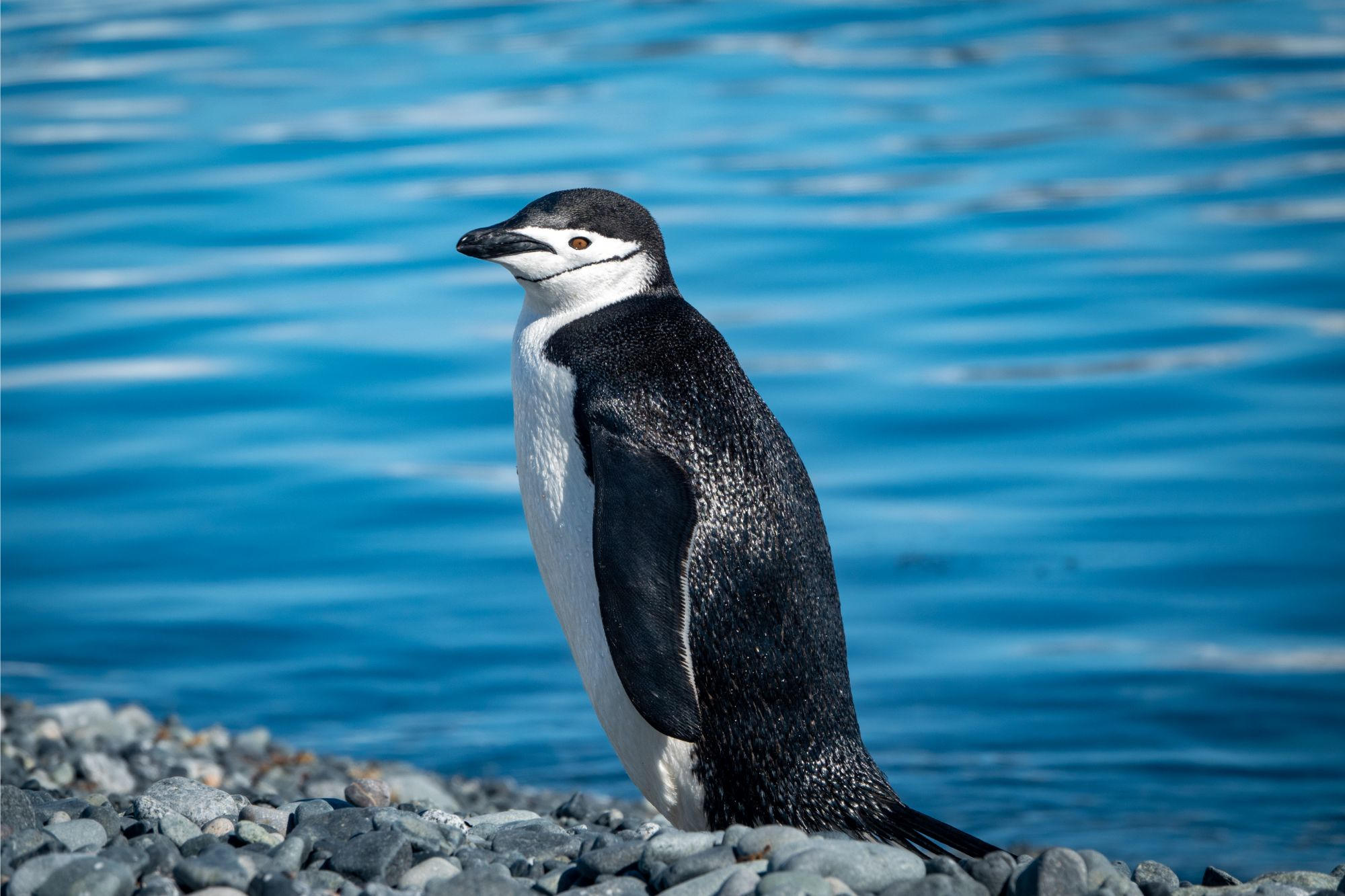
    Chinstrap Penguin
    Chinstrap penguins in the wild get over 11 hours of sleep daily through thousands of microsleeps lasting about 4 seconds each. This fragmented sleep pattern, studied using EEG and other methods, helps them maintain nest vigilance and suggests an evolutionary adaptation for species needing constant alertness.

    In the wild chinstrap penguins engage in a unique sleep pattern, obtaining more than 11 hours of rest each day– but not all at once. According to a new study, these birds nod off thousands of times per day, but for only around 4 seconds at a time, cumulatively accruing their daily sleep needs while remaining continuously vigilant over their nests.

    Sleep seems to be ubiquitous throughout the animal kingdom. Typically characterized by immobility and the relative loss of ability to sense and respond to the surrounding environment, sleep can render animals vulnerable to predation. In humans, insufficient sleep can lead to nodding off, the seconds-long interruption of wakefulness by eye closure, and sleep-related brain activity.

    Such microsleeps can be dangerous, like when they occur while driving. However, it’s unclear if they are long enough to provide the same restorative functions that longer bouts of sleep are known to. If microsleeps do cumulatively fulfill sleep functions, they could provide an adaptive strategy for some species under ecological circumstances requiring constant vigilance.

    Studying Penguins’ Sleep Habits

    Paul-Antoine Libourel and colleagues studied sleep behavior in a colony of nesting chinstrap penguins (Pygoscelis antarcticus) in Antarctica. While nesting, a single penguin parent is often required to guard their nest from predatory birds and intruding penguins while its partner is away feeding for several days at a time.

    Extended periods of sleep would put their nests and offspring at risk. Using remote electroencephalogram (EEG) monitoring and other noninvasive sensors to record sleeping behavior in freely roaming and nesting penguins as well as continuous video and direct observations, Libourel et al. were able to identify peculiar patterns in the penguin’s sleep.

    They found that the birds did not engage in prolonged periods of sleep and instead were observed to fall asleep frequently – accumulating more than 11 hours of sleep per day over more than 10,000 microsleeps lasting only 4 seconds on average.

    Implications of Microsleeps

    According to the authors, the findings suggest that, given the breeding success of these penguins, the benefits of sleep can accrue incrementally and those microsleeps can fulfill at least some of the benefits of longer sleep bouts.

    “The data reported by Libourel et al. could be one of the most extreme examples of the incremental nature by which the benefits of sleep can accrue,” write Christian Harding and Vladyslav Vyazovskiy in a related Perspective. “Although sleep bout duration is sensitive to many variables and differs widely among species, the seconds-long microsleeps of chinstrap penguins are markedly brief.”

    Reference: “Nesting chinstrap penguins accrue large quantities of sleep through seconds-long microsleeps” by P.-A. Libourel, W. Y. Lee, I. Achin, H. Chung, J. Kim, B. Massot and N. C. Rattenborg, 30 November 2023, Science.
    DOI: 10.1126/science.adh0771

    Never miss a breakthrough: Join the SciTechDaily newsletter.
    Follow us on Google and Google News.

    American Association for the Advancement of Science Penguin Physiology
    Share. Facebook Twitter Pinterest LinkedIn Email Reddit

    Related Articles

    Cold-Blooded Secret: Hammerhead Sharks Hold Their Breath To Stay Warm As They Hunt

    Genes Down-Regulated in Spaceflight Extend the Lifespan of Worms

    Imbalance Between Neuronal Excitation and Inhibition May Account for Seizure Susceptibility in Angelman Syndrome

    Physical Properties of Stem Cells Predict What They Will Become

    High-Fructose Diet Slows the Brain, Hampering Memory and Learning

    PAPupuncture Offers Long-Lasting Pain Relief

    Blind Golden Moles Have a Blue-Green Iridescent Sheen, a Rare Example in Mammals

    Researchers Use Human Neurons to Investigate Parkinson’s Disease

    Researchers Discover Chloroplast Genomes Transfer from Plant to Plant

    Leave A Reply Cancel Reply

    • Facebook
    • Twitter
    • Pinterest
    • YouTube

    Don't Miss a Discovery

    Subscribe for the Latest in Science & Tech!

    Trending News

    Your Blood Pressure Reading Could Be Wrong Because of One Simple Mistake

    Astronomers Stunned by Ancient Galaxy With No Spin

    Physicists May Be on the Verge of Discovering “New Physics” at CERN

    Scientists Solve 320-Million-Year Mystery of Reptile Skin Armor

    Scientists Say This Daily Walking Habit May Be the Secret to Keeping Weight Off After Dieting

    New Therapy Rewires the Brain To Restore Joy in Depression Patients

    Giant Squid Detected off Western Australia in Stunning Deep-Sea Discovery

    Popular Sugar-Free Sweetener Linked to Liver Disease, Study Warns

    Follow SciTechDaily
    • Facebook
    • Twitter
    • YouTube
    • Pinterest
    • Newsletter
    • RSS
    SciTech News
    • Biology News
    • Chemistry News
    • Earth News
    • Health News
    • Physics News
    • Science News
    • Space News
    • Technology News
    Recent Posts
    • Scientists Say a 40-Year-Old Childhood Obesity Warning May Be Completely Wrong
    • Marijuana Use May Raise Lung Cancer Risk, Researchers Warn
    • This Common Type of Food May Be Raising Your Risk of Heart Disease
    • Fur Seals’ Hearts Suddenly Spike Hours After Returning to Land
    • Scientists Say Cognitive Decline Isn’t Inevitable — Your Brain Can Improve at Any Age
    Copyright © 1998 - 2026 SciTechDaily. All Rights Reserved.
    • Science News
    • About
    • Contact
    • Editorial Board
    • Privacy Policy
    • Terms of Use

    Type above and press Enter to search. Press Esc to cancel.