
Study comparing 19th- and 21st-century Americans finds a half-hour decline in daily physical activity.
Today, Americans have access to what feels like an endless amount of workout routines, huge gyms, and even high-end home workout equipment like the Peloton. Despite all that, new research estimates that the average American does about 30 minutes less physical activity a day than an American 200 years ago.
That’s the conclusion reached by researchers from the lab of evolutionary biologist Daniel E. Lieberman after using data on falling body temperature in the U.S. and changing metabolic rates to measure declining levels of physical activity in the U.S. since the industrial revolution. The work is described in Current Biology.
The scientists found that since 1820, resting metabolic rate (or the total number of calories burned when the body is completely at rest) has declined by about 6 percent for Americans, which translates to about 27 minutes per day of less moderate to vigorous physical activity than 200 years ago. The reason, the authors say, is largely because of technology.
Technology as the Main Culprit
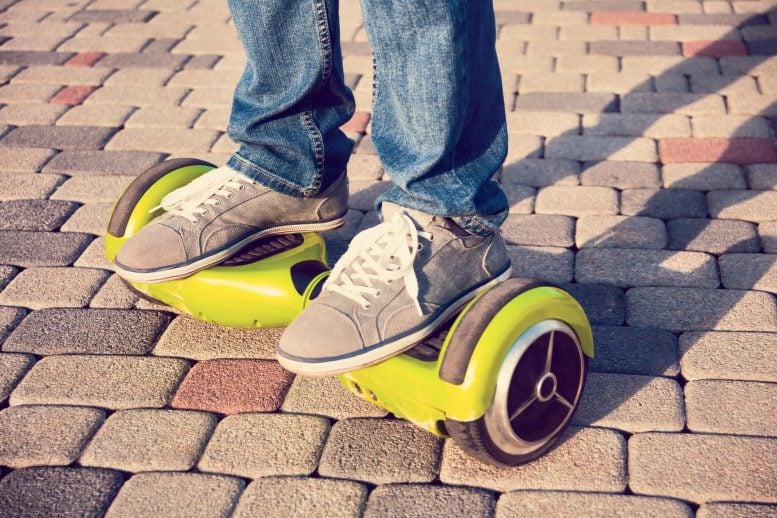
“Instead of walking to work, we take cars or trains; instead of manual labor in factories, we use machines,” said Andrew K. Yegian, a postdoctoral fellow in the Department of Human and Evolutionary Biology and the paper’s lead author. “We’ve made technology to do our physical activity for us….Our hope is that this helps people think more about the long-term changes of activity that have come with our changes in lifestyle and technology.”

Over the past two centuries, while it’s been well documented in scientific literature that profound technological and social changes have reduced overall levels of physical activity, how much it has gone down for the population had never been calculated.
The paper puts a quantitative number to the literature and shows that historical records of resting body temperature may be able to serve as a thermometer of population-level physical activity.
“This is a first pass estimate of taking physiological data and trying to quantify declines in activity,” Yegian said. “The next step would be to try to apply this as a tool to other populations.”
The work started as a back-of-the-envelope type calculation after new research last year from scientists at Stanford University showed that the average body temperature of Americans went down in that time to about 97.5 degrees Fahrenheit —a tick lower than the well-established 98.6. The researchers figured that falling body temperature and falling physical activity are related and could be linked by the human metabolism, which produces body heat and is, in part, powered by what people are doing in terms of physical activity.
The scientists scoured the previous studies by other researchers to find a quantitative answer to this question: If there is a change in body temperature, what does that mean in terms of metabolism and activity? They pulled data from two papers to calculate how they corresponded and used that to estimate on how much physical activity has gone down.
In the paper, the researchers note that factors other than reduced physical activity can influence the resting metabolic rate and body temperature, complicating their estimate.
They also say that future work that refining relationships between the metabolic rates, body temperature, and physical activity could allow for more precise investigation of physical activity trends and serve as an anchor for understanding how this decline in physical activity affected the health and morbidity of Americans during the industrial era.
Health Implications of a Less Active Population
“Physical activity is a major determinant of health,” said Lieberman, the Edwin M. Lerner II Professor of Biological Science. “Understanding how much less active Americans have become over the last few generations can help us assess just how much increases in the incidence of chronic conditions like type 2 diabetes, heart disease and Alzheimer’s can be attributed to decreases in physical activity.”
Reference: “Historical body temperature records as a population-level ‘thermometer’ of physical activity in the United States” by Andrew K. Yegian, Steven B. Heymsfield and Daniel E. Lieberman, 25 October 2021, Current Biology.
DOI: 10.1016/j.cub.2021.09.014
Never miss a breakthrough: Join the SciTechDaily newsletter.
Follow us on Google and Google News.