
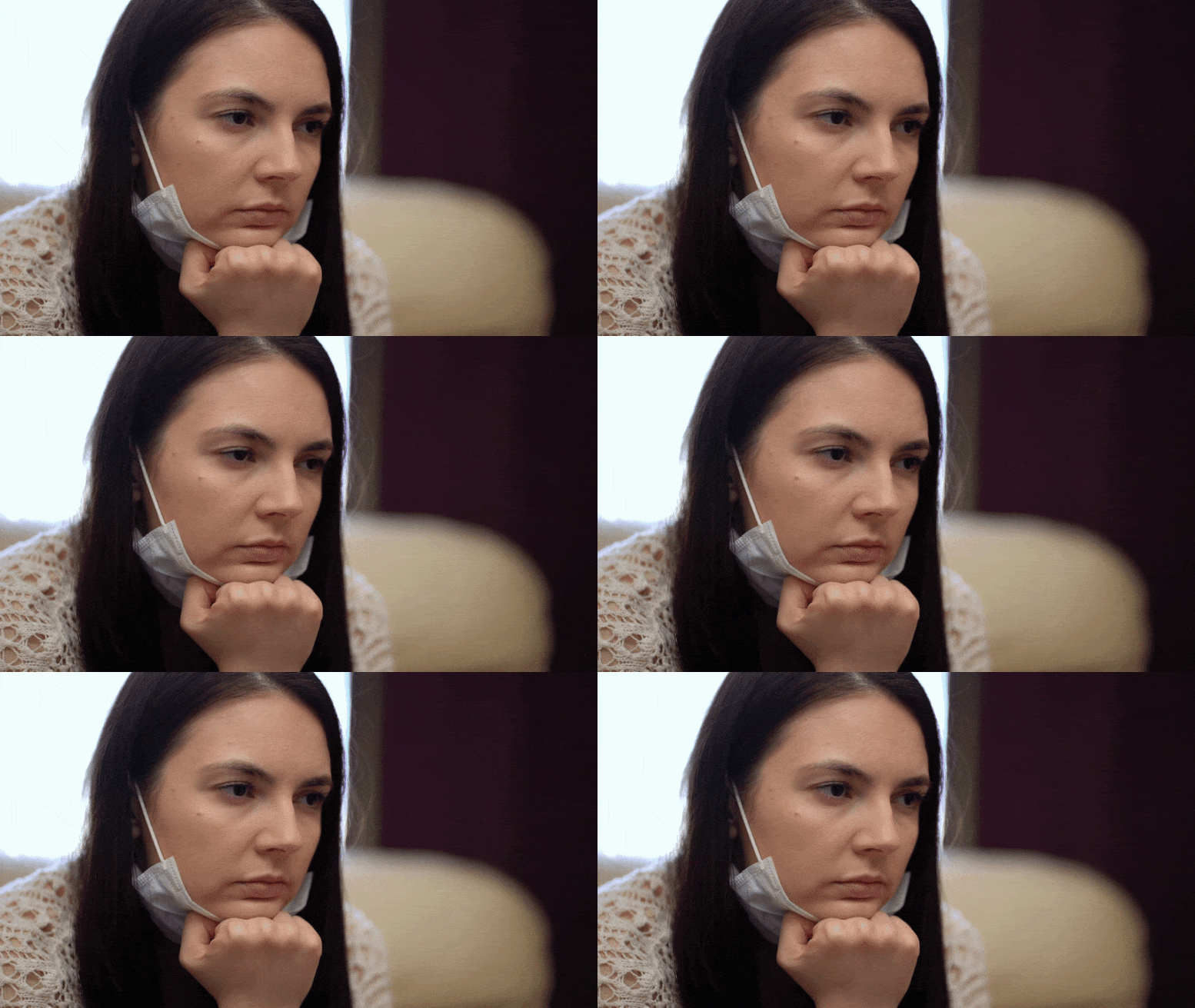
People who had higher pre-pandemic levels of depression or anxiety have been more severely affected by disruption to jobs and healthcare during the pandemic, according to a new study co-led by University College London (UCL) researchers.
The study, published in The British Journal of Psychiatry and funded by UKRI, looked at data from 59,482 people who are surveyed regularly as part of 12 ongoing longitudinal studies in England. It found that people whose survey responses before the COVID pandemic suggested higher levels of anxiety and depression symptoms were 24% more likely to have had delays to medical procedures, 12% more likely to lose their job, and 33% more likely to have had disruption to prescriptions or medication during the first eight to 10 months of the pandemic than those with average levels of anxiety and depression symptoms.
Those with more severe symptoms of depression or anxiety experienced a much greater likelihood of disruptions to jobs, income and healthcare, the study found.
Dr. Praveetha Patalay (UCL), senior author of the paper, said: “Our findings highlight that the wider health and economic impacts of the pandemic have been disproportionately experienced by those with mental health difficulties, potentially leading to worsening longer-term outcomes, even post-pandemic, for those already experiencing poor mental health.”
Professor Nishi Chaturvedi (MRC Unit for Lifelong Health and Ageing at UCL), who co-leads the COVID-19 Longitudinal Health and Wellbeing National Core study, said: “The anxiety and depression experienced by the participants of the study go beyond the mental ill health reported to GPs and healthcare services. This is a largely hidden group of people vulnerable to potentially long-lasting health and socioeconomic consequences of the pandemic.”
Lead author Dr. Giorgio Di Gessa (UCL Institute of Epidemiology & Healthcare) said: “Policymakers should take these findings into account in the provision of future health care and economic support, as failing to address these disruptions risks widening health inequalities further. Special care should be taken by pharmacists and primary care staff to ensure people with mental health difficulties do not miss appointments, procedures and prescriptions.
“It is also important to note that pre-pandemic psychological distress was generally more common among women, younger generations, ethnic minorities, and those with fewer qualifications, meaning the overall impact of disruption on these groups is larger.”
Lead author Dr. Michael Green (University of Glasgow) said: “During the pandemic, many people lost their jobs or lost their income and faced disruptions to healthcare.* Our study shows that this disruption was particularly likely to affect people with prior mental ill health.
“We need to ensure that healthcare and support for economic hardship are not overly difficult to access for these vulnerable people, especially as existing pandemic economic supports like furlough are removed.”
The work was conducted as part of the COVID-19 Longitudinal Health and Wellbeing National Core study, led by UCL researchers and funded by UKRI. The study involved researchers at UCL, King’s College London, the University of Glasgow, the University of Leicester, the University of Edinburgh, and the University of Bristol.
In each of the longitudinal studies, respondents answered questionnaires designed to assess mental health about three years before the pandemic on average. They later reported the disruptions they experienced between March and December last year.
The researchers compared disruptions faced by people whose responses showed “average” levels of anxiety and depression to disruptions affecting people with more anxiety and depression than average, regardless of whether they had a clinical diagnosis or were seeking treatment for a mental illness.
The research team looked at the disruptions of the pandemic in three areas: healthcare (medication access, procedures or surgeries, and appointments); economic activity (employment, income, or working hours); and housing (change of address or household composition). They found that people with prior mental ill health were more likely to face economic and healthcare disruption, but had no greater likelihood of housing disruption.
Professor Chaturvedi added: “UKRI support has enabled collaboration across 12 longitudinal cohort studies, allowing us to address critical pandemic-related questions that could not be answered any other way.”
* According to an Institute of Fiscal Studies (IFS) briefing note, during the early stage of the pandemic one in six people over the age of 50 reported having hospital treatment cancelled, with an additional one in 10 unable to visit or speak to their GP: https://ifs.org.uk/publications/15160
Reference: “Pre-pandemic mental health and disruptions to healthcare, economic, and housing outcomes during COVID –19: evidence from 12 UK longitudinal studies” by Giorgio Di Gessa, Jane Maddock, Michael J. Green, Ellen J. Thompson, Eoin McElroy, Helena L. Davies, Jessica Mundy, Anna J. Stevenson, Alex S. F. Kwong, Gareth J. Griffith, Srinivasa Vittal Katikireddi, Claire L. Niedzwiedz, George B. Ploubidis, Emla Fitzsimons, Morag Henderson, Richard J. Silverwood, Nish Chaturvedi, Gerome Breen, Claire J. Steves, Andrew Steptoe, David J. Porteous and Praveetha Patalay, 30 September 2021, The British Journal of Psychiatry.
DOI: 10.1192/bjp.2021.132
Never miss a breakthrough: Join the SciTechDaily newsletter.
Follow us on Google and Google News.