
Close Menu
    Facebook X (Twitter) Instagram
    SciTechDaily
    • Biology
    • Chemistry
    • Earth
    • Health
    • Physics
    • Science
    • Space
    • Technology
    Facebook X (Twitter) Pinterest YouTube RSS
    SciTechDaily
    Home»Biology»Photosynthesis-Free: Scientists Discover Remarkable Plant That Steals Nutrients To Survive
    Biology

    Photosynthesis-Free: Scientists Discover Remarkable Plant That Steals Nutrients To Survive

    By Pensoft PublishersAugust 13, 20241 Comment3 Mins Read
    Facebook Twitter Pinterest Telegram LinkedIn WhatsApp Email Reddit
    Share
    Facebook Twitter LinkedIn Pinterest Telegram Email Reddit
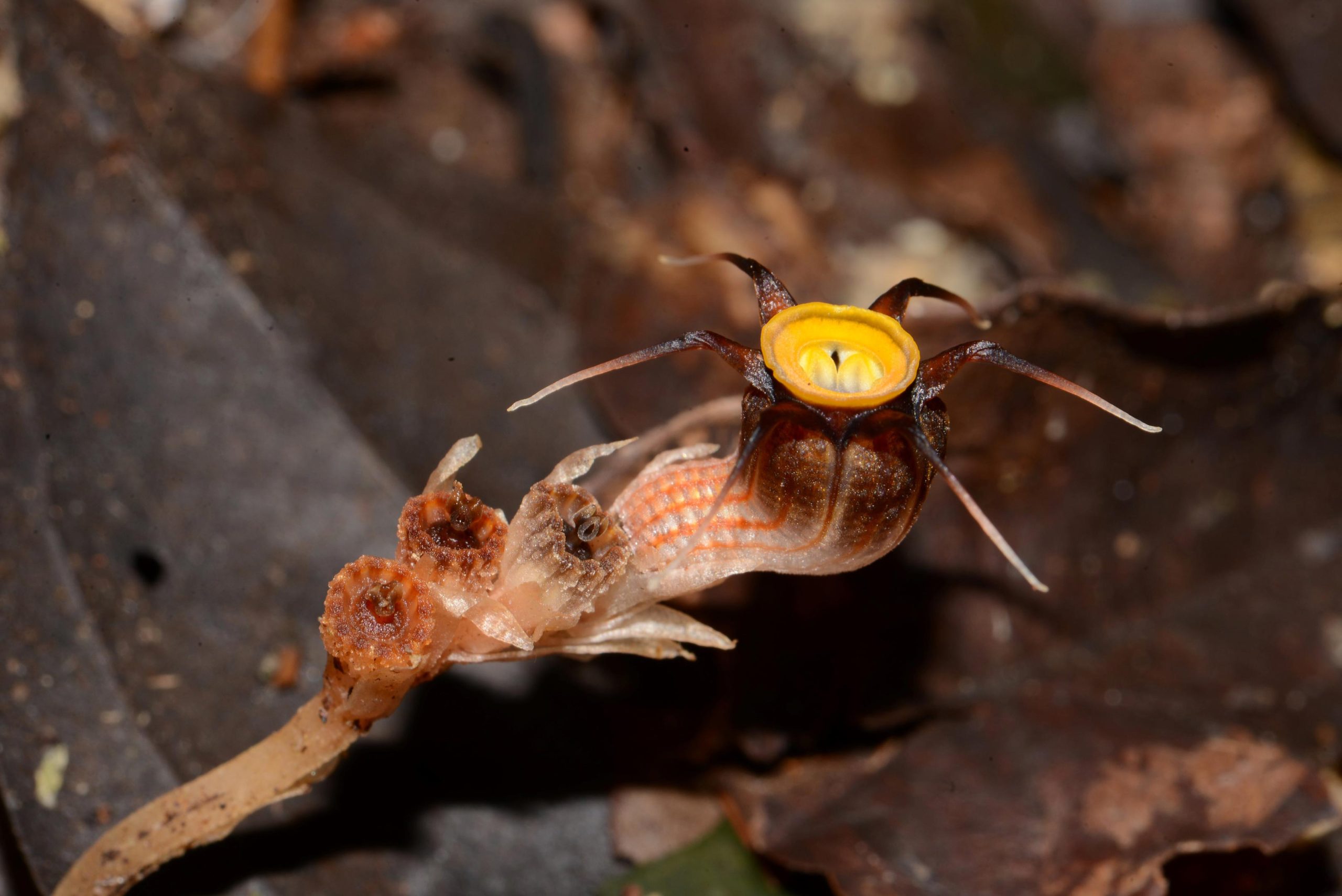
    Thismia malayana Live Specimen
    Thismia malayana live specimen. Credit: Mat Yunoh Siti-Munirah

    The newly discovered plant Thismia malayana in Malaysia’s rainforests parasitizes fungi to survive in shaded undergrowth. It’s small, pollinated by insects, and listed as Vulnerable, highlighting conservation needs.

    Scientists have discovered an extraordinary plant that survives by stealing nutrients from underground fungi. Named Thismia malayana, this unusual plant was recently published as a new species in the open-access journal PhytoKeys by botanists from the Forest Research Institute Malaysia (FRIM) in collaboration with local naturalists and stakeholders.
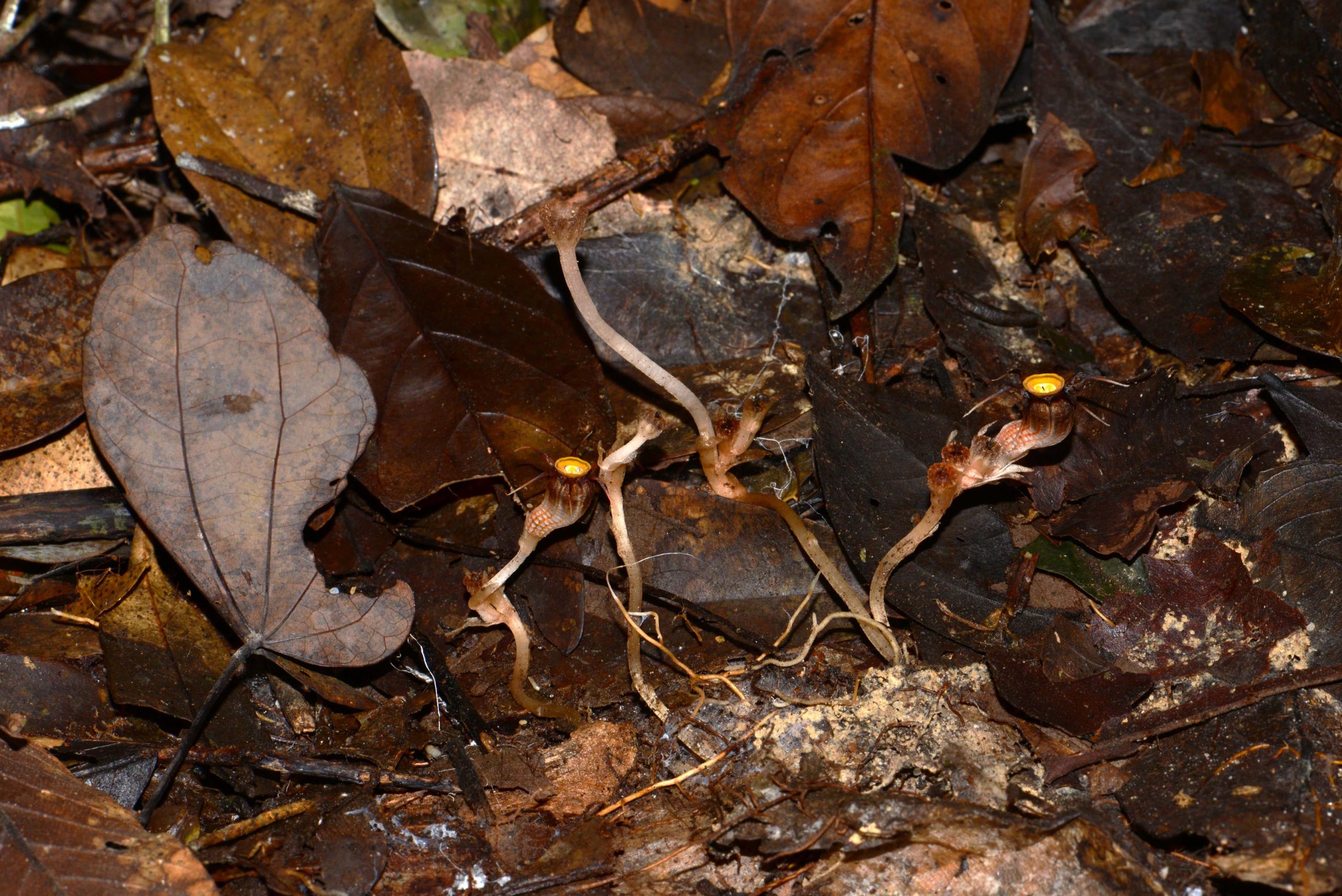
    Multiple Thismia malayana Specimens
    Thismia malayana live specimen. Credit: Mat Yunoh Siti-Munirah

    Unique Survival Strategy of Thismia malayana

    Thismia malayana, discovered in the tropical rainforests of Peninsular Malaysia, belongs to a group of plants known as mycoheterotrophs. Unlike most plants, mycoheterotrophs do not perform photosynthesis. Instead, they act as parasites, stealing carbon resources from the fungi on their roots. This adaptation takes advantage of mycorrhizal symbiosis, which is usually a mutually beneficial relationship between colonizing fungi and a plant’s root system.
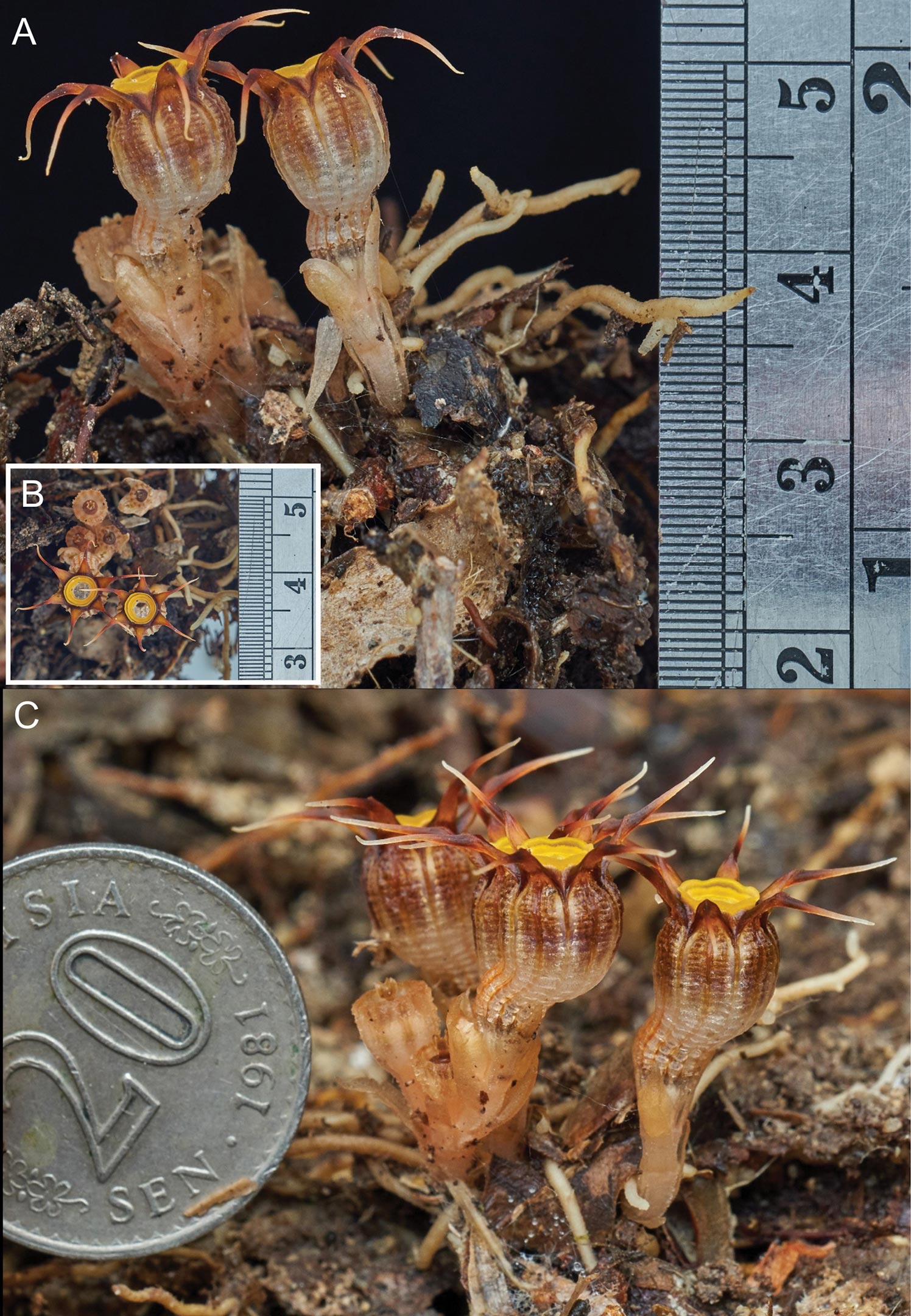
    Thismia malayana With Scales
    Thismia malayana with scales (the finest grade is 0.5 mm) A side view B top view C the size compared to the 20-sen coin (23.59 mm in diameter). Credit: Chin Hardy-Adrian

    Habitat and Pollination

    By stealing nutrients from fungi, this newly discovered species thrives in the low-light conditions of dense forest understories where fungus gnats and other small insects pollinate its highly specialized flowers.
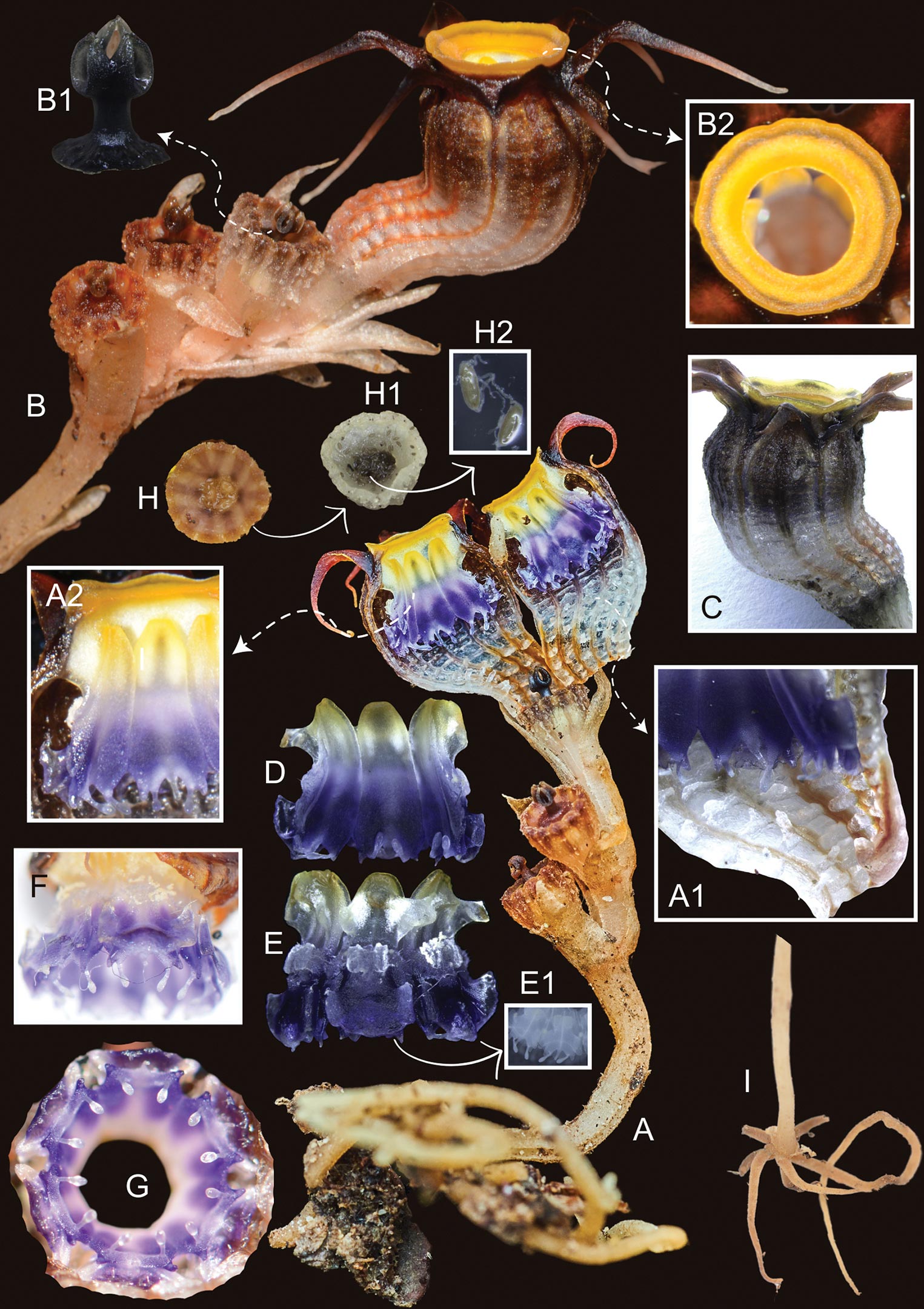
    Thismia malayana Diagram
    Thismia malayana A flowering plant A1 floral tube, inner surface A2 annulus and stamen filaments, view from inside B inflorescence with anthetic flower and several young fruits B1 style and stigma B2 annulus, top view C flower, side view D, E stamens, view from inside and from outside, E1 stamen supraconnectives: one pair of club-shaped inwards-pointing, one pair of acute outwards-pointing, and one central appendage F stamen supraconnectives, apical view G stamen tube, view from below H, H1 fruit after dehiscence, top view, H2 seeds I shoot base with roots. Credit: Siti-Munirah (A1–I) and Hardy-Adrian (A)

    This remarkable plant is around 2 cm long and is typically found hidden in leaf litter and growing near tree roots or old rotten logs. The research team identified Thismia malayana in two locations: the lowlands of Gunung Angsi Forest Reserve in Negeri Sembilan and the hilly dipterocarp forests of Gunung Benom in the Tengku Hassanal Wildlife Reserve, Pahang.
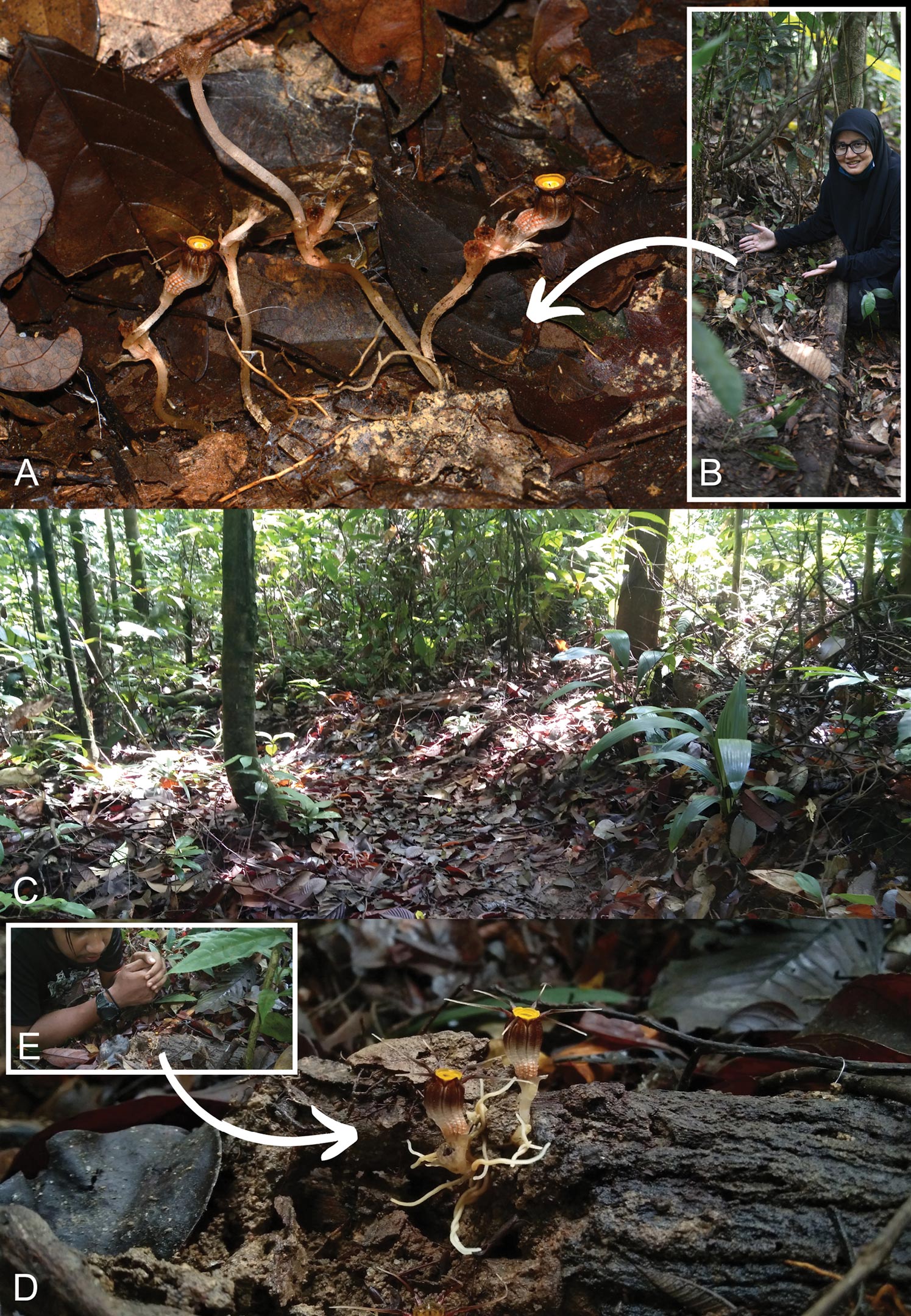
    Habitat of Thismia malayana
    Habitat (in situ) of Thismia malayana in Ulu Bendul RP in Gunung Angsi FR (A, B) and the Tengku Hassanal WR (C–E) A Thismia malayana at its habitat, which is located right next to the main trail to Gunung Angsi B Siti-Munirah showing the habitat of T. malayana C path to Lata Bujang and Gunung Benom D the plants growing on rotten wood E Mohamad-Shafiq observed a Thismia malayana in its habitat. Credit: Siti-Munirah (A, B) and Mohamad-Shafiq (C–E)

    Conservation Challenges

    Despite its small size, Thismia malayana is very sensitive to environmental changes and has been classified as Vulnerable according to the IUCN Red List criteria. Its limited distribution and the potential threat from trampling due to its proximity to hiking trails underscore the importance of continued conservation efforts.

    Reference: “Thismia malayana (Thismiaceae), a new mycoheterotrophic species from Peninsular Malaysia” by Mat Yunoh Siti-Munirah, Chin Hardy-Adrian, Sharipudin Mohamad-Shafiq, Zainuddin Irwan-Syah and Abd Halim Hamidi, 31 May 2024, PhytoKeys.
    DOI: 10.3897/phytokeys.242.120967

    Never miss a breakthrough: Join the SciTechDaily newsletter.
    Follow us on Google and Google News.

    Fungi Pensoft Publishers Plants Popular
    Share. Facebook Twitter Pinterest LinkedIn Email Reddit

    Related Articles

    New Green Pit Viper From India Named After Salazar Slytherin From Harry Potter

    Asian Hornets Are Invading Europe – Here’s What It’s Going to Cost

    New Snail Discovered by Citizen Scientists Named After Greta Thunberg

    Invasion of Zombie Ants in Florida – Fungal Infection Takes Over the Ants’ Brains

    Plant Protein Curbs the Reproduction of Colon Cancer Tumor Cells

    Hybridization Leads to New Pathogen Species

    Insight on the Evolution of Cocaine Biosynthesis

    Increased Number of Plant Species Responding to Global Warming

    Mesodinium Chamaeleon Is A Unique Life Form That is Half Plant Half Animal

    1 Comment

    1. Robert on August 14, 2024 9:23 am

      It is difficult to read light-gray type font.

      Reply
    Leave A Reply Cancel Reply

    • Facebook
    • Twitter
    • Pinterest
    • YouTube

    Don't Miss a Discovery

    Subscribe for the Latest in Science & Tech!

    Trending News

    Scientists Recreate a Nuclear Fireball and Uncover Fallout’s Hidden Chemistry

    These Tiny Gut Particles Could Be Accelerating Aging Throughout the Body

    Doctors Changed One Thing and Weight Gain Stopped

    Magnetic Fields May Solve a Longstanding Binary Star Mystery

    The Probiotic Breakthrough for Natural Anxiety Relief and Better Mental Health

    Animal vs. Plant Protein: Scientists Found a Surprising Nutritional Difference

    According to Scientists, This Simple Dietary Change Is Linked to Lower Depression Scores

    Researchers Discover a Hidden Vitamin D Problem That Persists Year-Round

    Follow SciTechDaily
    • Facebook
    • Twitter
    • YouTube
    • Pinterest
    • Newsletter
    • RSS
    SciTech News
    • Biology News
    • Chemistry News
    • Earth News
    • Health News
    • Physics News
    • Science News
    • Space News
    • Technology News
    Recent Posts
    • Mini Brain Organoids Expose Hidden Biological Differences in Alzheimer’s Disease
    • Scientists Recommend Doing This To Reduce Anxiety During Pregnancy
    • Scientists Reveal What Happened When 12 People Were Trapped Together in Antarctica for 10 Months
    • Buried for 1.7 Billion Years: These Ancient Fossils May Rewrite the Story of Complex Life
    • NASA Spots Giant Ocean Swell Signaling a Potential El Niño Comeback
    Copyright © 1998 - 2026 SciTechDaily. All Rights Reserved.
    • Science News
    • About
    • Contact
    • Editorial Board
    • Privacy Policy
    • Terms of Use

    Type above and press Enter to search. Press Esc to cancel.