
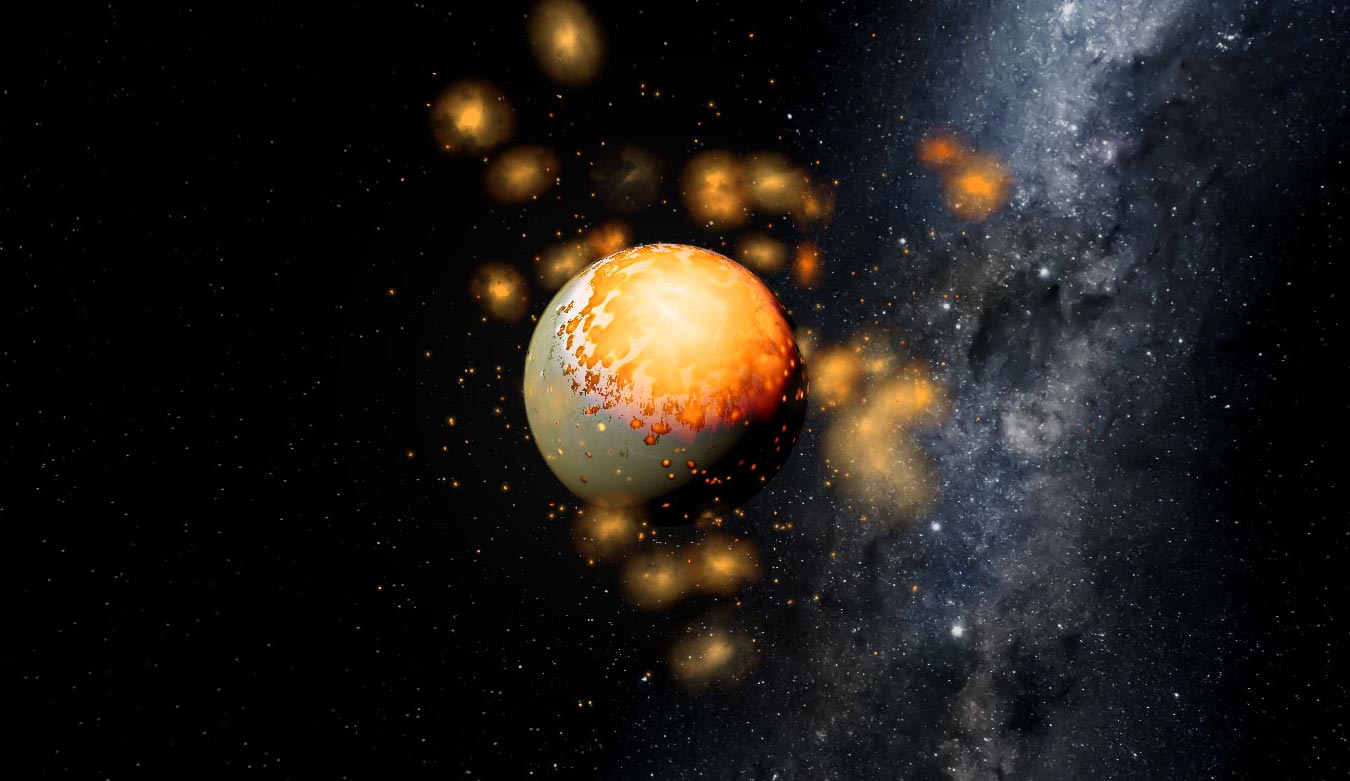
Impact history should be considered a key factor in the search for habitable Earth-like exoplanets.
Southwest Research Institute, working with Yale University, has produced a review highlighting recent scientific advances in understanding how the rocky inner planets, known as terrestrial planets, came to be and how they have changed over time. Their Nature Review journal paper examines the influence of late accretion on the long-term development of these planets, focusing on how this stage shaped their physical and chemical characteristics as well as their potential for supporting life.
Stars and planets emerge when immense clouds of gas and dust collapse under gravity. This process creates a central star, such as our Sun, surrounded by a broad disk of material that gradually clumps together.
Within this disk, the terrestrial planets (Mercury, Venus, Earth, and Mars) formed as small rocky fragments collided and merged into larger planetesimals, which later grew into protoplanets. During this period, late collisions played an especially important role. Earth appears to have been the last of the four to fully form, reaching roughly 99% of its final size within 60 to 100 million years after the earliest solid materials came together.
The Role of Late Accretion
“We examined the disproportionate role late accretion — the final 1% of planetary growth — plays in controlling the long-term evolution of the Earth and other terrestrial planets,” said the paper’s lead author, Dr. Simone Marchi, of SwRI’s Solar System Science and Exploration Division in Boulder, Colorado. “Differences in planets’ late accretions may provide a rationale for interpreting their distinct properties. We made advances constraining the history of late accretions, using large-scale impact simulations and understanding the consequences of interior, crustal, and atmospheric evolution.”
A recent wealth of geochemical data from meteorites and terrestrial rocks has led to a better understanding of the formation of planets. With these advances, collisions and their various consequences have emerged as crucial processes affecting the long-term evolution of terrestrial planets. For instance, the tectonics, atmospheric composition, and water of Venus and Earth appear to be tied to late accretion. The surface variability of Mars and the high metal-to-silicate mass ratio of Mercury are also associated with late large impacts.
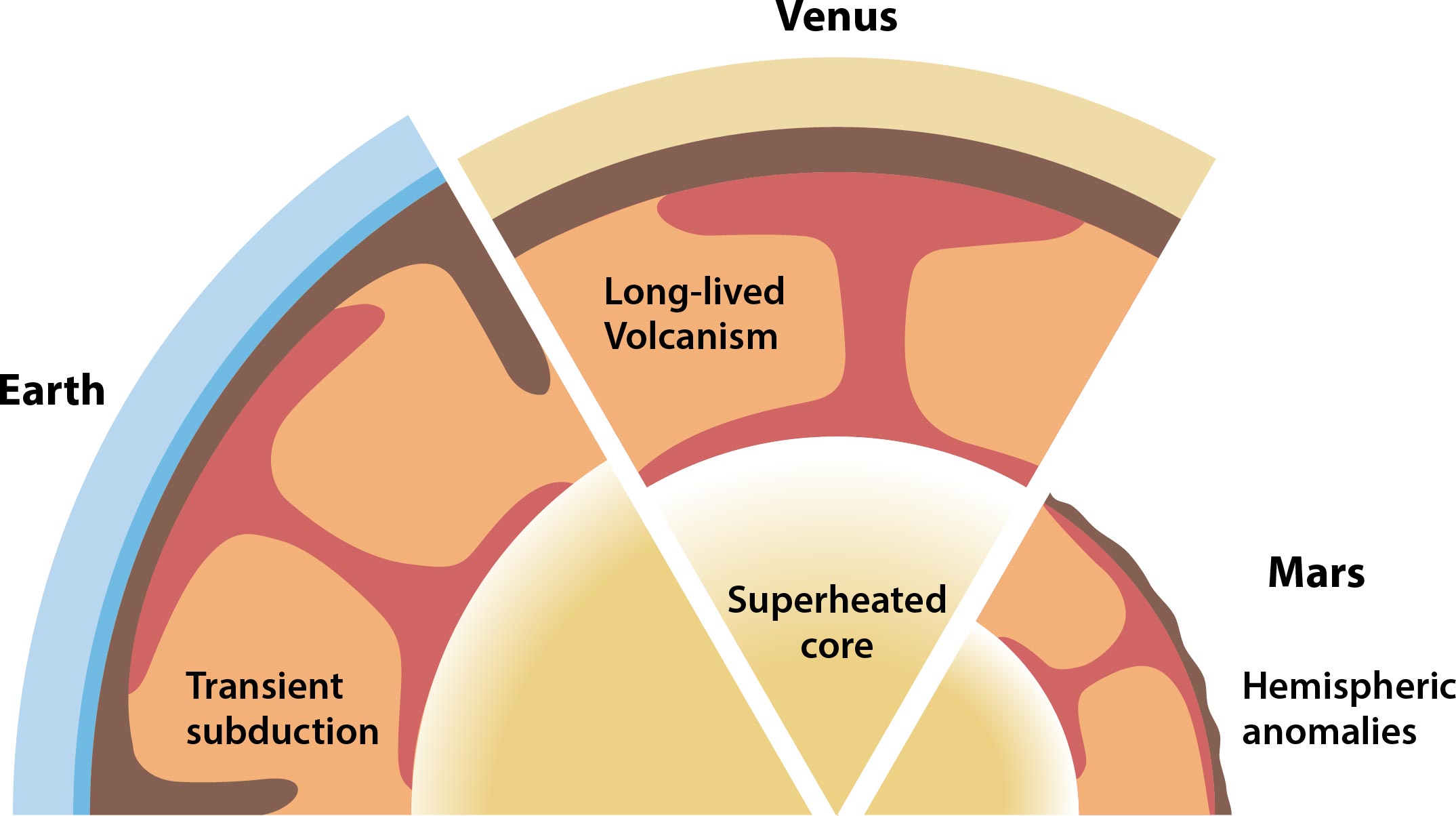
“Impact histories should play a critical role in the search for habitable exoplanets like Earth,” Marchi said. “The habitability of a rocky planet depends on the nature of its atmosphere, which is tied to plate tectonics and mantle outgassing. The search for Earth’s twin might focus on rocky planets with similar bulk properties — mass, radius, and habitable zone location — as well as a comparable collision history.”
Models provide insights into the total number and history of impacts, but geologic activity can obscure some evidence. The scientific community uses lunar impacts, additional observations, and dynamic models to better understand and “constrain” the bombardment history of the rocky planets.
Tracking the Fate of Impactors
“The fate of an impactor’s material is crucial to understanding the target body’s physical and chemical evolution,” Marchi said. “We assess the abundance of certain elements that have an affinity for metal in the mantle and crust of planetary objects to understand the timing and processes that led to the formations of their core, mantle, and crust.”
Impacts also modify the atmospheres of terrestrial planets in profound ways, particularly affecting the abundance of volatile elements, such as water and carbon, that easily vaporize. Collisions can blow off pre-existing atmospheres, or conversely, volatile-rich impactors can deliver these components to a planet’s surface and atmosphere. The abundance of volatiles provides insights into the formation, evolution, and habitability of terrestrial planets.
“These processes almost certainly played a role in the prebiotic chemistry of early Earth, but their implications in the origin of life remain a mystery,” Marchi said.
Reference: “The shaping of terrestrial planets by late accretions” by Simone Marchi, and Jun Korenaga, 28 May 2025, Nature.
DOI: 10.1038/s41586-025-08970-8
Never miss a breakthrough: Join the SciTechDaily newsletter.
Follow us on Google and Google News.
1 Comment
Betcha when more smoke clears it will be seen that a sizeable Moon, like ours, is also required to help maintain the critical plate tectonics.
{^_^}