
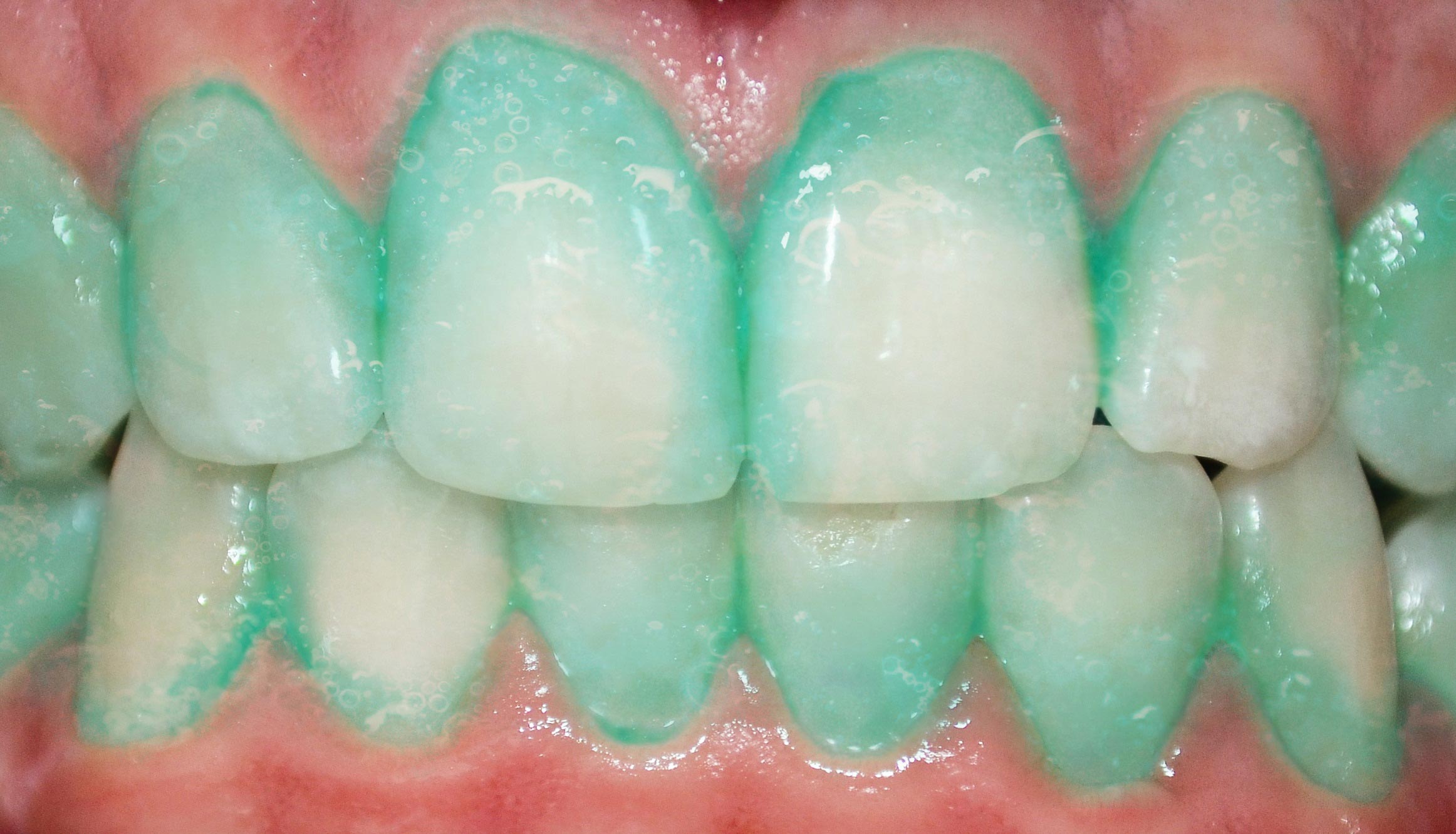
Study shows Plaque HD® significantly reduces inflammation throughout the body.
For decades, researchers have suggested a link between oral health and inflammatory diseases affecting the entire body — in particular, heart attacks and strokes. Inflammation is intimately involved in the pathogenesis of atherosclerosis and is accurately measured by high sensitivity C-reactive protein (hs-CRP), a sensitive marker for future risks of heart attacks and strokes.
Researchers from Florida Atlantic University’s Schmidt College of Medicine, Marshfield Clinic Research Institute, and the University of Wisconsin School of Medicine and Public Health, collaborated on a randomized trial titled, “Correlation between Oral Health and Systemic Inflammation” (COHESION), to further explore whether Plaque HD®, a plaque identifying toothpaste, reduces hs-CRP.
Results of the randomized pilot trial, published online ahead of print in the American Journal of Medicine, showed that Plaque HD® produced a statistically significant reduction in hs-CRP among those with elevations at baseline. Plaque HD® is the first toothpaste that identifies plaque so that it can be removed with directed brushing. In addition, the product’s proprietary formulation contains unique combinations and concentrations of cleaning agents that weaken the core of the plaque structure to help the subject visualize and more effectively remove the plaque.
In this trial, all randomized subjects were given the same brushing protocol and received a 30-day supply of toothpaste containing either Plaque HD® or an identical non-plaque identifying placebo toothpaste. To assess hs-CRP, levels were measured by Quest Diagnostics using an enzyme linked immunosorbent assay.
“The current findings are similar to those from our previous pilot trial,” said Charles H. Hennekens, M.D., Dr.P.H., senior author, first Sir Richard Doll Professor, and senior academic advisor in FAU’s Schmidt College of Medicine. “Whether this plaque-identifying toothpaste decreases heart attacks or strokes requires a large-scale randomized trial of sufficient size and duration. These results provide a stronger rationale to conduct such trials. If positive, the results of these trials would have significant potential clinical and public health implications.”
Based on these findings, Hennekens and colleagues at FAU and the University of Wisconsin School of Medicine and Public Health are drafting an investigator-initiated research grant proposal to the National Institutes of Health (NIH). Their proposed randomized trial will test whether Plaque HD® reduces progression of atherosclerosis in the coronary and carotid arteries, for which systemic inflammation is an important precursor.
A report from the United States Centers for Disease Control and Prevention found that 47.2 percent of American adults aged 30 years and older have some form of periodontal disease, a pathological inflammatory condition of the gums and tissues surrounding the teeth. Periodontal disease increases with age affecting more than 70 percent of adults 65 years and older. Prior research has suggested that periodontal disease may be connected to variety of other diseases, including heart disease and stroke and other inflammatory diseases such as rheumatoid arthritis. Inflammation throughout the body may be a crucial link between periodontal and other systemic diseases.
Further, two years ago, the prestigious New England Journal of Medicine ranked the original manuscript published in 1997 by Hennekens and colleagues on aspirin, inflammation and cardiovascular disease, as their most influential original report of the last 20 years. Those randomized data derived from the landmark Physician’s Health Study, in which Hennekens was the founding principal investigator, and suggested that hs-CRP predicted future heart attacks and strokes.
Co-authors of this randomized pilot trial are Amit Acharya, Ph.D., Marshfield Clinic Research Center and the University of Wisconsin School of Medicine and Public Health; Ingrid Glurich, Ph.D, Marshfield Clinic Research Center; and Scott Hetzel, M.S., KyungMann Kim, Ph.D., Matthew C. Tattersall, D.O., F.A.C.C.; and David L. DeMets, Ph.D., all with the University of Wisconsin School of Medicine and Public Health.
Never miss a breakthrough: Join the SciTechDaily newsletter.
Follow us on Google and Google News.
1 Comment
I’d sure like to see this on the shelves of Walmart.