
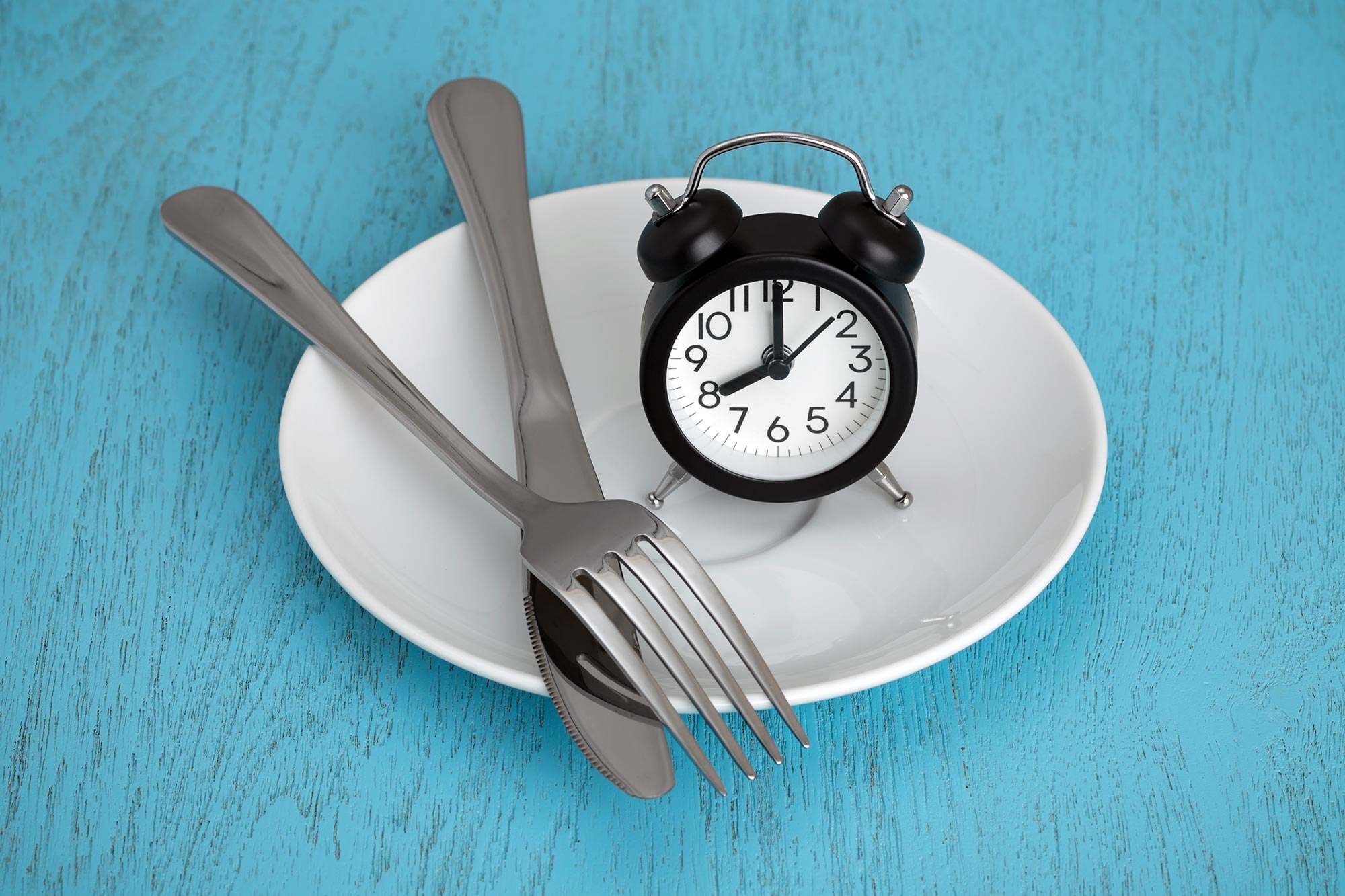
Intermittent fasting may not boost metabolism without cutting calories, according to new research.
A new study from the German Institute of Human Nutrition Potsdam-Rehbruecke (DIfE) and Charité – Universitätsmedizin Berlin challenges common beliefs about intermittent fasting. Researchers found that time-restricted eating (intermittent fasting with no change in total calories) did not produce measurable improvements in metabolism or heart health, although it did influence the body’s internal biological rhythms. The work, led by Prof. Olga Ramich as part of the ChronoFast study, was published in Science Translational Medicine.
Time-restricted eating (TRE) involves consuming all daily meals within a window of ten hours or less, followed by at least 14 hours of fasting. This eating pattern has gained attention as a simple way to manage weight and improve metabolic health. Animal research has shown that TRE can protect against diet-induced obesity and related metabolic issues, and some human studies have reported benefits such as improved insulin sensitivity, lower blood sugar and lipid levels, and modest reductions in body weight and fat. Because of these findings, TRE has been viewed as a potential strategy for addressing insulin resistance and diabetes.
Inconsistent Initial Situation
However, previous studies have produced inconsistent results, leaving open the question of what actually drives any observed benefits. It remains unclear whether improvements stem from shorter eating periods, an unintended reduction in calories, or both. Many earlier trials also failed to precisely track energy intake or control for other influencing factors.
To clarify this, Prof. Ramich, who heads the Department of Molecular Metabolism and Precision Nutrition at DIfE and also serves as a professor at the Charité – Universitätsmedizin Berlin, and her team tested whether limiting food intake to an eight-hour window could enhance insulin sensitivity and other markers of metabolic and cardiovascular health when calorie intake remained constant. This carefully designed investigation formed the basis of the ChronoFast trial.
The scientists conducted a randomized crossover design involving a total of 31 women with overweight or obesity. Over two weeks each, the participants consumed their usual meals either early, between 8 a.m. and 4 p.m.(eTRE), or late, between 1 p.m. and 9 p.m. (lTRE). The calorie and nutrient composition remained nearly identical (isocaloric).
During four visits, blood samples were collected, and an oral glucose tolerance test was performed to examine the influence of TRE on glucose and fat metabolism, as well as other metabolic markers. Within the dietary phases, continuous glucose monitoring was used to observe 24-hour glucose levels while simultaneously documenting food intake. Physical activity was controlled using a motion sensor. DIfE researchers, in cooperation with Prof. Achim Kramer from the Charité – Universitätsmedizin Berlin, also studied the body’s internal clock in isolated blood cells.
Determination of Circadian Rhythms
The human body follows individual, via an molecular mechanism generated rhythms, which roughly (Latin: circa) correspond to the length of a day (Latin: dia), and is therefore also known as the circadian clocks. According to the day-night rhythm, it reliably controls nearly all physiological and biochemical processes in the body, including sleep and metabolism. Almost every cell in the body possesses an internal clock that can be influenced by light and other factors, such as exercise or nutrition.
To objectively determine a person’s individual internal rhythms (circadian phase), Prof. Dr. Achim Kramer from Charité – Universitätsmedizin Berlin developed the BodyTime assay. The test requires only a single blood sample. This method was used in the ChronoFast study and showed that eating times influence the body’s internal clocks in humans.
No Improvements in Insulin Sensitivity or Other Metabolic Values
Contrary to previous studies suggesting positive effects of TRE, the ChronoFast study shows no clinically relevant changes in insulin sensitivity, blood sugar levels, blood fats, or inflammatory markers, at least following this relatively short two-week intervention. “Our results suggest that the health benefits observed in earlier studies were likely due to unintended calorie reduction, rather than the shortened eating period itself,” explains Ramich.
Although the participants showed no marked metabolic improvements, the study of the internal clock in blood cells revealed that TRE influenced the circadian phase in blood cells and the sleep timing. The internal clock was, on average, shifted back by 40 minutes after the lTRE intervention compared to the eTRE intervention, and participants who followed the lTRE intervention went to bed and awoke later. “The timing of food intake acts as a cue for our biological rhythms – similar to light,” says first author Beeke Peters.
Negative Energy Balance and Chronotype May Be Crucial
The results underscore that calorie reduction plays a central role in the health benefits of intermittent fasting. “Those who want to lose weight or improve their metabolism should pay attention not only to the clock, but also to their energy balance,” summarizes Ramich.
Future studies should clarify whether a specific timing of TRE, in combination with a reduced calorie intake, provides additional benefits and how individual factors, such as chronotype or genetics, influence these effects.
Reference: “Intended isocaloric time-restricted eating shifts circadian clocks but does not improve cardiometabolic health in women with overweight” by Beeke Peters, Julia Schwarz, Bettina Schuppelius, Agnieszka Ottawa, Daniela A. Koppold, Daniela Weber, Nico Steckhan, Knut Mai, Tilman Grune, Andreas F. H. Pfeiffer, Andreas Michalsen, Achim Kramer and Olga Pivovarova-Ramich, 29 October 2025, Science Translational Medicine.
DOI: 10.1126/scitranslmed.adv6787
Never miss a breakthrough: Join the SciTechDaily newsletter.
Follow us on Google and Google News.
10 Comments
Testing 31 I overweight/obese people. Great study and zero real conclusion.
Kind of a waste of money. Anyone that has really researched this realizes that the restricted eating window should also reduce calories. Plus there are other factors at play, like whether you are exercising in a fasted state. Also the most commonly recommended IF is 8/16.
2 weeks! To undo years of poor choices??
TWO WEEKS?
That is barely enough time to see differences in insulin sensitivity within statistical significance.
IF does improve insulin sensitivity. This study needed more time.
isn’t that common sense..really.. go feed the hungry
Well duh. You clearly have to also eat in a calorie deficit too. But your body WILL NOT lose weight, if your insulin levels are elevated. So the best way to do that is to fast for the majority of the day (including while sleeping). My eating window is 10am – 4pm. My stomach is empty when I get up, so my body uses the glycogen in my liver, helping it heal. My stomach is empty when I go to bed, and I am starting to move into burning fat, etc. I’ve lost 28 pounds as a post menopausal woman, this way. And I KNOW I will reach my goal weight.
At age 86, I have no problem doing 44 hour fasts. If I eat too much and gain a few pounds, I just eat absolutely nothing the next day and lose the gain. I admit that keeping the weight down is a problem if you are addicted to nuts and guacamole as I am.
Of course. If you still eat the same number of calories then this is technically bulimia, binge and purge where the purge is prolonged fasting. We already knew it didn’t lead to decreased weight unless there was an overall caloric deficit.
I lost 30 lbs by IF. (went from 165 to 135, I’m 5’4″) I was only eating one full meal and a one smaller meal per day. I was completely cutting out breakfast, lunch and snacks during daytime and ate only after dinner time. I only ate when I was hungry and stopped eating when I was full. If you do IF right, you will be cutting calories by about half and you will lose weight. BUT I had no health benefits from the weight loss. My blood pressure is still high, my cholesterol is still high, I actually have LESS energy and feel worse.
Wtf 31 obese women over 2 weeks!!! How do they get funding for this? What a twat