
Close Menu
    Facebook X (Twitter) Instagram
    SciTechDaily
    • Biology
    • Chemistry
    • Earth
    • Health
    • Physics
    • Science
    • Space
    • Technology
    Facebook X (Twitter) Pinterest YouTube RSS
    SciTechDaily
    Home»Technology»Practical Quantum Devices Now Closer to Reality – Scientists Unveil Room Temperature Photonic Chips
    Technology

    Practical Quantum Devices Now Closer to Reality – Scientists Unveil Room Temperature Photonic Chips

    By The Hebrew University of JerusalemMarch 28, 2024No Comments3 Mins Read
    Facebook Twitter Pinterest Telegram LinkedIn WhatsApp Email Reddit
    Share
    Facebook Twitter LinkedIn Pinterest Telegram Email Reddit
    Fiber Coupled Single Photon Source
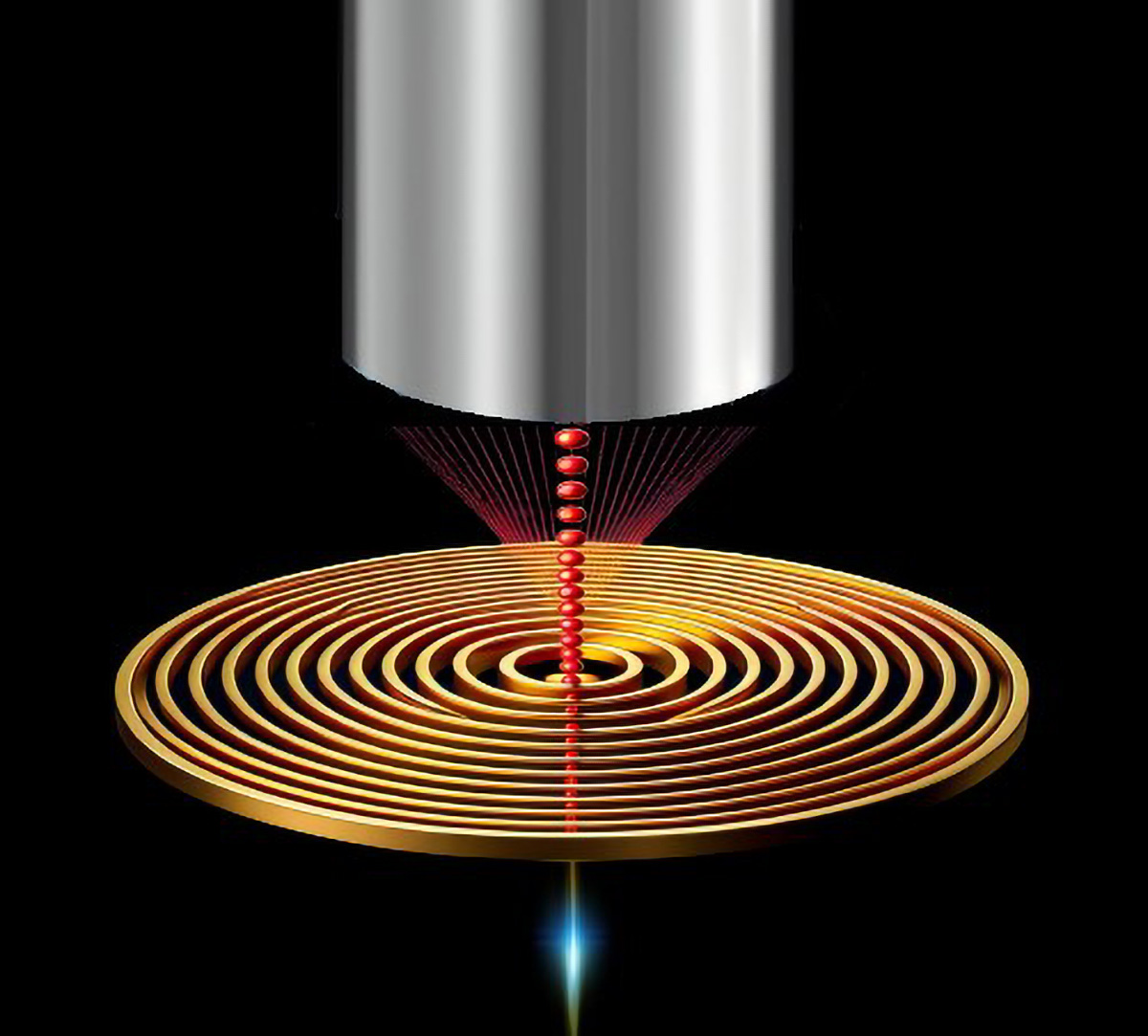
    A quantum emitter centrally placed within a hybrid metal-dielectric bullseye antenna, designed for highly directional photon emission. The antenna’s unique structure allows photons to be efficiently coupled directly into an optical fiber, showcasing a pivotal enhancement in quantum photonics technology with implications for secure communication and advanced quantum computing applications. Credit: Alexander Nazarov

    A new study by Hebrew University has made a significant breakthrough by successfully incorporating single-photon sources into small chips that operate at room temperature. This development marks a crucial progress in the field of quantum photonics, opening up possibilities for its use in quantum computing and cryptography. It represents a key achievement in creating usable quantum photonic devices, signaling an optimistic outlook for the complete realization of quantum technologies, including computing, communication, and sensing.

    A recent study, spearheaded by Boaz Lubotzky during his Ph.D. research, along with Prof. Ronen Rapaport from the Racah Institute of Physics at The Hebrew University of Jerusalem, in collaboration with teams from Los Alamos National Laboratory (LANL) in the USA and from Ulm University in Germany, unveiled a significant advancement toward the on-chip integration of single-photon sources at room temperature. This achievement represents a significant step forward in the field of quantum photonics and holds promise for various applications including quantum computing, cryptography, and sensing.

    Innovation in Antenna Design

    The key innovation lies in the implementation of a hybrid metal–dielectric bullseye antenna, which delivers exceptional photon directionality. This novel antenna design allows for the efficient back-excitation of photons by placing the emitter within a subwavelength hole positioned at the center of the antenna. This configuration enables both direct back-excitation and highly efficient front coupling of emission to low numerical aperture optics or optical fibers.

    The study demonstrates the versatility of this concept by fabricating devices containing either colloidal quantum dots or nanodiamonds containing silicon-vacancy centers, both are excellent single photon emitters even at room temperature. These emitters were accurately positioned using two distinct nanopositioning methods.
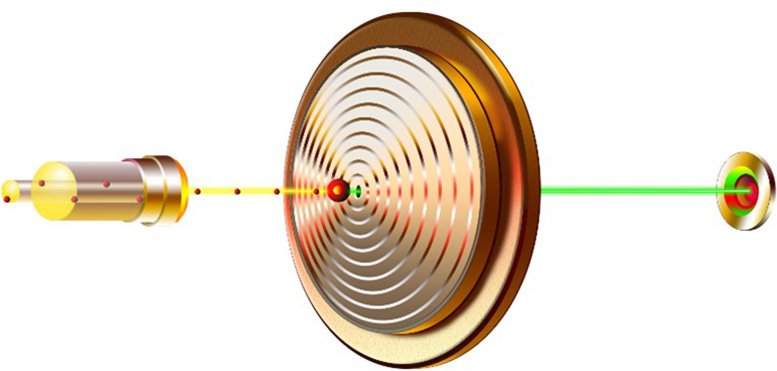
    Quantum Emitter Centrally Placed Within a Hybrid Metal Dielectric Bullseye Antenna
    Fiber-Coupled Single-Photon Source. Credit: Swati Foujdar

    Remarkably, both types of back-excited devices exhibited front collection efficiencies of approximately 70% at numerical apertures as low as 0.5. This means one can use very simple and compact optical elements and still collect most of the photons into the desired channel, or accurately send the emitted photons into a nearby optical fiber without the need for any additional coupling optics. This is a key ingredient in the integration of quantum light sources into real quantum systems. This streamlined process promises to simplify future integration efforts and accelerate the realization of practical quantum photonic devices.

    Boaz Lubotzky commented on the significance of this achievement, stating, “By overcoming key challenges associated with on-chip integration of single-photon sources, we have opened up exciting new possibilities for the development of advanced quantum technologies.”

    The successful integration of single-photon sources onto tiny chips at room temperature, achieved through the innovative use of a hybrid metal–dielectric bullseye antenna has immediate applications in advancing quantum cryptography for secure communication, improving sensing technologies, and streamlining the integration process for practical quantum photonic devices. The study’s findings open doors for commercial applications and the development of new products in the burgeoning field of quantum technologies.

    Reference: “Room-Temperature Fiber-Coupled Single-Photon Sources based on Colloidal Quantum Dots and SiV Centers in Back-Excited Nanoantennas” by Boaz Lubotzky, Alexander Nazarov, Hamza Abudayyeh, Lukas Antoniuk, Niklas Lettner, Viatcheslav Agafonov, Anastasia V. Bennett, Somak Majumder, Vigneshwaran Chandrasekaran, Eric G. Bowes, Han Htoon, Jennifer A. Hollingsworth, Alexander Kubanek and Ronen Rapaport, 2 January 2024, Nano Letters.
    DOI: 10.1021/acs.nanolett.3c03672

    Never miss a breakthrough: Join the SciTechDaily newsletter.
    Follow us on Google and Google News.

    Fiber Optics Quantum Computing Quantum Cryptography Quantum Dots The Hebrew University of Jerusalem
    Share. Facebook Twitter Pinterest LinkedIn Email Reddit

    Related Articles

    Unlocking the Quantum Internet: Germany’s Latest Experiment Sets Global Benchmarks

    Crucial Connection Completed: Laying the Foundation for the Quantum Internet

    A Peculiar State of Matter in Layers of Semiconductors Could Advance Quantum Computing

    Exploiting a Strange State of Matter: Researchers Confront Major Hurdle in Quantum Computing

    Secret to Building Superconducting Quantum Computers With Massive Processing Power

    Crucial Milestone for Scalable Quantum Technology: 2D Array of Semiconductor Qubits That Functions as a Quantum Processor

    Important Milestone in the Creation of a Quantum Computer That Uses Transistors As Qubits

    Artificial Atoms in Silicon “Quantum Dot” Create Stable Qubits for Quantum Computing

    New Spin Technique Moves Quantum Computers a Step Closer

    Leave A Reply Cancel Reply

    • Facebook
    • Twitter
    • Pinterest
    • YouTube

    Don't Miss a Discovery

    Subscribe for the Latest in Science & Tech!

    Trending News

    The Universe Is Expanding Too Fast and Scientists Can’t Explain Why

    “Like Liquid Metal”: Scientists Create Strange Shape-Shifting Material

    Early Warning Signals of Esophageal Cancer May Be Hiding in Plain Sight

    Common Blood Pressure Drug Shows Surprising Power Against Deadly Antibiotic-Resistant Superbug

    Scientists Uncover Dangerous Connection Between Serotonin and Heart Valve Disease

    Scientists Discover a “Protector” Protein That Could Help Reverse Hair Loss

    Bone-Strengthening Discovery Could Reverse Osteoporosis

    Scientists Uncover Hidden Trigger Behind Stem Cell Aging

    Follow SciTechDaily
    • Facebook
    • Twitter
    • YouTube
    • Pinterest
    • Newsletter
    • RSS
    SciTech News
    • Biology News
    • Chemistry News
    • Earth News
    • Health News
    • Physics News
    • Science News
    • Space News
    • Technology News
    Recent Posts
    • A Common Diabetes Drug May Hold the Key to Stopping HIV From Coming Back
    • Ancient “Syphilis-Like” Disease in Vietnam Challenges Key Scientific Assumptions
    • Drinking Alcohol To Cope in Your 20s Could Damage Your Brain for Life
    • Scientists Crack Alfalfa’s Chromosome Mystery After Decades of Debate
    • Ancient Ant-Plant Alliance Collapses As Predatory Wasps Move In
    Copyright © 1998 - 2026 SciTechDaily. All Rights Reserved.
    • Science News
    • About
    • Contact
    • Editorial Board
    • Privacy Policy
    • Terms of Use

    Type above and press Enter to search. Press Esc to cancel.