
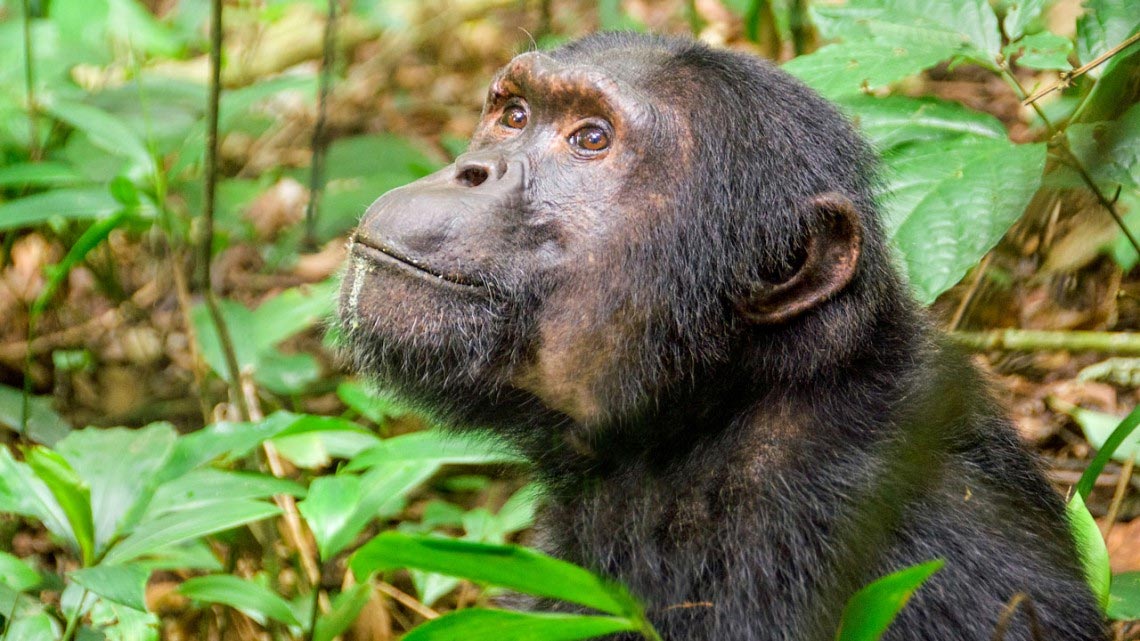
The ecological selectivity at the Cretaceous-Paleogene boundary not only shaped which mammals endured but also set the stage for their rapid diversification into new niches.
When an asteroid struck 66 million years ago and wiped out dinosaurs not related to birds and three-quarters of life on Earth, early ancestors of primates and marsupials were among the only tree-dwelling (arboreal) mammals that survived, according to a new study.
Arboreal species were especially at risk of extinction due to global deforestation caused by wildfires from the asteroid’s impact.
In the study, computer models, fossil records, and information from living mammals revealed that most of the surviving mammals did not rely on trees, though the few arboreal mammals that lived on – including human ancestors – may have been versatile enough to adapt to the loss of trees.
The study points to the influence of this extinction event, known as the Cretaceous-Paleogene (K-Pg) boundary, on shaping the early evolution and diversification of mammals.
Behavioral Flexibility as a Survival Strategy
“One possible explanation for how primates survived across the K-Pg boundary, in spite of being arboreal, might be due to some behavioral flexibility, which may have been a critical factor that let them survive,” said Jonathan Hughes, the paper’s co-first author and a doctoral student in the lab of Jeremy Searle, professor of ecology and evolutionary biology in the College of Agriculture and Life Sciences. Co-first author Jacob Berv, Ph.D. ’19, is currently a Life Sciences Fellow at the University of Michigan.
The study, “Ecological Selectivity and the Evolution of Mammalian Substrate Preference Across the K-Pg Boundary,” was published on October 11, 2021, in the journal Ecology and Evolution.
The earliest mammals appeared roughly 300 million years ago and may have diversified in tandem with an expansion of flowering plants about 20 million years prior to the K-Pg event. When the asteroid struck, many of these mammal lineages died off, Hughes said.
“At the same time, the mammals that did survive diversified into all the new ecological niches that opened up when dinosaurs and other species became extinct,” Hughes said.
Modeling Mammalian Evolutionary Pathways
In the study, the researchers used published phylogenies (branching, tree-like diagrams that show evolutionary relatedness among groups of organisms) for mammals. They then classified each living mammal on those phylogenies into three categories – arboreal, semi-arboreal and non-arboreal – based on their preferred habitats. They also designed computer models that reconstructed the evolutionary history of mammals.
Mammal fossils from around the K-Pg are very rare and are difficult to use to interpret an animal’s habitat preference. The researchers compared information known from living mammals against available fossils to help provide additional context for their results.
Generally, the models showed that surviving species were predominantly non-arboreal through the K-Pg event, with two possible exceptions: ancestors of primates and marsupials. Primate ancestors and their closest relatives were found to be arboreal right before the K-Pg event in every model. Marsupial ancestors were found to be arboreal in half of the model reconstructions.
The researchers also examined how mammals as a group may have been changing over time.
“We were able to see that leading up to the K-Pg event, around that time frame, there was a big spike in transitions from arboreal and semi-arboreal to non-arboreal, so it’s not just that we are seeing mostly non-arboreal [species], but things were rapidly transitioning away from arboreality,” Hughes said.
Reference: “Ecological selectivity and the evolution of mammalian substrate preference across the K–Pg boundary” by Jonathan J. Hughes, Jacob S. Berv, Stephen G. B. Chester, Eric J. Sargis and Daniel J. Field, 11 October 2021, Ecology and Evolution.
DOI: 10.1002/ece3.8114
Co-authors include Daniel Field, a vertebrate paleontologist at the University of Cambridge; Eric Sargis, a professor of anthropology at Yale University; and Stephen Chester, an associate professor of anthropology at Brooklyn College.
The study was funded by the National Science Foundation.
Never miss a breakthrough: Join the SciTechDaily newsletter.
Follow us on Google and Google News.
1 Comment
Methinks someone is having difficulty apprehending the QUANTITY of time under discussion.
Just 7 million years ago Chadensis was experimenting with Vertical posture. He didn’t figure it out.