
Close Menu
    Facebook X (Twitter) Instagram
    SciTechDaily
    • Biology
    • Chemistry
    • Earth
    • Health
    • Physics
    • Science
    • Space
    • Technology
    Facebook X (Twitter) Pinterest YouTube RSS
    SciTechDaily
    Home»Space»Progress on NASA’s New Lunar Terrain Vehicle (LTV) Moon Rover
    Space

    Progress on NASA’s New Lunar Terrain Vehicle (LTV) Moon Rover

    By NASANovember 3, 2022No Comments3 Mins Read
    Facebook Twitter Pinterest Telegram LinkedIn WhatsApp Email Reddit
    Share
    Facebook Twitter LinkedIn Pinterest Telegram Email Reddit
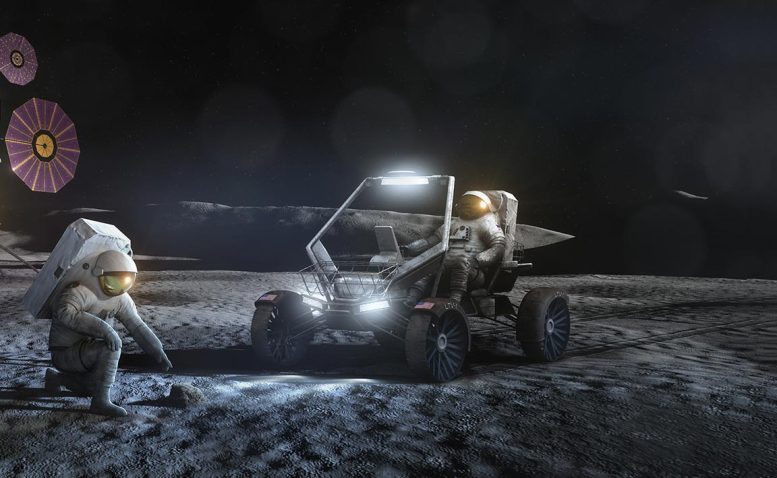
    NASA Lunar Terrain Vehicle With Astronaut
    NASA astronaut kneeling in front of the new Lunar Terrain Vehicle (LTV) on the surface of the moon. Credit: NASA

    During Artemis missions, as NASA astronauts explore the South Pole region of the Moon, they will be able to go farther and conduct more science than ever before using a new Lunar Terrain Vehicle (LTV). Instead of owning the vehicle, NASA plans to contract it from the private sector as a service.

    NASA will accept feedback until December 1 on the draft request for proposals for the LTV Services (LTVS) contract, which is now ready for industry to review. The draft outlines NASA’s expectation for use of the LTV on the lunar surface in the 2028 timeframe. After taking industry feedback into account, NASA plans to issue a final request for proposals by early 2023.

    Lara Kearney is the manager of the Extravehicular Activity (EVA) and Human Surface Mobility (HSM) Program at NASA’s Johnson Space Center in Houston. “This draft is one of the first important steps in this exciting project that will allow astronauts to explore farther on the Moon than ever before,” says Kearney. “Gaining industry feedback is crucial as we move forward in issuing a final request for proposal.”
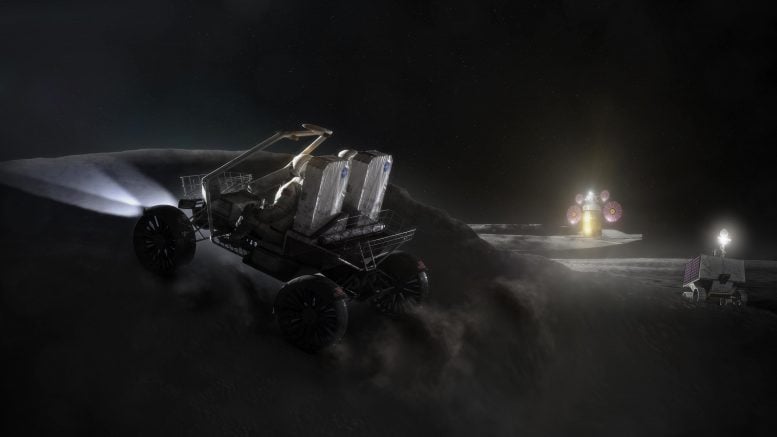
    Lunar Terrain Vehicle (LTV)
    Artist’s depiction of a lunar terrain vehicle on the surface of the Moon. Credit: NASA

    Debuting during the Apollo missions, this iconic style of unpressurized, human-class rover is a cornerstone in NASA’s plans to develop a long-term presence on the lunar surface. While those human-driven vehicles expanded lunar exploration capabilities significantly, the new Artemis LTV will feature multiple upgrades and advanced technology.

    Because Artemis missions will be targeting the lunar South Pole area, the new LTV must be able to withstand and operate in cold and unique lighting conditions. The Artemis LTV is also expected to be able to cover a range of hundreds of miles per year, enabling access to diverse locations that will facilitate science discoveries, resource prospecting, and exploration. It will also be capable of remote operation and will be available for other commercial uses when not carrying out NASA research and operations.

    By contracting services from industry partners, NASA is able to leverage commercial innovation and provide the best value to U.S. taxpayers while achieving its human spaceflight and exploration goals. The contract will support continued science and long-term human exploration at the Moon under Artemis, which will land the first woman and first person of color on the lunar surface.

    Learn more about this new approach to lunar surface exploration and NASA’s plans to contract for LTV services at:

    https://www.nasa.gov/jsc/procurement/ltv

    Never miss a breakthrough: Join the SciTechDaily newsletter.
    Follow us on Google and Google News.

    Moon
    Share. Facebook Twitter Pinterest LinkedIn Email Reddit

    Related Articles

    Research Papers Explore Titan’s Atmosphere

    NASA LRO Spacecraft Reveals Geological Activity on the Moon’s Surface

    Moon Data Allows Creation of Detailed Lunar 3-D Map

    NASA Plans Space Outpost on the Far Side of the Moon at Earth Moon Lagrange Point 2

    NASA’s GRAIL Mission Returns Video From Far Side of the Moon

    MIT Researchers Examine New Lunar Dynamo Evidence

    Russian Mars Moon Probe Phobos-Grunt Crashed In Pacific Ocean

    GRAIL Probes Now Orbiting The Moon

    Scientists Rank Most Livable Alien Worlds

    Leave A Reply Cancel Reply

    • Facebook
    • Twitter
    • Pinterest
    • YouTube

    Don't Miss a Discovery

    Subscribe for the Latest in Science & Tech!

    Trending News

    The Strange “Spacetime Crystal” That Can Suddenly Turn Into a Black Hole

    The Surprising Way Asteroids May Have Helped Life Begin on Earth

    Vast Hidden Structure Discovered Under Miles of Ice in East Antarctica

    A Surprising Discovery Suggests Autism Is Not One Condition

    New Alzheimer’s Discovery Could Change How Scientists Fight the Disease

    Yale Discovery Overturns Long-Held “Evolutionary Dead End” Theory

    UCLA Scientists Uncover a “Hidden Weakness” in Some of the World’s Deadliest Cancers

    Humpback Whale Stuns Scientists With 15,000 Kilometer Journey Across Oceans

    Follow SciTechDaily
    • Facebook
    • Twitter
    • YouTube
    • Pinterest
    • Newsletter
    • RSS
    SciTech News
    • Biology News
    • Chemistry News
    • Earth News
    • Health News
    • Physics News
    • Science News
    • Space News
    • Technology News
    Recent Posts
    • Food Waste Becomes a Powerful Carbon Trap in Climate Breakthrough
    • Battery-Free Artificial Photosynthesis Turns Sunlight, Water, and CO2 Into Fuel
    • How Ancient People Moved a 6-Ton Stone 700 Kilometers to Stonehenge
    • Scientists Finally See How Antibodies Really Attack Viruses
    • The Unexpected Gut Health Risk of Cutting Out Sugar
    Copyright © 1998 - 2026 SciTechDaily. All Rights Reserved.
    • Science News
    • About
    • Contact
    • Editorial Board
    • Privacy Policy
    • Terms of Use

    Type above and press Enter to search. Press Esc to cancel.