
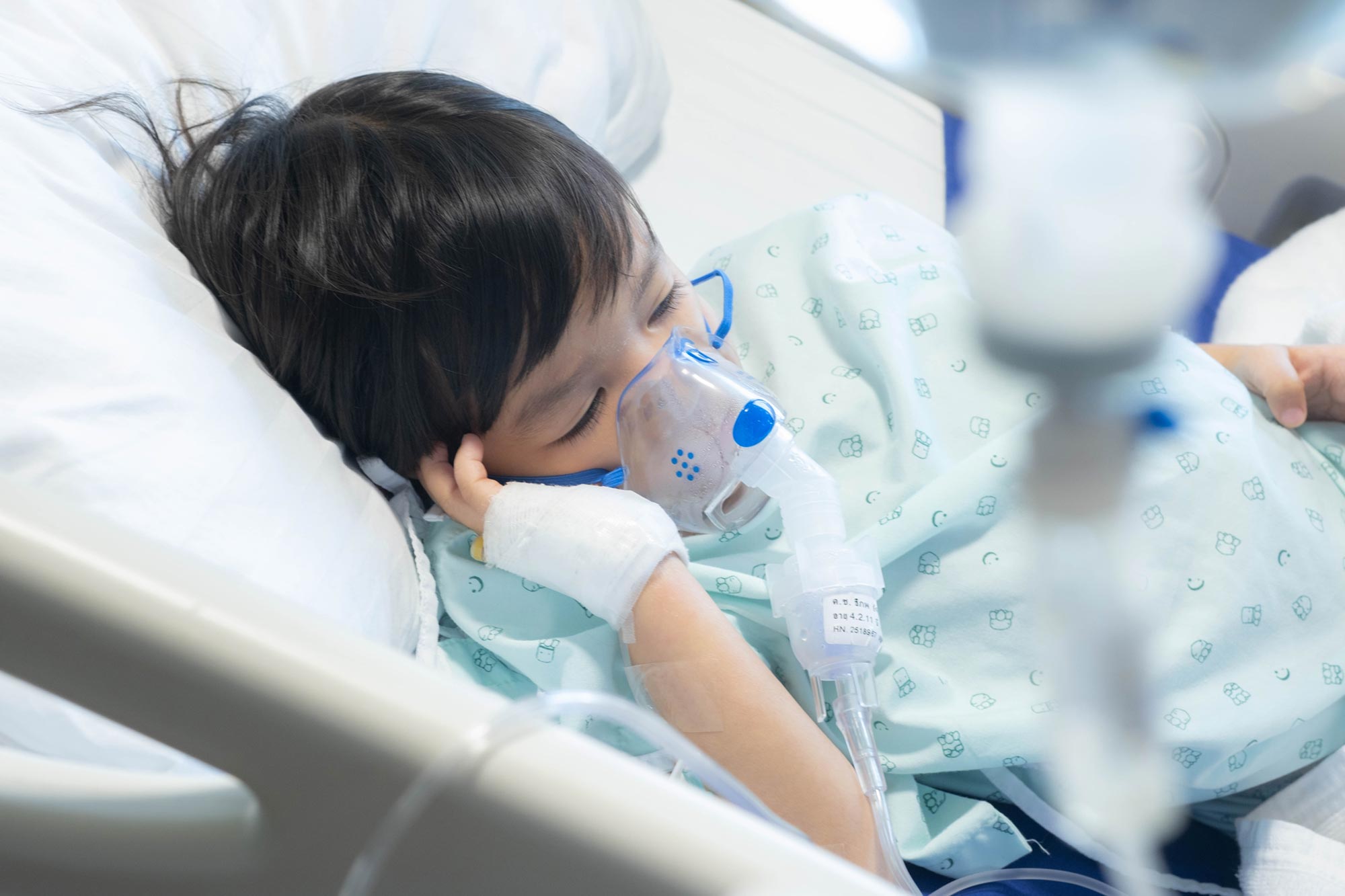
Protecting babies from RSV could help prevent asthma years later.
Researchers in Belgium from VIB and Ghent University (UGent), working alongside colleagues in Denmark, have identified strong evidence that infection with respiratory syncytial virus (RSV) during early infancy greatly increases the chances of developing asthma in childhood – particularly for children who already have a family history of asthma or allergies. The study, published in Science Immunology, points to newborn RSV protection as a potential way to significantly reduce asthma cases later in life.
Early-life infections and asthma risk
Asthma affects an estimated 5-15% of children across Europe. The condition can interfere with daily life, place long-term strain on families, and create substantial healthcare costs. For these reasons, preventing asthma before it begins has become a critical public health goal.
“Childhood asthma is a complex disease with many contributing factors,” says Prof. Bart Lambrecht (VIB-UGent Center for Inflammation Research), senior author of the study. “We found that early-life RSV infection and genetic allergy risk interact in a very specific way that pushes the immune system toward asthma. The encouraging news is that this process can be prevented.”

Combining population data with laboratory research
To better understand how RSV and inherited allergy risk interact, the scientists analyzed nationwide health registry data covering all Danish children and their parents. They paired this large-scale population data with carefully controlled laboratory experiments.
This combined approach allowed the team to see how early viral infection and genetic predisposition reinforce each other. The results revealed that infants who experience severe RSV infections in their first months of life are more likely to develop immune responses that overreact to common allergens such as house dust mites.
Why family history matters
The effect of early RSV infection was far stronger in children with a family background of asthma or allergies. In these cases, allergen-specific antibodies passed from parents to newborns increased sensitivity even further, making the infant immune system more prone to exaggerated reactions.
RSV prevention blocks harmful immune changes
The researchers also tested what happens when newborns are protected from RSV. In experimental models, blocking RSV infection prevented the immune system changes linked to asthma development. As a result, asthma did not develop.
“With RSV prevention now becoming widely accessible, we have an opportunity to improve long-term respiratory health, not just prevent RSV hospitalizations,” says Prof. Hamida Hammad (VIB-UGent), co-senior author. “This is not just a laboratory insight. It’s a message that should help parents choose RSV prevention with confidence.”
Expanding access to RSV protection
Several countries are beginning to introduce maternal vaccination during the third trimester of pregnancy, along with passive immunization of newborns using long-acting antibodies. These approaches are highly effective at preventing RSV hospitalizations. However, adoption has been uneven.
“This is a moment where policy, science, and pediatricians can come together,” Lambrecht adds. “If preventing RSV infection also reduces asthma risk, the benefits for families and health systems could be enormous.”
Reference: “Maternal allergy and neonatal RSV infection synergize via FcR-mediated allergen uptake to promote the development of asthma in early life” by Elisabeth De Leeuw, Josefine F. Justesen, Cédric Bosteels, Nincy Debeuf, Manon Vanheerswynghels, Leander Jonckheere, Caroline De Wolf, Alysia Wayenberg, Karel F.A. Van Damme, Stijn Vanhee, Manon Lesage, Kim Deswarte, Sam Dupont, Morten Dahl, Hamida Hammad and Bart N. Lambrecht, 28 November 2025, Science Immunology.
DOI: 10.1126/sciimmunol.adz4626
This work was supported by the European Research Council, the University of Ghent, and Research Foundation – Flanders (FWO).
Never miss a breakthrough: Join the SciTechDaily newsletter.
Follow us on Google and Google News.