
Close Menu
    Facebook X (Twitter) Instagram
    SciTechDaily
    • Biology
    • Chemistry
    • Earth
    • Health
    • Physics
    • Science
    • Space
    • Technology
    Facebook X (Twitter) Pinterest YouTube RSS
    SciTechDaily
    Home»Technology»Published Study Shows Algae Using Raw Plants as a Carbon Energy Source
    Technology

    Published Study Shows Algae Using Raw Plants as a Carbon Energy Source

    By Nancy Ambrosiano, Los Alamos National LaboratoryJuly 18, 2018No Comments2 Mins Read
    Facebook Twitter Pinterest Telegram LinkedIn WhatsApp Email Reddit
    Share
    Facebook Twitter LinkedIn Pinterest Telegram Email Reddit
    Feeding Plants This Algae Could Fuel Your Car
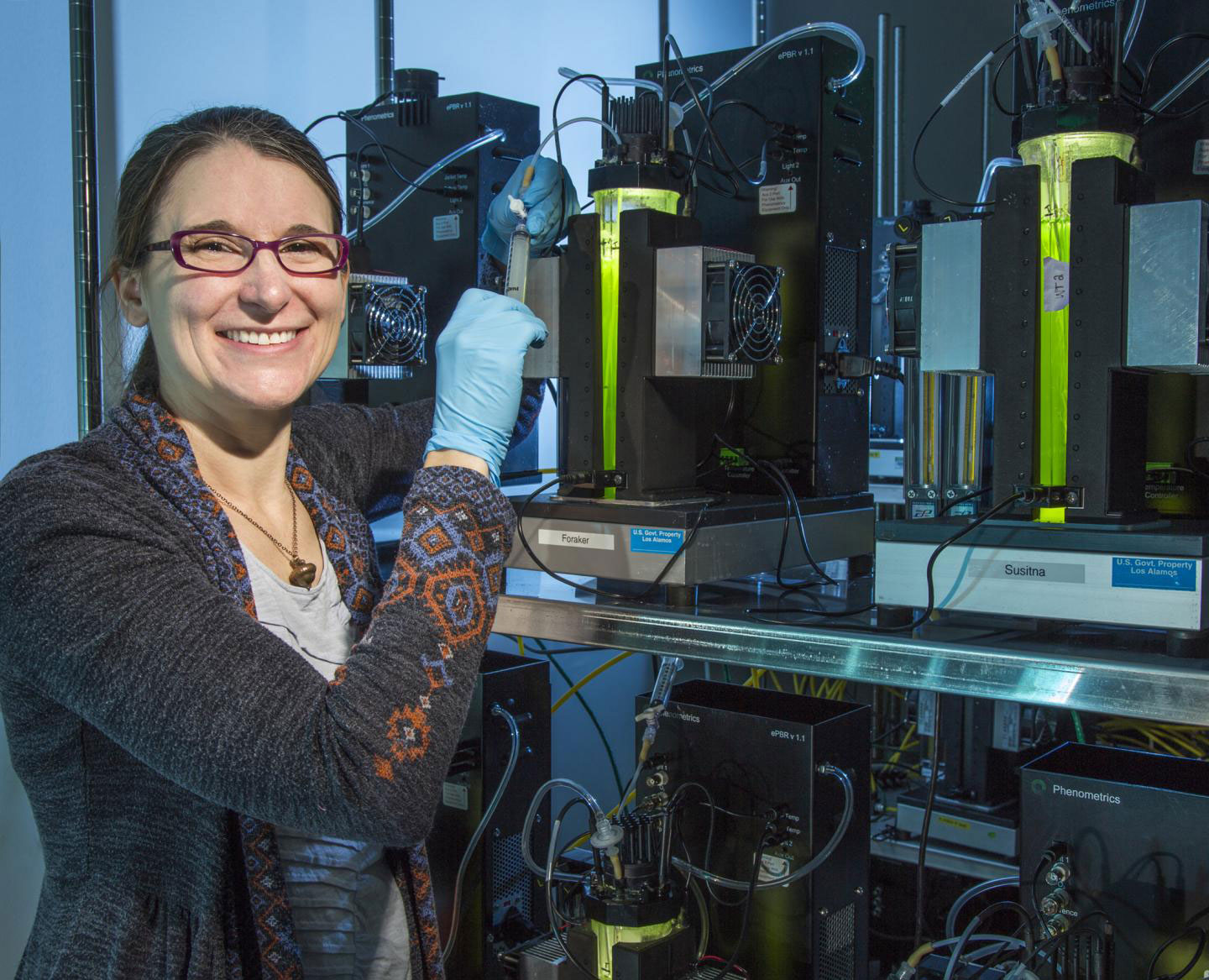
    Amanda Barry of Los Alamos’s Bioenergy and Biome Sciences group, the lead author on the study.

    Researchers at Los Alamos National Laboratory and partner institutions provided today the first published report of algae using raw plants as a carbon energy source. The research shows that a freshwater production strain of microalgae, Auxenochlorella protothecoides, is capable of directly degrading and utilizing non-food plant substrates, such as switchgrass, for improved cell growth and lipid productivity, useful for boosting the algae’s potential value as a biofuel.

    “Algae hold great potential as a source of renewable fuel due to their ability to produce refinery-compatible diesel and jet fuel precursors,” said Amanda Barry of Los Alamos’s Bioenergy and Biome Sciences group, lead author on the study, out today in the journal Algal Research. “Identifying algae strains that can use plant substrates, such as switchgrass and corn stover (the part of the plant left in a field after harvest) to grow faster and with more lipids suggests that waste plant material can be used to increase the productivity of algae during cultivation for biofuels or bioproducts. Pinpointing the unique enzymes and biochemical pathways algae use to break down complex plant lignocellulose increases our understanding of algal biology, and it opens up new avenues of future designer engineering to improve algal biofuel production strains,” she said.

    The current study presents the first example of algae degradation and utilization of untreated plant substrate, the putative genetic and molecular mechanisms behind this degradation, and identifies potential glycosyl hydrolases that may be involved in plant deconstruction.

    Publication: “Characterization of plant carbon substrate utilization by Auxenochlorella protothecoides” by Brian W. Vogler, Shawn R. Starkenburg, Nilusha Sudasinghe, Jenna Y.Schambach, Joseph A.Rollin, Sivakumar Pattathil and Amanda N.Barry, 17 July 2018, Algal Research.
    DOI: 10.1016/j.algal.2018.07.001

    Funding: This work was partly supported by a grant from the Laboratory Directed Research and Development Early Career Research Program at Los Alamos National Laboratory and funds provided by the U.S. Department of Energy’s Bioenergy Technologies Office.

    Never miss a breakthrough: Join the SciTechDaily newsletter.
    Follow us on Google and Google News.

    Algae Biofuel Biotechnology Green Technology Los Alamos National Laboratory Renewable Energy Sustainability
    Share. Facebook Twitter Pinterest LinkedIn Email Reddit

    Related Articles

    Research Shows Advanced Biofuels Can Be Produced Extremely Efficiently

    Engineers Discover Greener and Cheaper Technique for Biofuel

    Engineers Convert Yeast Cells into Biofuel

    Scripps Researchers Develop New Method for Enhancing Biofuel Production

    New Approach Improves Biomass-to-Fuel Process

    Discovery May Lead to the Creation of Biofuel From CO2 in the Atmosphere

    Fermentation Process for Making Explosives Helps Boost Biofuel Production

    Carbon Increases Oil Production From Algae

    NASA Explores OMEGA System for Alternative Aviation Fuels

    Leave A Reply Cancel Reply

    • Facebook
    • Twitter
    • Pinterest
    • YouTube

    Don't Miss a Discovery

    Subscribe for the Latest in Science & Tech!

    Trending News

    Largest-Ever Study Finds Medicinal Cannabis Ineffective for Anxiety, Depression, PTSD

    250-Million-Year-Old Egg Solves One of Evolution’s Biggest Mysteries

    Living With Roommates Might Be Changing Your Gut Microbiome Without You Knowing

    Century-Old Cleaning Chemical Linked to 500% Increased Risk of Parkinson’s Disease

    What if Your Memories Never Happened? Physicists Take a New Look at the Boltzmann Brain Paradox

    One of the Universe’s Largest Stars May Be Getting Ready To Explode

    Scientists Discover Enzyme That Could Supercharge Ozempic-Like Weight Loss Drugs

    Popular Sweetener Linked to DNA Damage – “It’s Something You Should Not Be Eating”

    Follow SciTechDaily
    • Facebook
    • Twitter
    • YouTube
    • Pinterest
    • Newsletter
    • RSS
    SciTech News
    • Biology News
    • Chemistry News
    • Earth News
    • Health News
    • Physics News
    • Science News
    • Space News
    • Technology News
    Recent Posts
    • Challenging the Narrative: New Study Shows U.S. Life Expectancy Is Rising Across All States
    • Mystery Illness Kills 5 in Burundi As Doctors Scramble for Answers
    • Bone-Strengthening Discovery Could Reverse Osteoporosis
    • The Most Elusive Number in Physics Just Got Even More Mysterious
    • Scientists Uncover Hidden Trigger Behind Stem Cell Aging
    Copyright © 1998 - 2026 SciTechDaily. All Rights Reserved.
    • Science News
    • About
    • Contact
    • Editorial Board
    • Privacy Policy
    • Terms of Use

    Type above and press Enter to search. Press Esc to cancel.