
Satellite data reveals accelerating cracks in Antarctica’s Brunt Ice Shelf, suggesting the calving of a massive iceberg is imminent.
Two years after the Brunt Ice Shelf seemed poised to produce a berg twice the size of New York City, the ice is still hanging on. But the calving of one, maybe two, large icebergs is inevitable. The question is: when? Ice scientists are watching to see if a rapidly accelerating crack will cause the shelf to rip apart before the sunlit summer season ends.
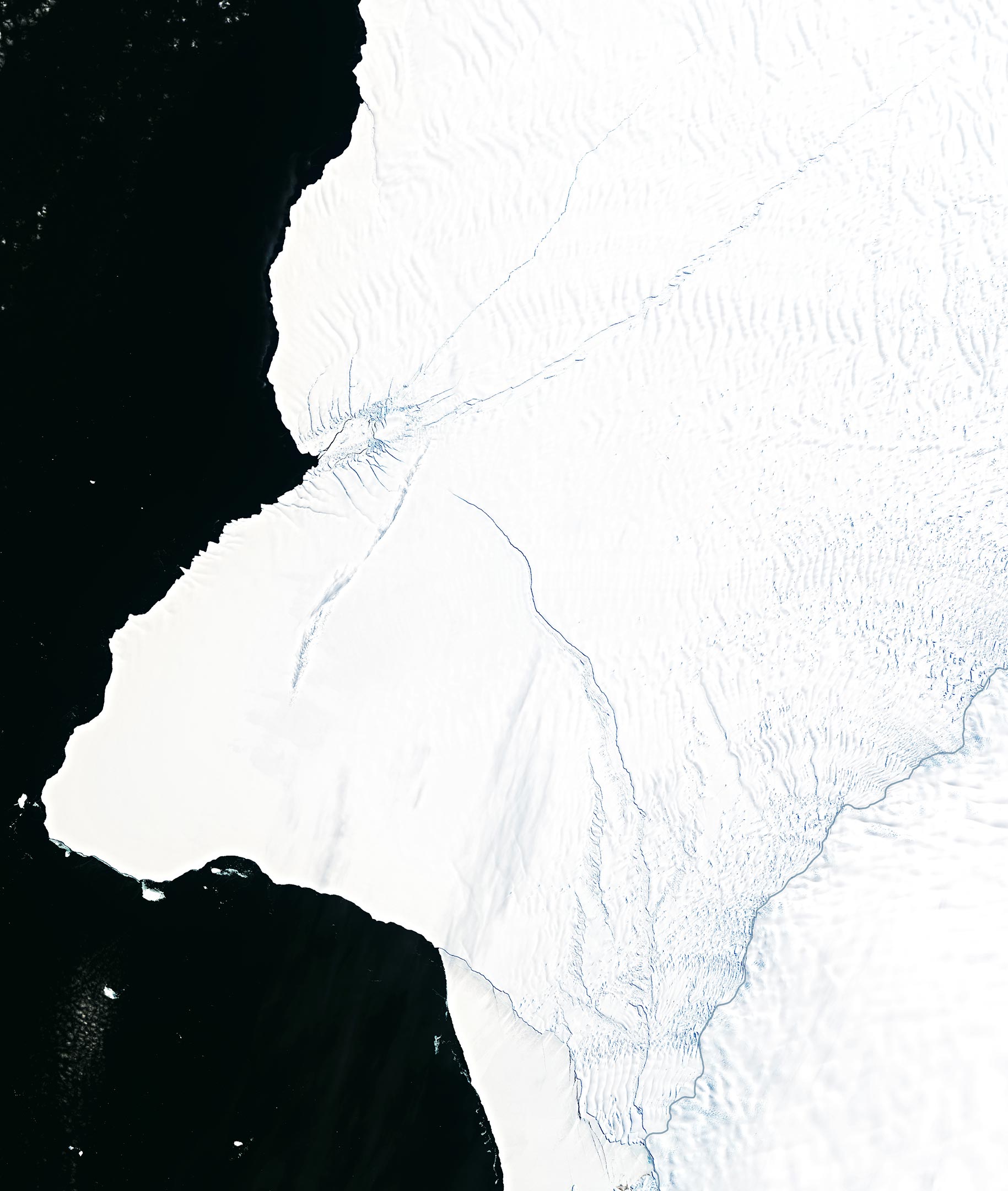
The Operational Land Imager (OLI) on Landsat 8 acquired this image of the Brunt Ice Shelf on January 12, 2021. The ice flows away from the Antarctic mainland and floats on the eastern Weddell Sea. The main shelf area has long been home to the British Antarctic Survey’s Halley Research Station, from which scientists study Earth, atmospheric, and space weather processes.
The breaking, or “calving,” of icebergs from ice shelves is part of a natural, cyclical process of growth and decay at the limits of Earth’s ice sheets. As glacial ice flows from land and spreads out over the sea, shelf areas farthest from shore grow thinner. These areas are stretched thin, and can be melted from above or below, making them more prone to forming rifts and eventually breaking away. The Brunt Ice Shelf appears to be in a period of instability, with cracks spreading across its surface.
Progression of Cracks and Rifts
The major rifts are visible in the wide view at the top of this page. In late October 2016, the “Halloween crack” appeared and rapidly extended eastward. In early 2019, Chasm 1 extended northward as fast as 4 kilometers per year. Now, a new crack is zippering across the shelf north of the Halloween crack, far faster than the fissure to its south.
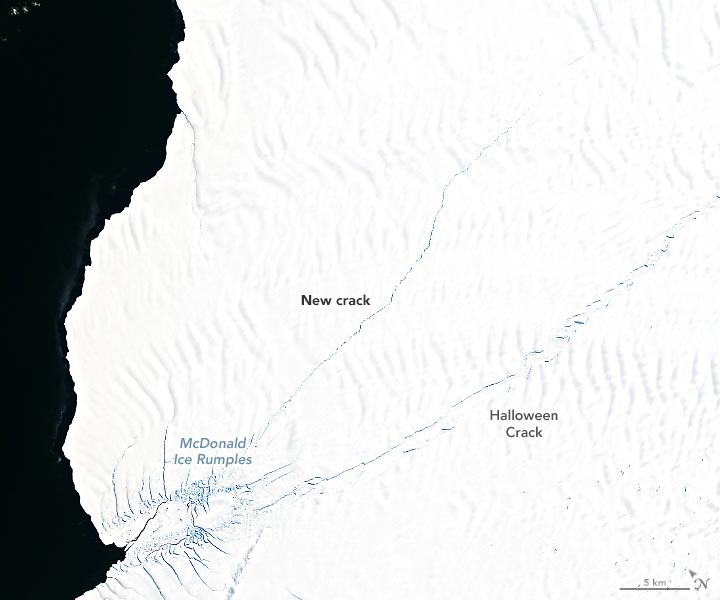
The detailed view shows the new rift growing away from an area known as the McDonald Ice Rumples. The rift shows up in satellite images as early as September 2019, when it had grown just over 2 kilometers (1.2 miles) longer during the austral winter. But the biggest growth just occurred recently. Between November 18 and December 22, 2020, the rift grew in length by about 20 kilometers (12 miles). Then it jogged toward the north and grew an additional 8 kilometers (5 miles) by January 12, 2021.
“It is impossible to know exactly what caused this new rift to extend so quickly,” said Christopher Shuman, a University of Maryland, Baltimore County, glaciologist based at NASA’s Goddard Space Flight Center. “It’s likely that fracture dynamics near the McDonald Ice Rumples played a role, as they did in the quick propagation of the ‘Halloween Crack’ in 2016. The unusual mix of ice blocks and mélange in this part of the Brunt Ice Shelf ‘system’ is another factor.”
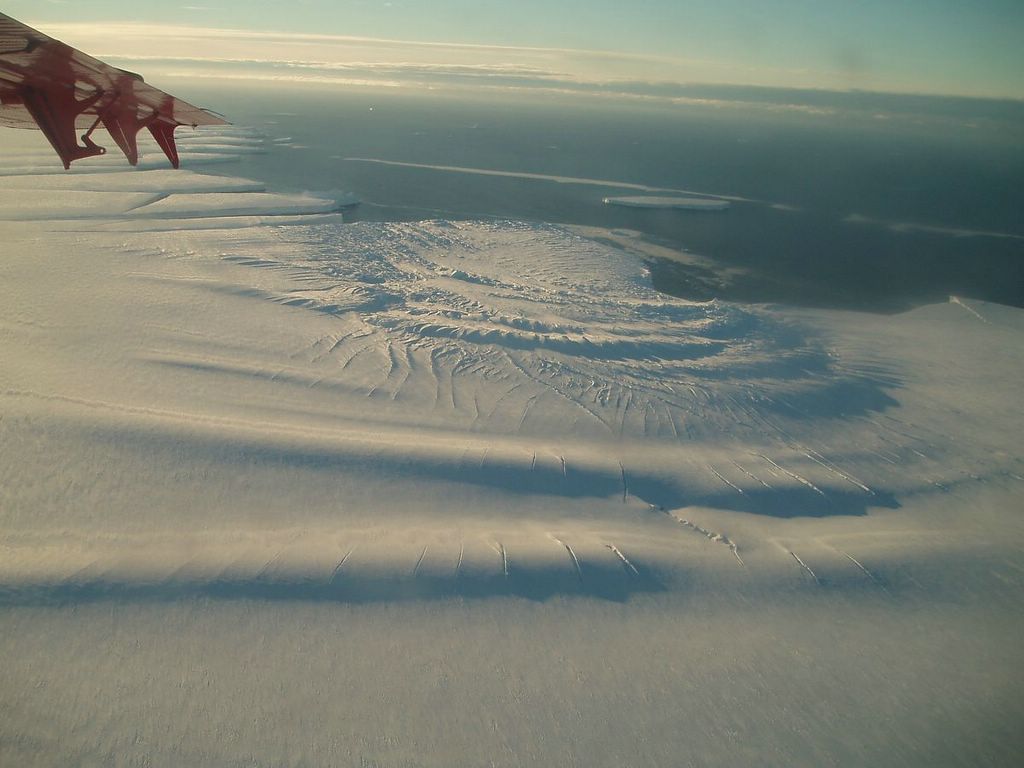
The rumples are the result of ice that flows over an underwater formation, where the bedrock rises high enough to reach into the underside of the floating ice shelf. This rocky formation impedes the flow of ice and causes pressure waves, crevasses, and rifts to form at the surface.
Future Outlook and Safety Measures
All of these cracks, combined with a recent speed-up at the leading edge of the ice shelf (detected by ESA’s Sentinel-1), point to an instability that is likely to spawn a new iceberg or two. The exact timing is uncertain, but until the break occurs and the shelf has been reformed, Halley Research Station is being kept minimally staffed for safety reasons. In 2016-2017, the Halley VI station was relocated to a safer location (Halley VIa) upstream of the then-growing Chasm 1.
“I think we are going to see big changes here,” Shuman said. With more than two months left of sunlight, changes should be visible in natural-color satellite images for a while longer before the onset of winter darkness.
NASA Earth Observatory images by Lauren Dauphin, using Landsat data from the U.S. Geological Survey.
Never miss a breakthrough: Join the SciTechDaily newsletter.
Follow us on Google and Google News.
1 Comment
It all just moves in slow motion, compared to a human time frame. I hope someone is making a long term time lapse sequence of the breakup, which will be passed on to future generations to show what happened.