

Close Menu
    Facebook X (Twitter) Instagram
    SciTechDaily
    • Biology
    • Chemistry
    • Earth
    • Health
    • Physics
    • Science
    • Space
    • Technology
    Facebook X (Twitter) Pinterest YouTube RSS
    SciTechDaily
    Home»Technology»Regenerative Nanotransfection: Innovative Nanochip Can Reprogram Biological Tissue in Living Body
    Technology

    Regenerative Nanotransfection: Innovative Nanochip Can Reprogram Biological Tissue in Living Body

    By Indiana UniversityDecember 2, 2021No Comments4 Mins Read
    Facebook Twitter Pinterest Telegram LinkedIn WhatsApp Email Reddit
    Share
    Facebook Twitter LinkedIn Pinterest Telegram Email Reddit
    Tissue Nanotransfection Nanochip
    Dr. Chandan Sen holds nanotransfection chip at the Medical Research Library building on Monday November 5, 2018. Chandon Sen, PhD, Indiana Center for Regenerative Medicine and Engineering at the Indiana University School of Medicine. Credit: Indiana University School of Medicine

    Indiana University researchers developed a nanochip that reprograms skin into blood vessels or nerves, now ready for standardized production and future clinical trials.

    A silicon device that can change skin tissue into blood vessels and nerve cells has advanced from prototype to standardized fabrication, meaning it can now be made in a consistent, reproducible way. As reported in Nature Protocols, this work, developed by researchers at the Indiana University School of Medicine, takes the device one step closer to potential use as a treatment for people with a variety of health concerns.

    The technology, called tissue nanotransfection, is a non-invasive nanochip device that can reprogram tissue function by applying a harmless electric spark to deliver specific genes in a fraction of a second. In laboratory studies, the device successfully converted skin tissue into blood vessels to repair a badly injured leg. The technology is currently being used to reprogram tissue for different kinds of therapies, such as repairing brain damage caused by stroke or preventing and reversing nerve damage caused by diabetes.

    “This report on how to exactly produce these tissue nanotransfection chips will enable other researchers to participate in this new development in regenerative medicine,” said Chandan Sen, director of the Indiana Center for Regenerative Medicine and Engineering, associate vice president for research and Distinguished Professor at the IU School of Medicine.

    Chandan Sen
    Chandan Sen. Credit: Indiana University School of Medicine

    Sen also leads the regenerative medicine and engineering scientific pillar of the IU Precision Health Initiative and is the lead author on the new publication.

    Turning Skin into Blood Vessels for Life-Saving Care

    “This small silicon chip enables nanotechnology that can change the function of living body parts,” he said. “For example, if someone’s blood vessels were damaged because of a traffic accident and they need blood supply, we can’t rely on the pre-existing blood vessel anymore because that is crushed, but we can convert the skin tissue into blood vessels and rescue the limb at risk.”

    In the Nature Protocols report, researchers published engineering details about how the chip is manufactured.

    Sen said this manufacturing information will lead to further development of the chip in hopes that it will someday be used clinically in many settings around the world.

    “This is about the engineering and manufacturing of the chip,” he said. “The chip’s nanofabrication process typically takes five to six days and, with the help of this report, can be achieved by anyone skilled in the art.”

    Sen said he hopes to seek FDA approval for the chip within a year. Once it receives FDA approval, the device could be used for clinical research in people, including patients in hospitals, health centers and emergency rooms, as well as in other emergency situations by first responders or the military.
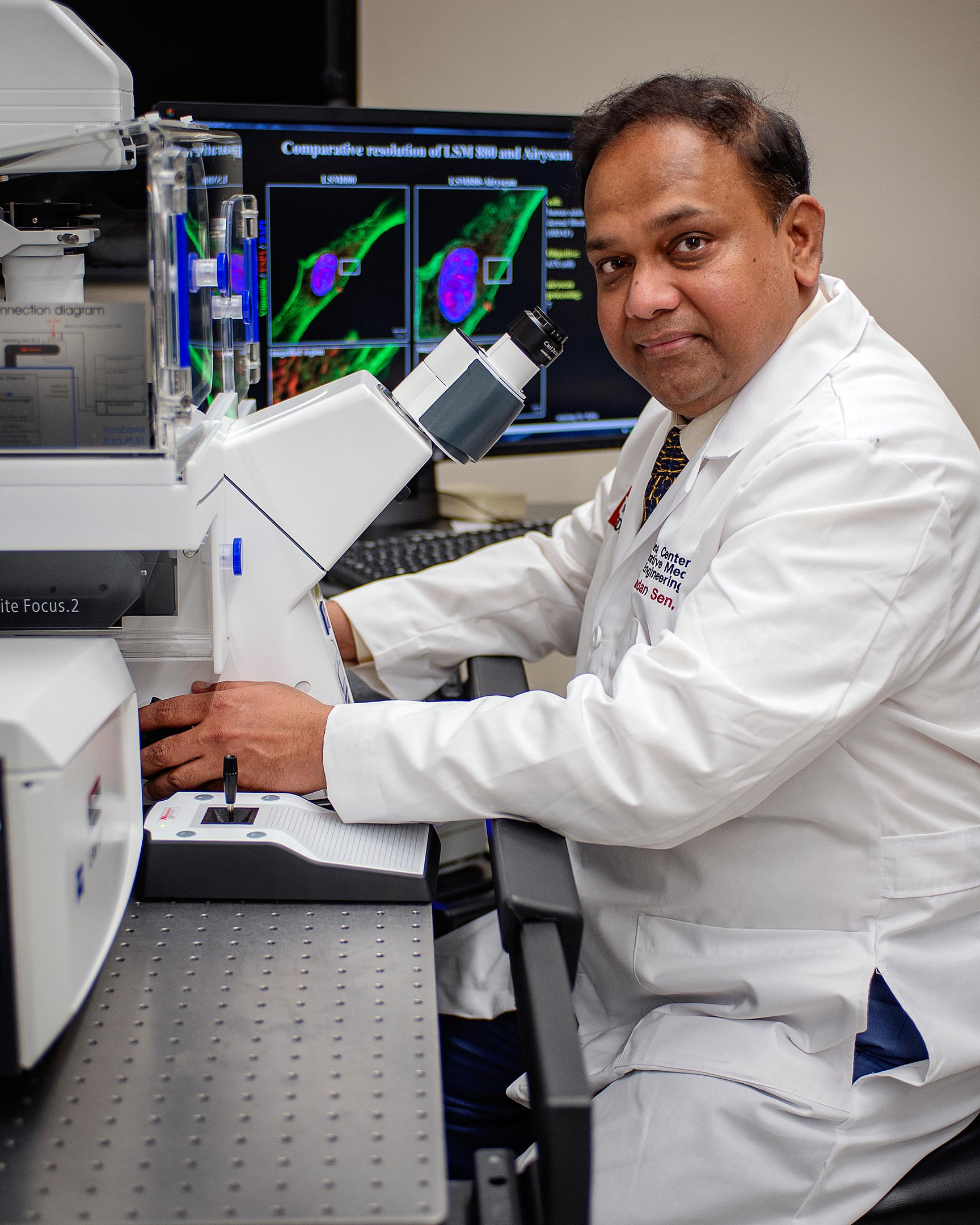
    Chandan Sen in Lab
    Chandon Sen, PhD, works in his lab at the Indiana Center for Regenerative Medicine and Engineering at the Indiana University School of Medicine. Credit: Indiana University School of Medicine

    Reference: “Fabrication and use of silicon hollow-needle arrays to achieve tissue nanotransfection in mouse tissue in vivo” by Yi Xuan, Subhadip Ghatak, Andrew Clark, Zhigang Li, Savita Khanna, Dongmin Pak, Mangilal Agarwal, Sashwati Roy, Peter Duda and Chandan K. Sen, 26 November 2021, Nature Protocols.
    DOI: 10.1038/s41596-021-00631-0

    Other study authors include Yi Xuan, Subhadip Ghatak, Andrew Clark, Zhigang Li, Savita Khanna, Dongmin Pak, Mangilal Agarwal and Sashwati Roy, all of IU, and Peter Duda of the University of Chicago.

    This research is funded by the National Institutes of Health.

    Never miss a breakthrough: Join the SciTechDaily newsletter.
    Follow us on Google and Google News.

    Biotechnology Indiana University Popular
    Share. Facebook Twitter Pinterest LinkedIn Email Reddit

    Related Articles

    New Material Can Generate Hydrogen From Fresh, Salt, or Polluted Water by Exposure to Sunlight

    New Invention Generates Electricity “Out of Thin Air” – Offers Clean Energy 24/7

    Handheld Bioprinter Treats Severe Burns by ‘Printing’ New Skins Cells Directly Onto Wound

    Human Brain-Like Functions Emerge in Neuromorphic Metallic Nanowire Network

    Stretchable High Efficiency Solar Cells for Wearable Electronics or Flexible Robot Skin

    Research Shows Advanced Biofuels Can Be Produced Extremely Efficiently

    New Bioprinting Technique Shows Potential for Tissue Repair and Regenerative Medicine

    AI Framework Predicts Better Patient Health Care and Reduces Cost

    Nanoscale Biological Coating Instantly Stops Bleeding

    Leave A Reply Cancel Reply

    • Facebook
    • Twitter
    • Pinterest
    • YouTube

    Don't Miss a Discovery

    Subscribe for the Latest in Science & Tech!

    Trending News

    Artificial Sweeteners May Harm Future Generations, Study Suggests

    Splashdown! NASA Artemis II Returns From Record-Breaking Moon Mission

    What If Consciousness Exists Beyond Your Brain

    Scientists Finally Crack the 100-Million-Year Evolutionary Mystery of Squid and Cuttlefish

    Beyond “Safe Levels”: Study Challenges What We Know About Pesticides and Cancer

    Researchers Have Found a Dietary Compound That Increases Longevity

    Scientists Baffled by Bizarre “Living Fossil” From 275 Million Years Ago

    Your IQ at 23 Could Predict Your Wealth at 27, Study Finds

    Follow SciTechDaily
    • Facebook
    • Twitter
    • YouTube
    • Pinterest
    • Newsletter
    • RSS
    SciTech News
    • Biology News
    • Chemistry News
    • Earth News
    • Health News
    • Physics News
    • Science News
    • Space News
    • Technology News
    Recent Posts
    • Alzheimer’s Breakthrough: Scientists Discover Key Protein May Prevent Toxic Protein Clumps in the Brain
    • Scientists Discover New Way To Make Protein Shakes Taste Better
    • Scientists Break Optical Limits With Quantum Dot-Powered Nanoscopy
    • Scientists Shrink a Lab Spectrometer to the Size of a Grain of Sand
    • Quantum Reality Gets Stranger: Physicists Put a Lump of Metal in Two Places at Once
    Copyright © 1998 - 2026 SciTechDaily. All Rights Reserved.
    • Science News
    • About
    • Contact
    • Editorial Board
    • Privacy Policy
    • Terms of Use

    Type above and press Enter to search. Press Esc to cancel.