
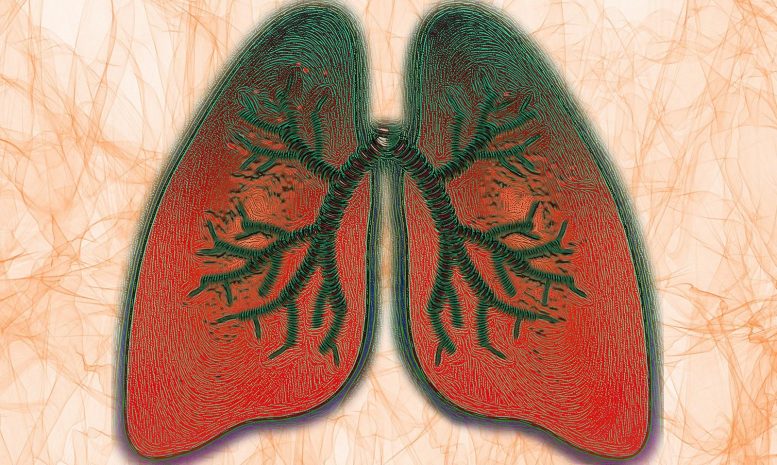
By creating a microdevice that mimics lung function on single-cell levels, researchers at Rutgers, Yale, and Johns Hopkins have learned more about asthmatic trigger response, leading to better treatment.
Researchers at Rutgers and other institutions have discovered how muscle contraction (bronchospasm) in the airway, which causes breathing difficulty in people with asthma, occurs by creating a microdevice that mimics the behavior of the human airways.
The study, published in the July 2019 issue of the journal Nature Biomedical Engineering and previously online, could lead to new treatment strategies for respiratory diseases, said co-author Reynold Panettieri, director of the Rutgers Institute for Translational Medicine and Science.
Bronchospasm can occur in both healthy people and those who suffer from serious respiratory diseases such as asthma or chronic obstructive pulmonary disease (COPD). Studying why the smooth muscle surrounding bronchial airways can suddenly contract and lead to difficulties in breathing is difficult due to the complexities of bronchospasm and the fact that the human respiratory system cannot be modeled in animal studies.
To analyze the biochemical and mechanical signals that occur between cells during spasms, the researchers created a microdevice — a “bronchi on a chip” one-thousandth the size of a human hair — containing cells from healthy and asthmatic lungs that mimics the function of a lung on single-cell levels.
When they triggered a simulated bronchospasm on the device, the researchers discovered that the initial contraction prompts the secretion of hormone-like compounds that either can induce an additional constriction or relax the spasm. In people with asthma, the smooth muscle surrounding the airways is more reactive and contracts more easily in response to stimuli such as allergens, leading to extended bronchial spasms, wheezing, and shortness of breath.
They also found that inducing a second asthmatic trigger during a bronchial spasm at a precise time will actually cause the smooth muscle to relax and stop the spasm.
The treatments for bronchospasm have not changed in the past 50 years, Panettieri said, since they work for most — but not all — people. “The microdevice allowed us to drill down into how single cells interact with each other in relation to smooth muscle contraction in a variety of lung diseases,” said Panettieri. “Being able to study the mechanics on the single-cell level and view thousands of cells simultaneously can be an important screening tool for the development of new drugs for people with asthma who don’t respond to current treatment.”
###
The study was led by Steven An, director of Bioengineering at Rutgers Institute for Translational Medicine and Science and professor of pharmacology at Rutgers Robert Wood Johnson Medical School, and researchers at Yale University’s Yale Systems Biology Institute and Johns Hopkins University.
Reference: “A microphysiological model of the bronchial airways reveals the interplay of mechanical and biochemical signals in bronchospasm” by Onur Kilic, Arum Yoon, Sagar R. Shah, Hwan Mee Yong, Alejandro Ruiz-Valls, Hao Chang, Reynold A. Panettieri Jr, Stephen B. Liggett, Alfredo Quiñones-Hinojosa, Steven S. An and Andre Levchenko, 11 March 2019, Nature Biomedical Engineering.
DOI:10.1038/s41551-019-0366-7
Never miss a breakthrough: Join the SciTechDaily newsletter.
Follow us on Google and Google News.