
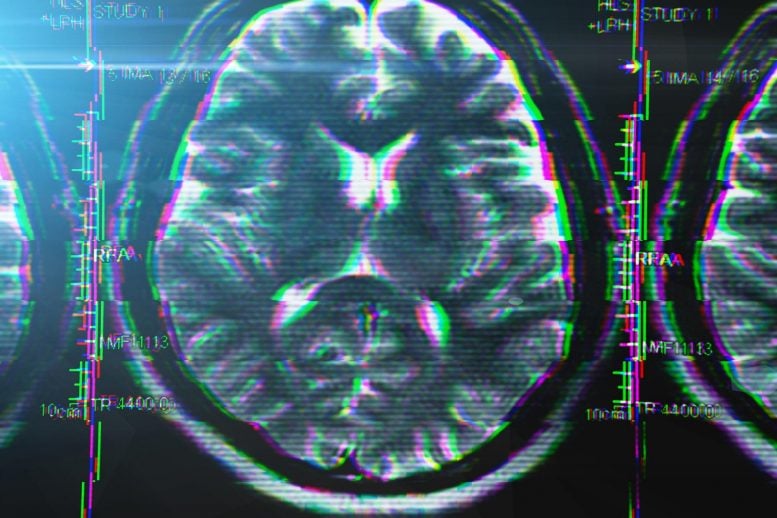
The Linseman Laboratory is studying the long-term brain health effects of COVID-19 in individuals with and without traumatic brain injury (TBI). Preliminary data suggest that those with a history of both COVID-19 and TBI experience more severe long COVID symptoms. The study is also examining blood biomarkers to understand age-related differences in long COVID and explore potential treatments targeting neuroinflammatory pathways.
In January 2021, Ron Miller’s life was upended. The then-39-year-old, who described his health at the time as perfectly fine, contracted COVID-19. Two years later, he’s unable to work as he still suffers from extreme fatigue and brain fog—a byproduct of his battle with long COVID.
Ron’s not alone. In fact, he’s among the nearly 20% of people who’ve experienced lingering COVID-19 symptoms.
The details of the persisting illness, Ron says, are fuzzy. There’s no clear delineation of when the acute symptoms stopped and when the long COVID symptoms began.
“It never really went away,” he says.
Exploring Long-Term Brain Health Impacts
Ron, whose name has been changed for this story, is part of the Linseman Laboratory’s study on the long-term brain health effects of COVID-19 in people with and without traumatic brain injury (TBI).
The lab, which is run by University of Denver College of Natural Sciences and Mathematics professor Dan Linseman, is part of the Knoebel Institute for Healthy Aging. The lab’s work focuses on neuroinflammation, neurodegeneration, neurotrauma and now long-neurological COVID.
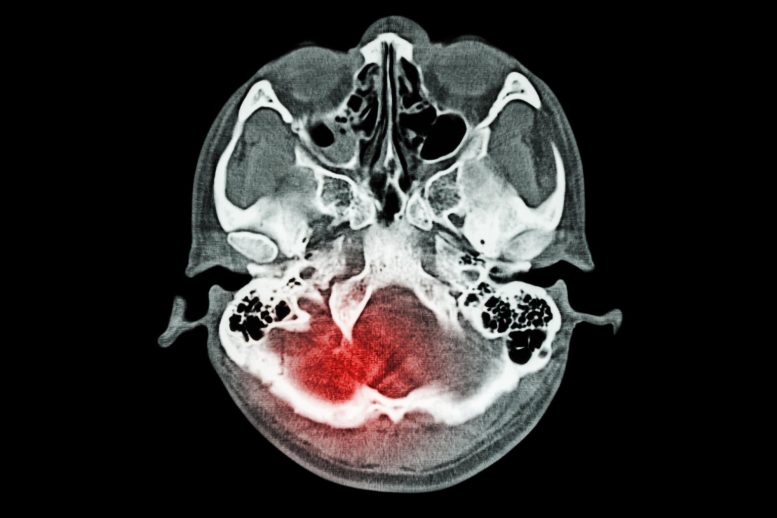
Allison Grossberg, a fourth-year doctoral student in the cellular and molecular biology program, is leading the study, which began in 2022 and partners with National Jewish Health and Resilience Code. Grossberg and Linseman wanted to know whether individuals with a history of both brain trauma and COVID-19 have worsened long-term neurological and psychological symptoms, increased inflammation, or an increased risk of neurodegenerative disease and/or auto-immunity.
“Certain infections like COVID-19 and Lyme disease can lead to inflammation in the brain—so why should they be any different?” Grossberg says.
So far, the Linseman Lab has preliminary data for 48 of the study’s participants, 28 of whom, like Ron, had COVID-19 and one or more TBIs; 11 had only a TBI; and five had only COVID. And four participants—the control group—had no history of COVID or TBI.
The study collects its data through a yearly visit in which participants complete a cognitive assessment and a detailed questionnaire and have blood drawn.
Linseman and Grossberg say it’s possible the findings may change over the five-year study as more participants are recruited. But as of now, the preliminary data is clear: Those with a history of COVID-19 and TBI reported more severe long COVID symptoms, a higher symptom burden, and more frequent symptoms.
For many of the study’s participants who have had a concussion, including Ron, it’s been decades since their injury.
Cumulative Effects of COVID-19 and TBI
“Concussions you get when you are young can cause persistent underlying damage, and some of that damage is likely persistent neuroinflammation,” Linseman says. “For example, we found that people who have Lyme disease have a certain cadre of neurological symptoms, but if they have a history of concussions, those symptoms are much worse. I think it’s similar with COVID. These are all neurotropic, so they get into the brain. They cause inflammation. If they do that on a background of sustained persistent neuroinflammation like a history of head injury, it basically becomes a cumulative effect on the brain.”
The study participants ranged in age from 18-83. Everyone who reported contracting COVID-19 had mild to moderate symptoms. Nasal congestion was the most reported, and chest pain and tightness were the most severe.
Those who reported having COVID-19 and TBI reported worse depressive symptoms, worse functional outcomes, and increased fatigue.
The study isn’t only recording information through a unique detailed questionnaire. Grossberg and Linseman are also examining biomarkers from the blood samples of each participant. Every cell in the body secretes lipid vesicles, Grossberg says, which are used to communicate with other cells in the body.
“They’re tagged with little markers that are specific to each cell type that releases them,” Grossberg says. “Inside these little packages are tons of important signaling molecules that help us understand what’s going on in someone’s brain as opposed to just what’s happening in the bloodstream.”
Then researchers can take the vesicles, or exosomes, from each patient and incubate them with cells grown in the lab.
“We expect that the exosomes from participants with history of COVID and TBI carry cargo that might cause an inflammatory response in the cell that is worse compared to exosomes from healthy control participants,” Grossberg says. “We expect it to look similar to the inflammatory response in cells exposed directly to a bacterial endotoxin, a lipopolysaccharide, which is known to cause inflammation,” Grossberg says.
According to the preliminary data, exosomes from those who had a combined history of COVID-19 and TBI caused inflammation in the lab-grown astrocytes.
Surprising Link Between Age and Long COVID Symptoms
What’s more, Linseman says, is the potential link between age and long COVID. When the study began, they anticipated that older people with a history of concussions would report the worst long COVID symptoms. So far in their findings, the opposite is true.
“That’s leading me into supporting the theory with the immune system and neuroinflammation that’s contributing to the symptomology,” Linseman says. “The biggest difference between older and younger people is that younger people have a more robust immune system.”
If their hypothesis is correct, and there’s a neuroinflammatory pathway that’s upended by COVID and TBI, researchers can start to explore potential treatments, like one that inhibits the inflammatory pathway.
While that discovery may be years in the making, the Linseman Lab’s study is making strides in the right direction.
For Ron, a DU graduate who was a partner in a risk management consulting firm, participating in this study means something—a tangible way to make an impact.
“If it could be helpful to society overall, not necessarily just me, it would be nice. Who knows if it will keep others from getting it in the future,” Ron says. “I have a lot of time on my hands, might as well use it to contribute some good.”
Never miss a breakthrough: Join the SciTechDaily newsletter.
Follow us on Google and Google News.