
Close Menu
    Facebook X (Twitter) Instagram
    SciTechDaily
    • Biology
    • Chemistry
    • Earth
    • Health
    • Physics
    • Science
    • Space
    • Technology
    Facebook X (Twitter) Pinterest YouTube RSS
    SciTechDaily
    Home»Health»Researchers Discover COVID-19’s Secret to Evading Early Immune Response
    Health

    Researchers Discover COVID-19’s Secret to Evading Early Immune Response

    By Medical University of ViennaNovember 13, 2024No Comments3 Mins Read
    Facebook Twitter Pinterest Telegram LinkedIn WhatsApp Email Reddit
    Share
    Facebook Twitter LinkedIn Pinterest Telegram Email Reddit
    COVID Coronavirus New Variant
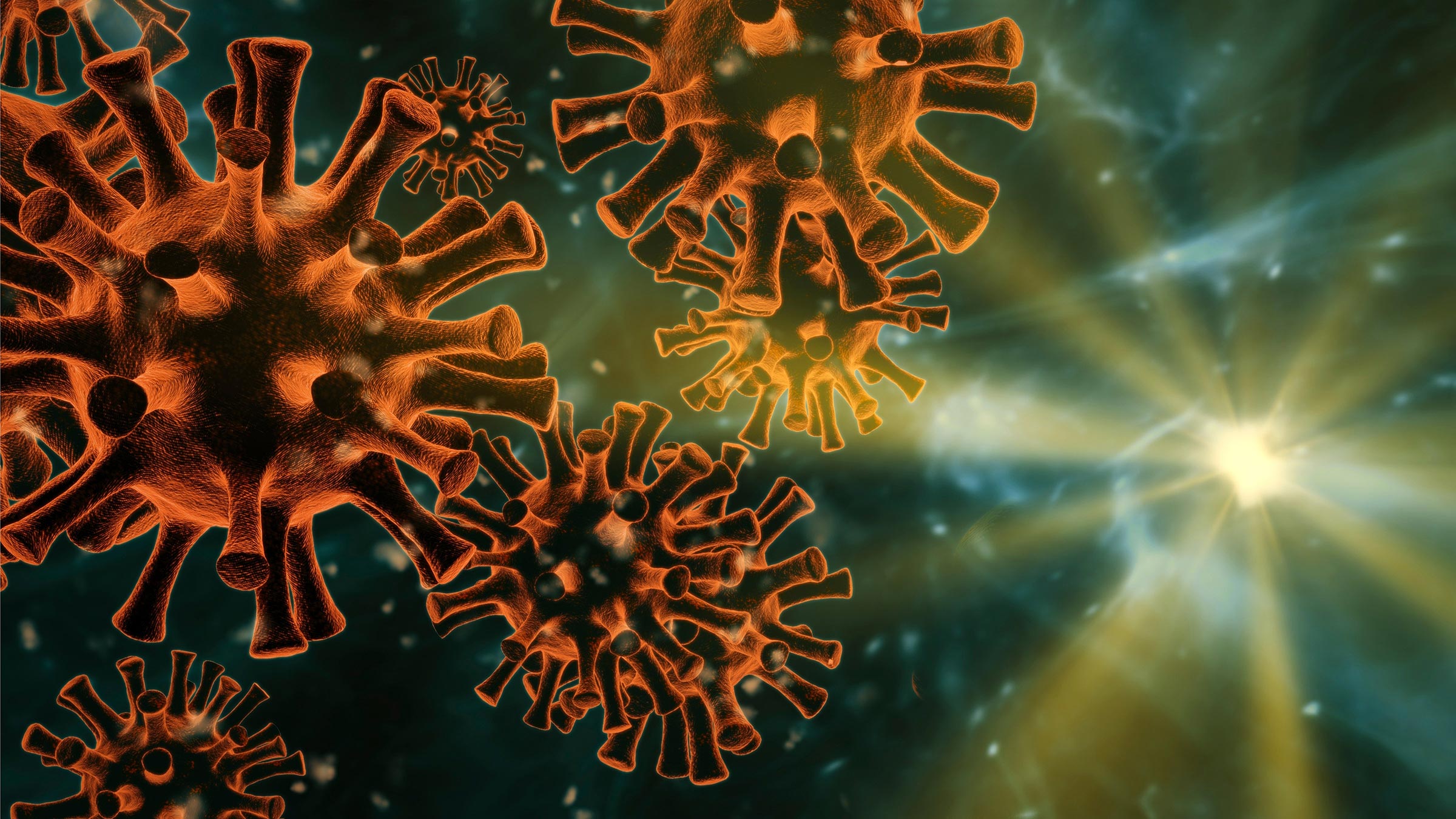
    Researchers found that SARS-CoV-2 hijacks three key host proteins (CD55, CD59, and Factor H) that regulate the complement system, reducing the body’s ability to clear the virus effectively. This evasion strategy may prolong infection and heighten inflammation, impacting both acute COVID-19 and long-term post-COVID symptoms.

    The virus takes control of three key host proteins that suppress the activity of the complement system.

    Researchers at the Medical University of Vienna and the Medical University of Innsbruck have found that SARS-CoV-2 manipulates three critical host proteins that normally suppress the activity of the complement system, a crucial part of early antiviral immunity. This interference hinders the body’s ability to clear the virus effectively, potentially influencing the progression of both acute COVID-19 infections and long-term post-COVID-19 conditions. The findings were recently published in the journal Emerging Microbes & Infections.

    An early and effective immune response is crucial for resolving viral infections and preventing post-infectious complications. The complement system, a pivotal element of antiviral immunity, is a cascade of proteins found in the bloodstream and at mucosal sites, such as the respiratory tract.

    Activated through three different pathways, complement facilitates the clearance of virus particles by directly inducing their destruction (lysis). To prevent bystander damage to host cells, complement is rapidly inactivated by a set of host molecules referred to as complement regulatory proteins.

    The new study led by Anna Ohradanova-Repic and colleagues from the Center for Pathophysiology, Infectiology, and Immunology at the Medical University of Vienna in collaboration with the team of Heribert Stoiber from the Institute of Virology at the Medical University of Innsbruck shows that SARS-CoV-2 hijacks three of these regulatory proteins, CD55, CD59, and Factor H, and thereby successfully shields itself from complement-mediated lysis.

    Hijacking host proteins for effective complement resistance

    By propagating SARS-CoV-2 in human cells, the researchers discovered that the virus particles acquire the cellular proteins CD55 and CD59. Further experiments showed that SARS-CoV-2 also binds to Factor H, another complement regulatory protein that is primarily found in the bloodstream.

    Confronting the virus particles with active complement revealed that they are partially resistant to complement-mediated lysis. By removing CD55, CD59, and Factor H from the virus surface or inhibiting their biological functions, the researchers could successfully restore complement-mediated clearance of SARS-CoV-2.

    “Through hijacking these three proteins, SARS-CoV-2 can evade all three complement pathways, resulting in reduced or delayed viral clearance by the infected host,” Anna Ohradanova-Repic, the leader of the study explains.

    Because complement is intricately linked with other components of the immune system, this not only affects virus elimination but can also cause significant inflammation, a core feature of both severe COVID-19 and Long COVID. “Uncovering immune evasion mechanisms that allow the virus to linger within the host for longer, deepen our understanding of the acute and long-term impacts of SARS-CoV-2 infection,” says first author Laura Gebetsberger.

    Reference: “SARS-CoV-2 hijacks host CD55, CD59 and factor H to impair antibody-dependent complement-mediated lysis” by Laura Gebetsberger, Zahra Malekshahi, Aron Teutsch, Gabor Tajti, Frédéric Fontaine, Nara Marella, André Mueller, Lena Prantl, Hannes Stockinger, Heribert Stoiber and Anna Ohradanova-Repic, 28 October 2024, Emerging Microbes & Infections.
    DOI: 10.1080/22221751.2024.2417868

    Never miss a breakthrough: Join the SciTechDaily newsletter.
    Follow us on Google and Google News.

    COVID-19 Immunology Medical University of Vienna
    Share. Facebook Twitter Pinterest LinkedIn Email Reddit

    Related Articles

    Immunity to COVID-19: Spike Protein Docking Site Is Achilles’ Heel of the Coronavirus

    These Seven Different “Disease Forms” Have Been Identified in Mild COVID-19

    New Study Outlines a Roadmap for Effective Treatment of COVID-19

    Immunity to Coronaviruses: Here’s What We Know So Far

    Alpha Blockers to Ease Severe COVID-19 Symptoms by Preventing ‘Cytokine Storm’

    Advanced Light Source X-Ray Experiments Zero In on COVID-19 Antibodies

    Study Shows Treatment With Interferon-α2b Speeds Up Recovery of COVID-19 Patients

    COVID-19 Treatment May Lie in Pangolin Genetics – May Possess Evolutionary Advantage Against Coronavirus

    Antibody Discovered That Blocks Infection by SARS-CoV-2 (COVID-19 Coronavirus) in Cells

    Leave A Reply Cancel Reply

    • Facebook
    • Twitter
    • Pinterest
    • YouTube

    Don't Miss a Discovery

    Subscribe for the Latest in Science & Tech!

    Trending News

    Popular Sugar-Free Sweetener Linked to Liver Disease, Study Warns

    What Is Hantavirus? The Deadly Disease Raising Alarm Worldwide

    Scientists Just Discovered How the Universe Builds Monster Black Holes

    Scientists Unveil New Treatment Strategy That Could Outsmart Cancer

    A Simple Vitamin May Hold the Key to Treating Rare Genetic Diseases

    Scientists Think the Real Fountain of Youth May Be Hiding in Your Gut

    Ravens Don’t Follow Wolves, They Predict Them

    This Common Knee Surgery May Be Doing More Harm Than Good

    Follow SciTechDaily
    • Facebook
    • Twitter
    • YouTube
    • Pinterest
    • Newsletter
    • RSS
    SciTech News
    • Biology News
    • Chemistry News
    • Earth News
    • Health News
    • Physics News
    • Science News
    • Space News
    • Technology News
    Recent Posts
    • Popular Supplement Ingredient Linked to Shorter Lifespan in Men
    • Scientists May Have Found a Way To Repair Nerve Damage in Multiple Sclerosis
    • GLP-1 Weight Loss Linked To Dramatically Lower Risk of Sleep Apnea, Kidney Disease and More
    • Scientists Uncover the Surprising Source of Strange Clouds Near the Milky Way’s Supermassive Black Hole
    • This Dazzling Green Snake Was Hiding in Plain Sight for Decades
    Copyright © 1998 - 2026 SciTechDaily. All Rights Reserved.
    • Science News
    • About
    • Contact
    • Editorial Board
    • Privacy Policy
    • Terms of Use

    Type above and press Enter to search. Press Esc to cancel.