
Findings Indicate That Activating Dopamine Could Build Resilience
It can feel all too easy to succumb to a sense of hopelessness. That’s especially true in times like these when we are faced with political unrest around the globe, economic turmoil, and a pandemic that doesn’t want to end. How do some individuals recover from adversity faster than others, and can people who struggle teach themselves to be more resilient over time?
Resilience can be learned, and can even be reinforced, according to a new study conducted in mice by a team of researchers from the Princeton Neuroscience Institute. In the study, which was published in the journal Nature on October 19, scientists placed small mice in close proximity with larger, aggressive mice. They found that a display of defensive behaviors predicted the mice’s ability to be resilient after the stressful event. Further, the scientists discovered that by activating dopamine while the mice fought back, they could further reinforce resilience.
Behavioral Responses to Stress and Resilience
From the research’s inception, Lindsay Willmore was intrigued by the relatively rare subset of mice who would defend themselves tenaciously when faced with an aggressor. She is is lead author on the paper and earned her Ph.D. in 2022.
“They’d turn back towards the aggressor, they’d throw their paws out, they’d jump on him, and they would just not give up,” said Willmore. “I thought, wow, there’s something going on in these guys’ brains that’s super interesting and could be the key to resilience.”
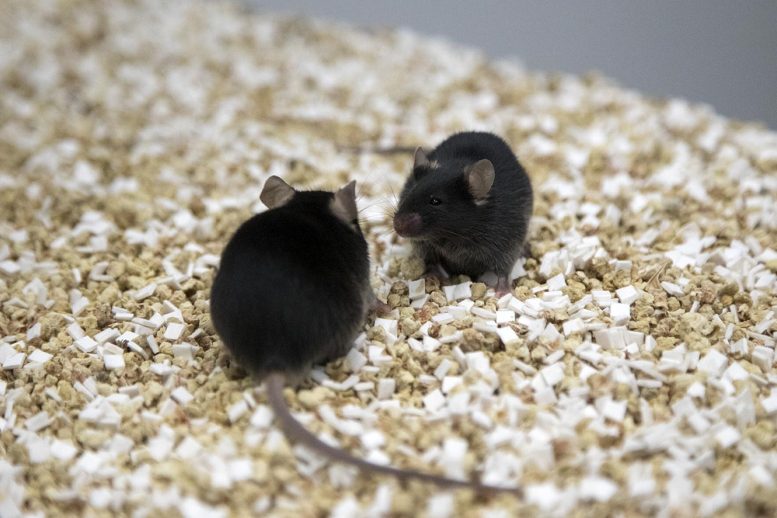
In the study, the researchers gauged resilience by monitoring the mice’s behaviors in the 10 days during which they sustained attacks by the aggressor.
The mice that tended not to defend themselves ended up displaying depression-like behaviors such as social avoidance following the stressful event. Meanwhile, the mice that fought back displayed greater resilience.
Dopamine’s Role in Strengthening Resilience
By stimulating dopamine while the mice were fighting back, the researchers found they could make the mice even more likely to become resilient. On the flip side, stimulating dopamine during avoidant behavior did not make the mice more resilient.
“It’s a complicated environment where a mouse has to decide what to do around a bully mouse,” said Ilana Witten, a professor of neuroscience and author on the study. “What decision it makes has profound consequences in terms of how it ends up.”
While the defensive stances associated with fighting back were key in predicting a mouse’s resilience in the face of attack, Willmore said, “Even more strongly related to resilience was how much dopamine the animals had in their reward system during the time when they were starting to fight back. That’s what was really cool to me — that an animal that is not just fighting back but is rewarded for fighting back is the one that becomes resilient.”
For the study, the researchers put a smaller mouse in a cage with a larger, more aggressive mouse that typically would attack its smaller cage-mate. Afterward, the two mice would stay in the enclosure but this time separated by a wall so that they could not interact physically.
Potential Applications Beyond Animal Studies
“I’m very interested in the question of whether we can teach resilience,” said Annegret Falkner, an assistant professor of neuroscience and author on the paper. The series of experiments the team conducted seemed to suggest the answer was indeed yes, that the mice could be nudged toward performing resilient behaviors.
While the researchers began the project before the start of the COVID-19 pandemic, Falkner said since the pandemic hit, she’s been thinking more than ever about resilience. “We need to think about ways to help the people who seem to be more susceptible to cope with the stresses of the world,” said Falkner.
As the researchers continue their studies on resilience, they hope that in the future such work could be applied beyond animals to human health. For example, devices such as smartwatches could give real-time feedback about good habits to promote healthy mechanisms like resilience. “Information about our dynamic interactions with the environment will be useful for tracking our habits that might be helpful or harmful,” said Willmore.
Reference: “Behavioural and dopaminergic signatures of resilience” by Lindsay Willmore, Courtney Cameron, John Yang, Ilana B. Witten and Annegret L. Falkner, 19 October 2022, Nature.
DOI: 10.1038/s41586-022-05328-2
The study was funded by the New York Stem Cell Foundation, the Esther A. and Joseph Klingenstein Fund, the Simons Foundation, the Alfred P. Sloan Foundation, the National Science Foundation, and the National Institutes of Health.
Never miss a breakthrough: Join the SciTechDaily newsletter.
Follow us on Google and Google News.