
Researchers discovered that animal color vision evolved long before colorful fruits and flowers, with warning and sexual color signals developing 150 and 100 million years ago, respectively. Warning signals are more widespread and require less visual ability than sexual signals, which depend on advanced vision in both sexes.
Colors play a significant role in communication both within and between animal species. Take, for instance, the peacock: it unfurls its vibrant, iridescent tail adorned with eyespots to catch the attention of peahens during courtship. This display is a classic example of sexual selection driven by color signaling.
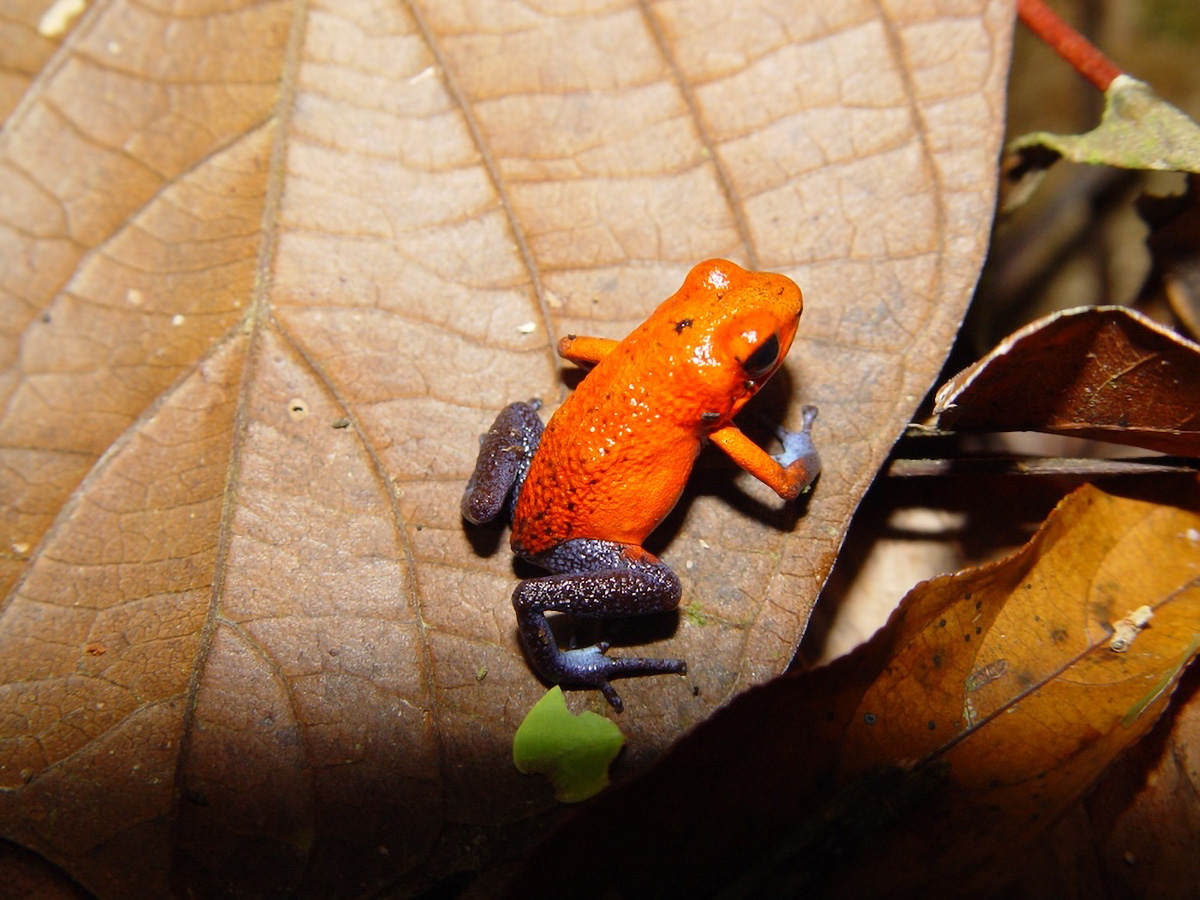
Conspicuous colors are also displayed by toxic animal species, including many venomous snakes and the brilliantly colored poison frogs of Central and South America, as a warning to potential predators.
A recent study by University of Arizona researchers analyzed the evolutionary timeline of color vision in animals and the different functions of “conspicuous colors” in animals and plants. Conspicuous colors include colors like red, yellow, orange, blue and purple, which stand out against most backgrounds.
Based on statistical analysis, the study found that color vision evolved in animals more than 100 million years before the emergence of colorful fruits and flowers. The study, led by John J. Wiens, professor in U of A Department of Ecology and Evolutionary Ecology, is published in the journal Biological Reviews.
Functions of Conspicuous Colors in Animals and Plants
The study focuses on two different types of color signals that animals use – warning and sexual. It also analyzes the color signals that plants use for flowers and fruits.
In plants, conspicuous colors have two main functions, Wiens said: for fruits, to disperse the seeds; for flowers, to distribute pollen.
“We wanted to know when bright coloration evolved and what was the purpose of that coloration. That’s largely why we pursued this study,” said Zachary Emberts, study co-author and an assistant professor of integrative biology at Oklahoma State University. Emberts was a postdoctoral scholar at the U of A when the study was conducted.

Color vision in animals evolved about 500 million years ago, while colorful fruits appeared around 350 million years ago and colorful flowers about 200 million years ago, Wiens said.
Weins said warning color signals emerged before sexual color signals – around 150 million years ago. Sexual color signals emerged about 100 million years ago.
“There has been a dramatic explosion of both warning and sexual color signals in the last 100 million years,” Wiens said.
Factors Driving the Evolution of Warning Signals
This is despite the fact that color vision evolved about 400 million years earlier. The exact reason behind the explosion is unknown. But the research team identified three key groups that likely drove the explosion in warning signals: ray-finned fishes in marine environments, and birds and lizards on land.
Wiens said warning color signals are much more widespread among animals than sexual signals, which are confined to arthropods and vertebrates.
“Warning signals are at least five times more widespread. That’s the overall pattern,” Wiens said.
Warning color signals may be so widespread because the colorful animal doesn’t need to have color vision itself in order to signal other animals of danger. In fact, species with warning color signals don’t even need well-developed eyes.
But when it comes to sexual color signals, males and females need to have advanced vision to signal each other using color cues. That is why sexual signals are exhibited only in two groups of animals that have eyes: vertebrates, which include fish, amphibians, mammals, birds, and reptiles, and arthropods, such as insects and spiders.
“In the future, it would be even more interesting to study what drives the ability of animals to see specific colors like red or blue,” Emberts said.
Reference: “How life became colourful: colour vision, aposematism, sexual selection, flowers, and fruits” by John J. Wiens and Zachary Emberts, 16 September 2024, Biological Reviews.
DOI: 10.1111/brv.13141
The study was funded by the U.S. National Science Foundation.
Never miss a breakthrough: Join the SciTechDaily newsletter.
Follow us on Google and Google News.