
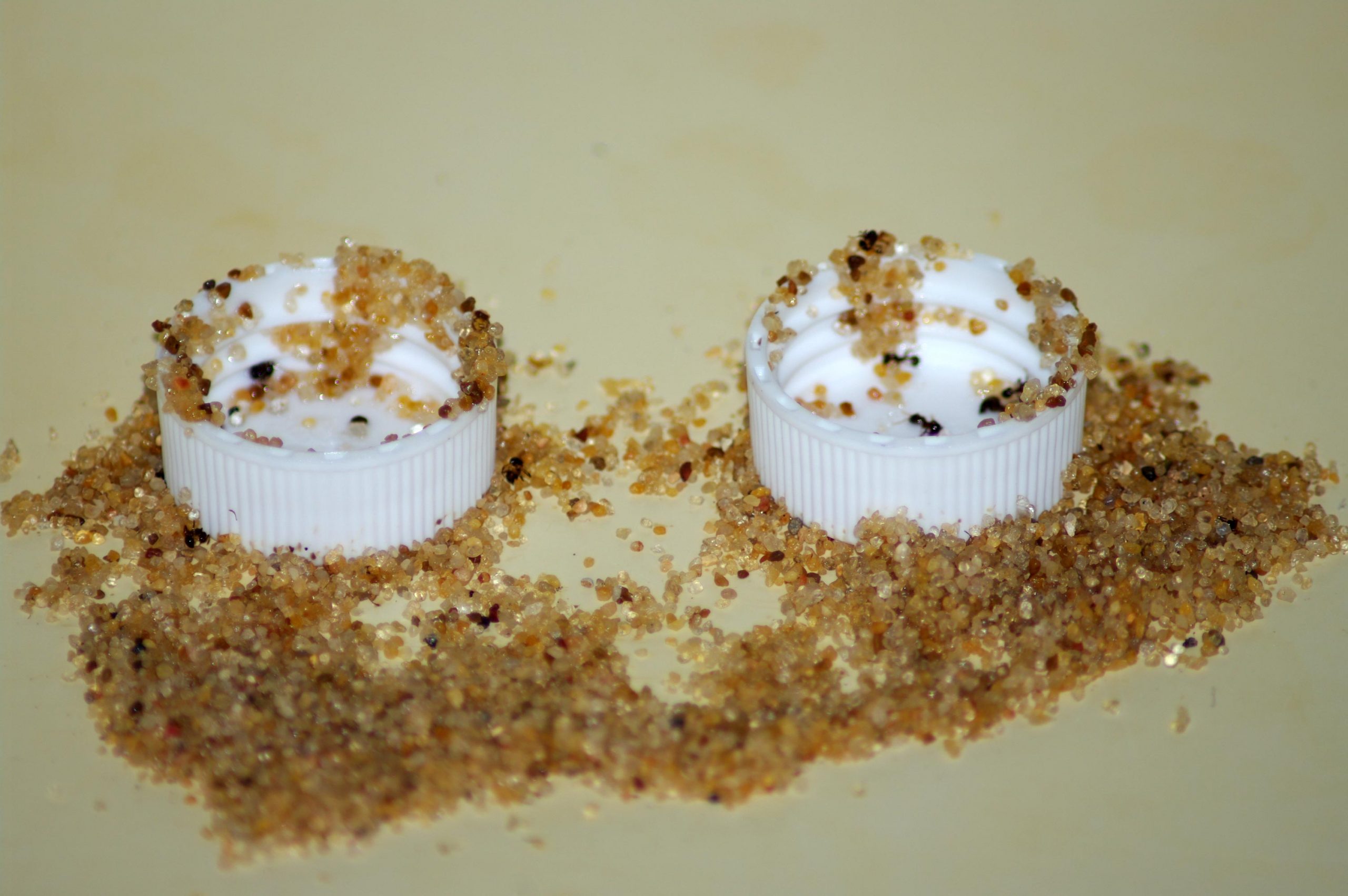
Researchers have observed black imported fire ants using sand to draw liquid food out of containers when faced with the risk of drowning. This is the first time this sophisticated tool use has been reported in these animals.
A study published in Functional Ecology has shown for the first time that a species of ant has the remarkable ability to adapt its tool use. When provided with small containers of sugar water, black imported fire ants were able to float and feed on the surface, but when researchers reduced the surface tension, the ants started depositing sand grains on the inside of the container leading out of it.
“We found the ants used sand to build a structure that could effectively draw sugar water out of the container to then be collected,” said Dr. Aiming Zhou, an associate professor at Huazhong Agricultural University, Wuhan, China, and a lead author of the research.
“This exceptional tool making skill not only reduced the drowning risk of ants, but also provided a larger space for them to collect sugar water.”
The sand structures were found to be so efficient that they could siphon almost half of the sugar water out of the containers in five minutes.
Researchers altered the surface tension of the sugar water by adding surfactant. When surfactant concentrations were over 0.05%, representing considerable drowning risk, ants were observed building the sand structures to siphon sugar water out of the container. These structures were never observed when ants foraged in containers of pure sugar water, indicating an adaptable approach to this novel tool use.
The results not only demonstrate black imported fire ants’ ability to use tools to forage but also that they can recognize an increased foraging risk and can adjust their tool use in response to this.
Researchers have observed black imported fire ants using sand to draw liquid food out of containers, when faced with the risk of drowning. This is the first time this sophisticated tool use has been reported in these animals. Credit: Dr. Aiming Zhou and Dr. Jian Chen
Dr. Jian Chen, Research Entomologist at The U.S. Department of Agriculture’s (USDA) Agricultural Research Service (ARS), Stoneville Mississippi, and another author of the research, said: “We knew some ant species are able to use tools, particularly in collecting liquid food; however, we were surprised by such remarkable tool use displayed by black imported fire ants. Our findings suggest that ants and other social insects may have considerable high cognitive capabilities for unique foraging strategies.”
Tool use is seen as an indicator of cognitive sophistication and has mostly been observed in primates and some species of birds. But in invertebrates this behavior is less well studied and has previously been thought of as hard-wired and inflexible.
Black imported fire ants, Solenopsis richteri, are native to South America but are now an invasive species in the southern United States after being introduced. Their Hydrophobic exoskeletons allow them to float on water but it’s likely that they still face frequent drowning risk in nature because of the importance of liquid foods like nectar and honeydew as a carbohydrate source.
In the study, the researchers calculated drowning risk by measuring the proportion of drowned ants in 2.5 cm containers of sugar water with differing concentrations of surfactant. The ants were able to float on the surface of pure sugar water, but the proportion of drowned ants increased significantly with increasing concentrations of surfactant. The researchers then provided ants with sands of varying grain size to test their preferences in creating sand structures when faced with different drowning risks.
Dr. Zhou cautions that further studies are needed in this research area, saying: “Our experiments are conducted in the laboratory and only limited to the black imported fire ants.” The next steps will be to determine how widespread this behavior is in other ant species. Dr. Chen adds: “Our study is the first to touch on this interesting topic. We hope our paper will motivate others to do the related investigations.”
Reference: “Ants adjust their tool use strategy in response to foraging risk” by Aiming Zhou, Yuzhe Du and Jian Chen, 7 October 2020, Functional Ecology.
DOI: 10.1111/1365-2435.13671
Never miss a breakthrough: Join the SciTechDaily newsletter.
Follow us on Google and Google News.
1 Comment
Ants species have managed to survive eons using genetic programming. No real pressure to develop brains capable of learning new responses.