
Close Menu
    Facebook X (Twitter) Instagram
    SciTechDaily
    • Biology
    • Chemistry
    • Earth
    • Health
    • Physics
    • Science
    • Space
    • Technology
    Facebook X (Twitter) Pinterest YouTube RSS
    SciTechDaily
    Home»Earth»Historic 2020 Atlantic Hurricane Season Is Not Done: Hurricane Delta Aims for the U.S. Gulf Coast
    Earth

    Historic 2020 Atlantic Hurricane Season Is Not Done: Hurricane Delta Aims for the U.S. Gulf Coast

    By Kasha Patel, NASA Earth ObservatoryOctober 9, 20201 Comment3 Mins Read
    Facebook Twitter Pinterest Telegram LinkedIn WhatsApp Email Reddit
    Share
    Facebook Twitter LinkedIn Pinterest Telegram Email Reddit
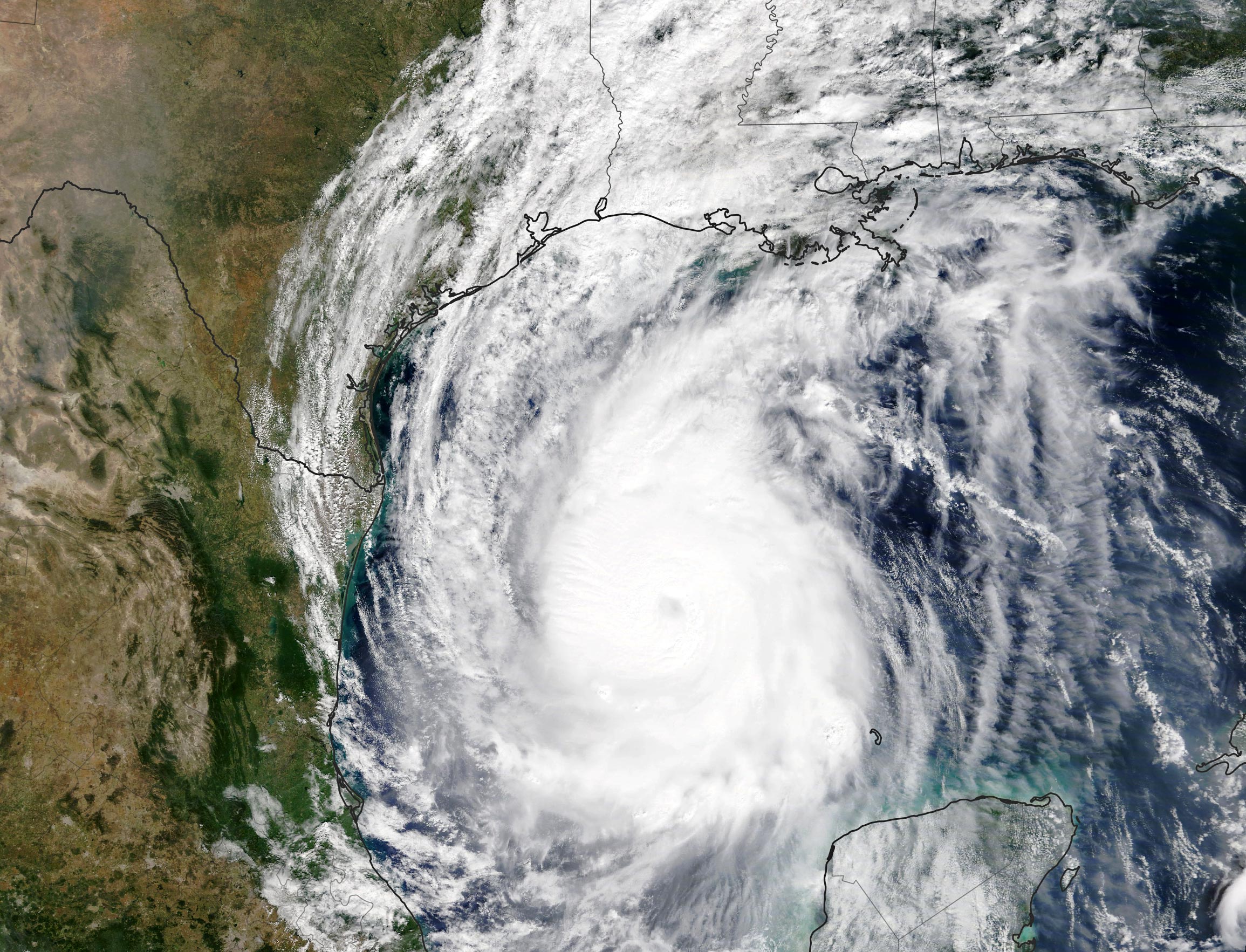
    Hurricane Delta October 8 Annotated
    October 8, 2020

    The historic 2020 Atlantic hurricane season is not done yet. Hurricane Delta, the 25th named storm of the season, is expected to make landfall on the U.S. Gulf Coast on October 9, bringing life-threatening storm surges and dangerous winds. Forecasters expect the storm will make landfall within 50 miles (80 kilometers) of where category 4 Hurricane Laura landed earlier this season.

    The natural-color image above shows Delta in the early afternoon on October 8; it was acquired by the Moderate Resolution Imaging Spectroradiometer (MODIS) on NASA’s Terra satellite. The map below shows the track of the storm between October 5 and October 8 overlaid on a map of sea surface temperatures (SSTs) in the Gulf of Mexico as measured on October 6, 2020. The SST data come from the Multiscale Ultrahigh Resolution Sea Surface Temperature (MUR SST) project, based at NASA’s Jet Propulsion Laboratory. MUR SST blends measurements of sea surface temperatures from multiple NASA, NOAA, and international satellites, as well as ship and buoy observations. The brightness temperature image of Delta was acquired by the Visible Infrared Imaging Radiometer Suite (VIIRS) on Suomi NPP in the early morning of October 8.
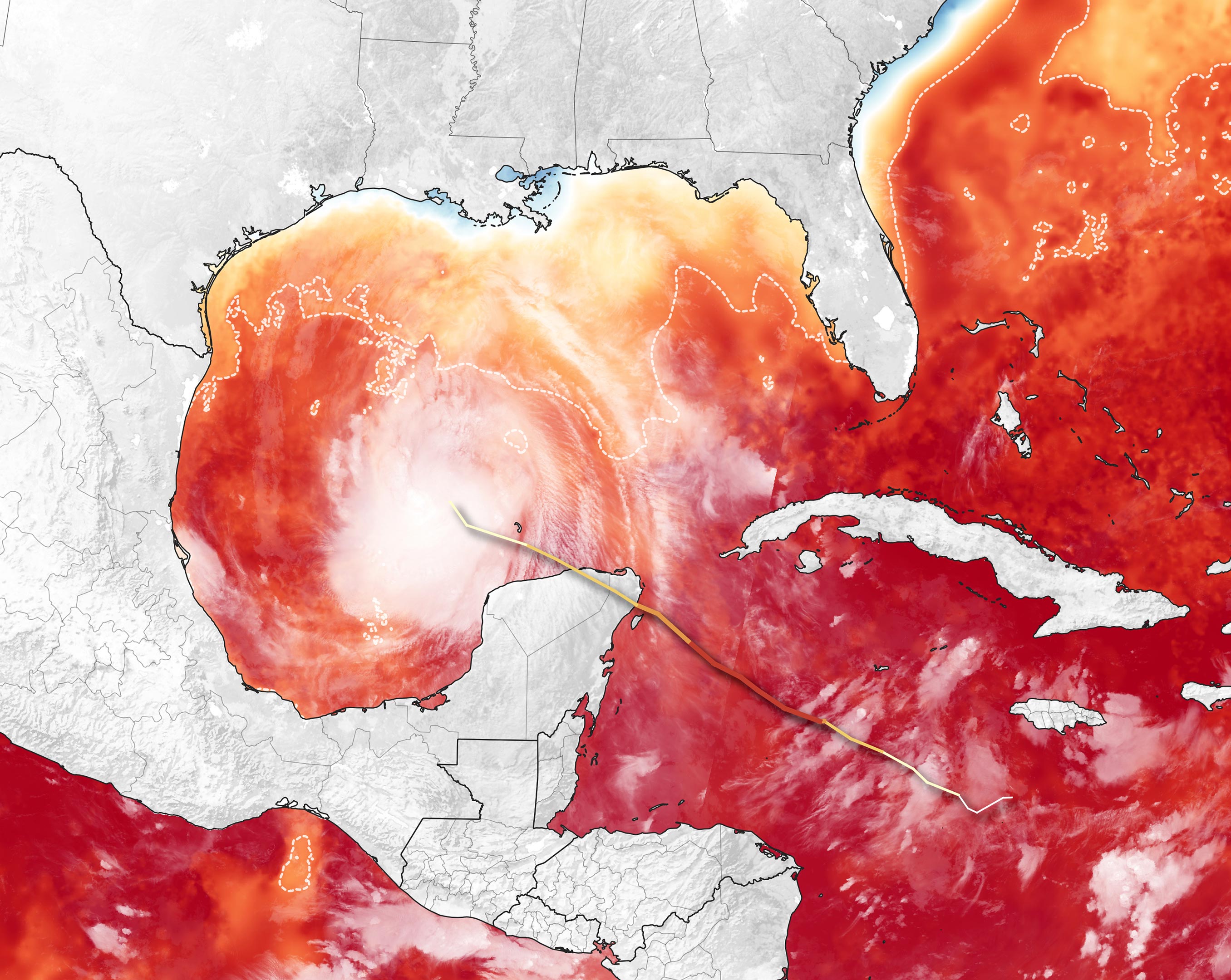
    Hurricane Delta Sea Surface Temperature Annotated
    October 5 – 8, 2020

    Hurricane Delta made landfall on the northeastern edge of the Yucatan Peninsula as a category 2 storm on October 7. The storm brought torrential downpours and sustained winds up to 100 miles (160 kilometers) per hour. It knocked out power and took down trees near the resort areas of Cancun and Cozumel. Thousands of tourists and residents were forced to evacuate. The weakened storm then entered the Gulf of Mexico and gained new strength as it moved over warm water again.

    The National Hurricane Center predicted the storm will turn to the northeast and hit the Louisiana coast on October 9. As it approaches the coast, ocean temperatures are expected to be around 82°F (28°C), high enough to sustain and possibly strengthen the storm.

    Forecasters warned of storm surges between 7 to 11 feet (2 to 3 meters) along portions of the Louisiana coast. Heavy rainfall could also lead to flash flooding along the central Gulf Coast and in the Lower Mississippi Valley.

    NASA Earth Observatory images by Lauren Dauphin, using MODIS data from NASA EOSDIS/LANCE and GIBS/Worldview, VIIRS data from NASA EOSDIS/LANCE and GIBS/Worldview and the Suomi National Polar-orbiting Partnership, sea surface temperature data from the Multiscale Ultrahigh Resolution (MUR) project, and storm track information from Weather Underground.

    Never miss a breakthrough: Join the SciTechDaily newsletter.
    Follow us on Google and Google News.

    Hurricane NASA NASA Earth Observatory Weather
    Share. Facebook Twitter Pinterest LinkedIn Email Reddit

    Related Articles

    A Changed Landscape in Southern Louisiana After Hurricane Ida: Large New Patches of Open Water

    NASA Satellite Observes Massive Power Outages in New Orleans

    Hurricane Ida Batters Louisiana: 5th-Strongest Storm Ever To Make Landfall in the Continental U.S.

    Incredible View of Tropical Storm Elsa Captured From Space

    Dangerous Category 5 Hurricane Iota Sets Late-Season Records

    Hurricane Zeta Arrives on the Gulf Coast – Dramatic Space Station Flyover Video

    NASA Watches a Dangerous Storm Nearing the Gulf Coast

    Hurricane Douglas Rapidly Closing In on Hawaii

    Brace for an Active 2020 Hurricane Season

    1 Comment

    1. Richie on October 10, 2020 3:30 am

      Historic in what sense? In 2005, the last named storm was Zeta. It seems too that the convention has changed: named storms now include non-tropical systems such as last spring’s “Arthur” (remember Arthur? probably not, it was a non-event which popped up off the coast of North Carolina and promptly moved out to sea.) The definition of historic has really been stretched in recent years — what’s up with that?

      Reply
    Leave A Reply Cancel Reply

    • Facebook
    • Twitter
    • Pinterest
    • YouTube

    Don't Miss a Discovery

    Subscribe for the Latest in Science & Tech!

    Trending News

    Popular Sugar-Free Sweetener Linked to Liver Disease, Study Warns

    What Is Hantavirus? The Deadly Disease Raising Alarm Worldwide

    Scientists Just Discovered How the Universe Builds Monster Black Holes

    Scientists Unveil New Treatment Strategy That Could Outsmart Cancer

    A Simple Vitamin May Hold the Key to Treating Rare Genetic Diseases

    Scientists Think the Real Fountain of Youth May Be Hiding in Your Gut

    Ravens Don’t Follow Wolves, They Predict Them

    This Common Knee Surgery May Be Doing More Harm Than Good

    Follow SciTechDaily
    • Facebook
    • Twitter
    • YouTube
    • Pinterest
    • Newsletter
    • RSS
    SciTech News
    • Biology News
    • Chemistry News
    • Earth News
    • Health News
    • Physics News
    • Science News
    • Space News
    • Technology News
    Recent Posts
    • This Dazzling Green Snake Was Hiding in Plain Sight for Decades
    • Scientists Discover That a Single Dose of Psilocybin Changes the Human Brain
    • “Totally Unexpected” – Scientists Discover Pancreatic Cancer’s Fatal Addiction
    • A Strange Quantum Effect May Explain One of Biology’s Greatest Mysteries
    • NASA’s Psyche Spacecraft Is About To Fly Shockingly Close to Mars
    Copyright © 1998 - 2026 SciTechDaily. All Rights Reserved.
    • Science News
    • About
    • Contact
    • Editorial Board
    • Privacy Policy
    • Terms of Use

    Type above and press Enter to search. Press Esc to cancel.