
Close Menu
    Facebook X (Twitter) Instagram
    SciTechDaily
    • Biology
    • Chemistry
    • Earth
    • Health
    • Physics
    • Science
    • Space
    • Technology
    Facebook X (Twitter) Pinterest YouTube RSS
    SciTechDaily
    Home»Health»Revolutionary Brain Stimulation Technique Shows Promise for Treating Neurological Disorders
    Health

    Revolutionary Brain Stimulation Technique Shows Promise for Treating Neurological Disorders

    By Institute for Basic ScienceMarch 6, 2024No Comments5 Mins Read
    Facebook Twitter Pinterest Telegram LinkedIn WhatsApp Email Reddit
    Share
    Facebook Twitter LinkedIn Pinterest Telegram Email Reddit
    Human Brain Memories
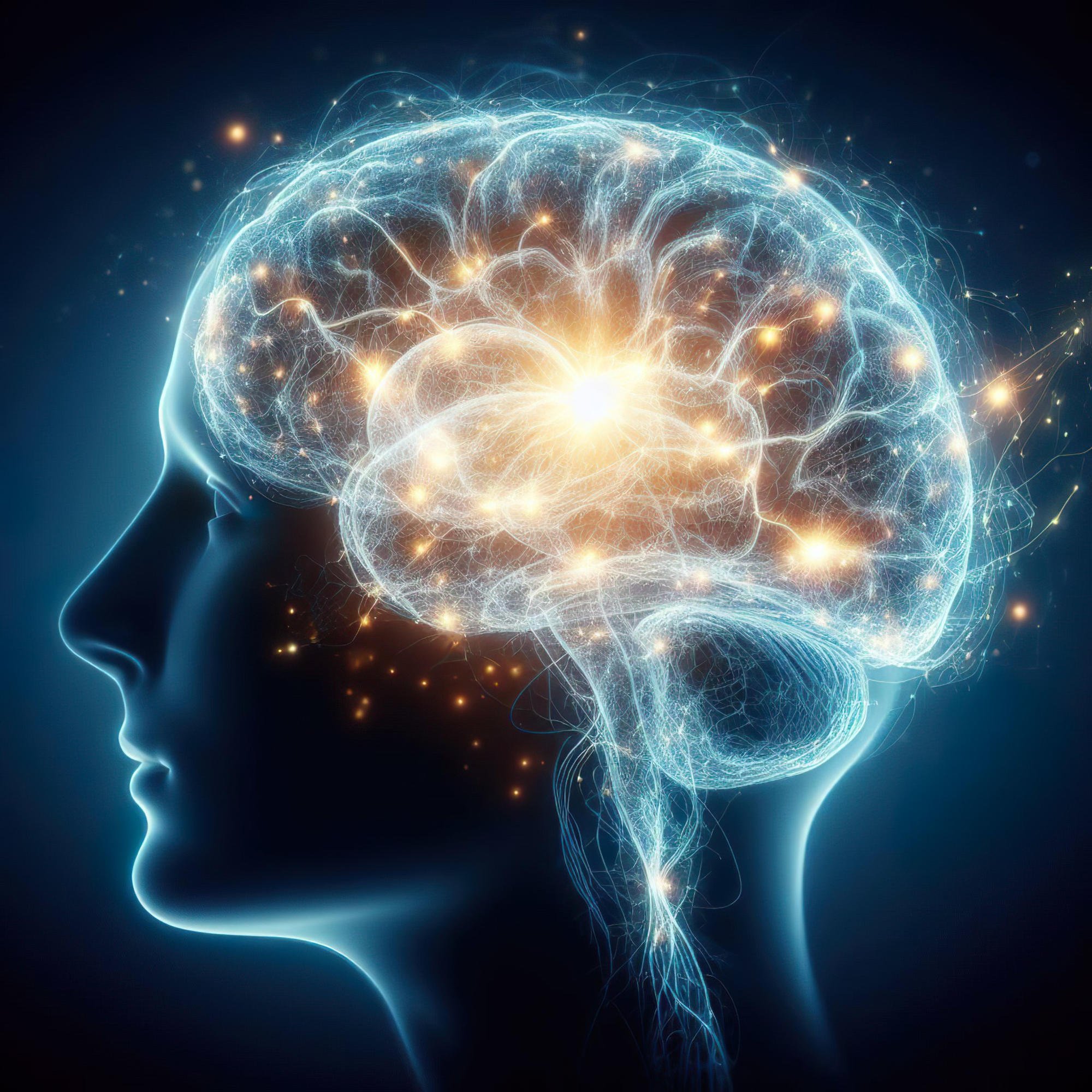
    Scientists have developed a non-invasive brain stimulation method, Patterned Low-Intensity Low-Frequency Ultrasound (LILFUS), which can precisely modulate brain function and induce lasting changes. This breakthrough overcomes the limitations of traditional stimulation methods and shows potential for treating neurological disorders, improving motor skills, and possibly aiding in rehabilitation therapies. The research opens new avenues for using ultrasound in brain therapy, with implications for treating a wide range of conditions. Credit: SciTechDaily.com

    Patterned low-intensity, low-frequency ultrasound (LILFUS) offers a safe and effective method for controlling brain functions.

    The ability of the human brain to adjust to both internal and external shifts, referred to as neural plasticity, is crucial for grasping cognitive processes such as memory and learning, along with a range of neurological conditions. A groundbreaking study led by Dr. Park Joo Min from the Center for Cognition and Sociality at the Institute for Basic Science (IBS) introduces an innovative approach that promises to revolutionize the treatment of brain disorders.

    The team developed a non-invasive brain stimulation method called Patterned Low-Intensity Low-Frequency Ultrasound (LILFUS), which holds tremendous potential for inducing long-lasting changes in brain function.

    Traditionally, magnetic and electrical brain stimulation methods have been used to modulate brain function. However, these methods come with inherent limitations that restrict their spatial resolution and penetration depth, making it challenging to precisely stimulate specific brain regions with optimal efficacy.
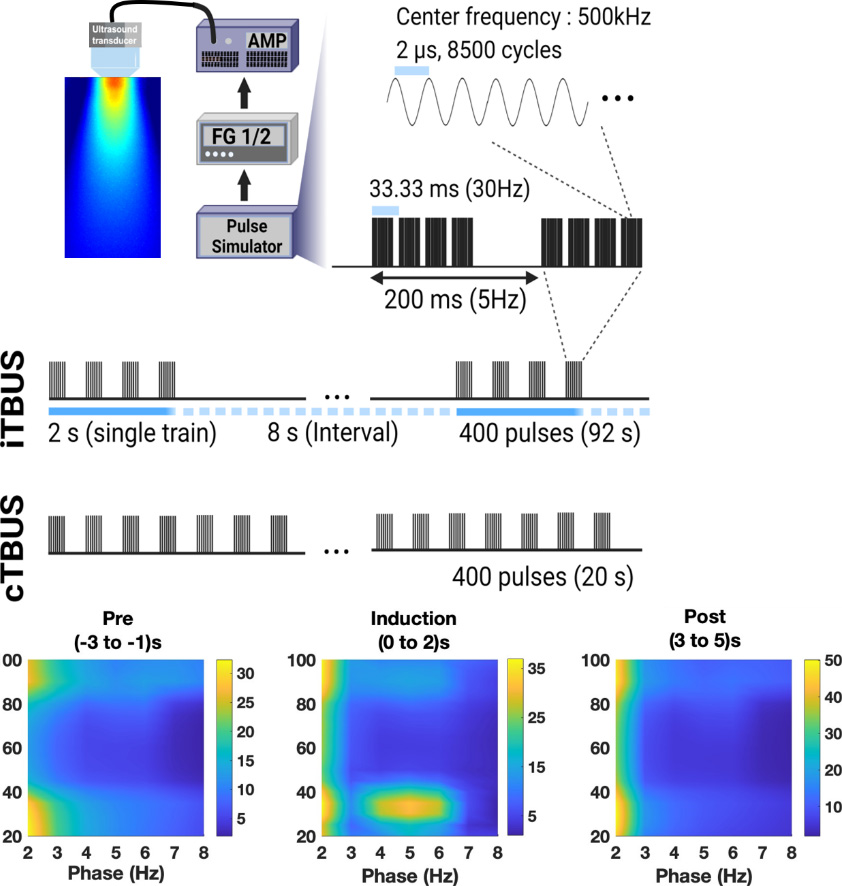
    Ultrasound Experimental Parameters and Synchronization of Brain Waves
    In this experiment, ultrasound protocols comprising two distinct stimulation patterns by combining Low-Intensity Low-Frequency (LILF) 30Hz and 5Hz ultrasound were used. The first pattern, known as intermittent TBUS, featured intermittent stimulation with 2 seconds of stimulation followed by 8 seconds of rest. The second pattern, termed continuous TBUS, involved 40 seconds of uninterrupted stimulation. Throughout the stimulation, brainwaves were monitored by analyzing the phase-amplitude coupling between theta and gamma waves, which are two primary types of brainwaves. The accompanying graph illustrates these observed changes. Credit: Institute for Basic Science

    More invasive methods, such as those that require surgical procedures, exhibit superior control and therapeutic effects for specific deep brain stimulation, but they come with risks such as tissue damage, inflammation, and infection. These limitations have fueled the search for alternative approaches that can overcome these constraints and provide more efficient and precise modulation of brain function.

    Ultrasound Stimulation: A New Frontier

    In the latest study unveiled by the IBS, researchers used ultrasound to enable precise stimulation of specific brain areas. Unlike electromagnetic waves, ultrasound has the advantage of being able to penetrate deep into the brain tissues.

    The researchers discovered that ultrasound stimulation can modulate neural plasticity – the brain’s ability to rewire itself – through the activation of key molecular pathways. Specifically, the study pinpointed the ultrasound’s effect on mechanosensitive calcium channels in astrocytes, which controls the cells’ ability to uptake calcium and release neurotransmitters.
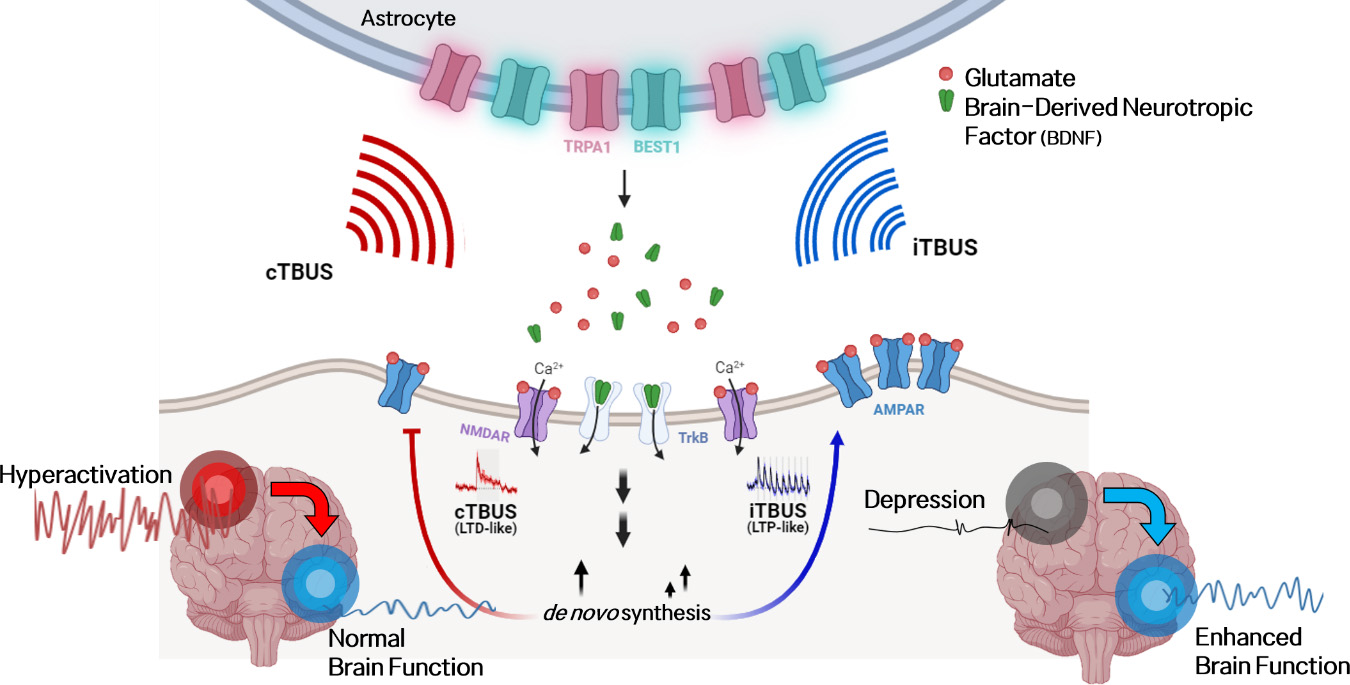
    Mechanism of Neural Regulation Induced by Ultrasound Stimulation
    This figure summarizes the outcomes following ultrasound stimulation. Low-intensity brainwave-like pattern ultrasound stimulation sequentially stimulates TRPA1 in astrocytes, leading to BEST1-dependent neurotransmitter secretion. This, in turn, stimulates adjacent neurons, inducing neural plasticity in the neurons. This process briefly describes how changes in cognitive functions associated with pattern-dependent memory and learning, as well as changes in behavioral aspects, become evident. Credit: Institute for Basic Science

    The Innovation of LILFUS

    LILFUS was designed based on specific ultrasound parameters that mimic the brainwave patterns of theta (5 Hz) and gamma (30 Hz) oscillations observed during learning and memory processes. The new tool allowed the researchers to either activate or deactivate specific brain regions at will – intermittent delivery of the ultrasound was found to induce long-term potentiation effects, while continuous patterns resulted in long-term depression effects.

    One of the most promising aspects of this new technology is its ability to facilitate the acquisition of new motor skills. When the researchers delivered ultrasound stimulation to the cerebral motor cortex in mice, they observed significant improvements in motor skill learning and the ability to retrieve food. Interestingly, researchers were even able to change the forelimb preference of the mice. This suggests potential applications in rehabilitation therapies for stroke survivors and individuals with motor impairments.

    Broader Implications and Future Directions

    The implications of this research extend far beyond motor function. It may be used to treat conditions such as depression, where altered brain excitability and plasticity are prominent features. With further exploration, LILFUS could be adapted for various brain stimulation protocols, offering hope for various conditions ranging from sensory impairments to cognitive disorders.

    Dr. Park stated, “This study has not only developed a new and safe neural regulation technology with long-lasting effects but has also uncovered the molecular mechanism changes involved in brainwave-patterned ultrasound neural regulation.” He further conveyed, “We plan to continue follow-up studies to apply this technology for the treatment of brain disorders related to abnormal brain excitation and inhibition and for the enhancement of cognitive functions.”

    Reference: “Long-lasting forms of plasticity through patterned ultrasound-induced brainwave entrainment” by Ho-Jeong Kim, Tien Thuy Phan, Keunhyung Lee, Jeong Sook Kim, Sang-Yeong Lee, Jung Moo Lee, Jongrok Do, Doyun Lee, Sung-Phil Kim, Kyu Pil Lee, Jinhyoung Park, C. Justin Lee and Joo Min Park, 23 February 2024, Science Advances.
    DOI: 10.1126/sciadv.adk3198

    The study was funded by the Institute for Basic Science.

    Never miss a breakthrough: Join the SciTechDaily newsletter.
    Follow us on Google and Google News.

    Brain Institute for Basic Science Neuroscience Popular
    Share. Facebook Twitter Pinterest LinkedIn Email Reddit

    Related Articles

    Cracking the Alzheimer’s Code: A Groundbreaking New Approach to Visualizing the True Culprit

    A Major Malformation Illustrates the Incredible Plasticity of the Human Brain

    “You Do Not Want to Mess With This Virus” – Research Strongly Suggests COVID-19 Virus Enters the Brain

    Rapid Mental Rejuvenation: Experimental Drug Reverses Age-Related Cognitive Decline Within Days

    Can Drinking Cocoa Make You Smarter? Cocoa Flavanols Found to Boost Brain Oxygenation and Cognition

    Specialized Scanning Reveals Brain Damage in COVID-19 Patients

    Century-Old Scientific Debate Settled: Anesthesia’s Effect on Consciousness Solved

    Chasing the Rush: Sugar Actually Changes the Chemistry of Your Brain

    New Way to Treat Hypersensitivity to Noise and Other Neurological Disorders

    Leave A Reply Cancel Reply

    • Facebook
    • Twitter
    • Pinterest
    • YouTube

    Don't Miss a Discovery

    Subscribe for the Latest in Science & Tech!

    Trending News

    The Universe Is Expanding Too Fast and Scientists Can’t Explain Why

    “Like Liquid Metal”: Scientists Create Strange Shape-Shifting Material

    Early Warning Signals of Esophageal Cancer May Be Hiding in Plain Sight

    Common Blood Pressure Drug Shows Surprising Power Against Deadly Antibiotic-Resistant Superbug

    Scientists Uncover Dangerous Connection Between Serotonin and Heart Valve Disease

    Scientists Discover a “Protector” Protein That Could Help Reverse Hair Loss

    Bone-Strengthening Discovery Could Reverse Osteoporosis

    Scientists Uncover Hidden Trigger Behind Stem Cell Aging

    Follow SciTechDaily
    • Facebook
    • Twitter
    • YouTube
    • Pinterest
    • Newsletter
    • RSS
    SciTech News
    • Biology News
    • Chemistry News
    • Earth News
    • Health News
    • Physics News
    • Science News
    • Space News
    • Technology News
    Recent Posts
    • Scientists Overcome Major Quantum Bottleneck, Potentially Transforming Teleportation and Computing
    • Quantum Physics’ Strangest Problem May Hold the Key to Time Itself
    • Scientists Create “Liquid Gears” That Spin Without Touching
    • The Simple Habit That Could Help Prevent Cancer
    • Forgotten Medicinal Plant Shows Promise in Fighting Dangerous Superbugs
    Copyright © 1998 - 2026 SciTechDaily. All Rights Reserved.
    • Science News
    • About
    • Contact
    • Editorial Board
    • Privacy Policy
    • Terms of Use

    Type above and press Enter to search. Press Esc to cancel.