
Scientists Announce Comprehensive Regional Diagnostic of Microbial Ocean Life Using DNA Testing
Large-scale ‘metabarcoding’ methods could revolutionize how society understands forces that drive seafood supply and the planet’s ability to remove greenhouse gases.
Researchers from the Scripps Institution of Oceanography at the University of California, San Diego, the J. Craig Venter Institute (JCVI), and the National Oceanic and Atmospheric Administration (NOAA) assessed the diversity of marine life off the California coast using genetics research tools similar to those used in genealogical research.
The end result is a ground-breaking technique that scientists will be able to use to diagnose conditions at the base of the ocean food web that impact the abundance of economically valuable fishes or cause toxic algal blooms. Researchers can also utilize so-called environmental DNA (eDNA), derived from information acquired by a method known as “metabarcoding,” to assess how effectively the oceans can protect the planet from the effects of climate change.
The team reports on the findings today (May 4, 2022) in the journal Nature Communications. The work was funded by the National Science Foundation (through the California Current Ecosystem Long-Term Ecological Research project), NOAA, and the Gordon and Betty Moore Foundation.
Uncovering Hidden Microbial Diversity with eDNA
“It’s the ecological sampling method of the future,” said study first author Chase James, a graduate student at Scripps Oceanography and JCVI researcher. “This study represents the first deployment of this approach within a long-term ecological sampling context. It reveals what you can see when all this hidden diversity is finally shown.”
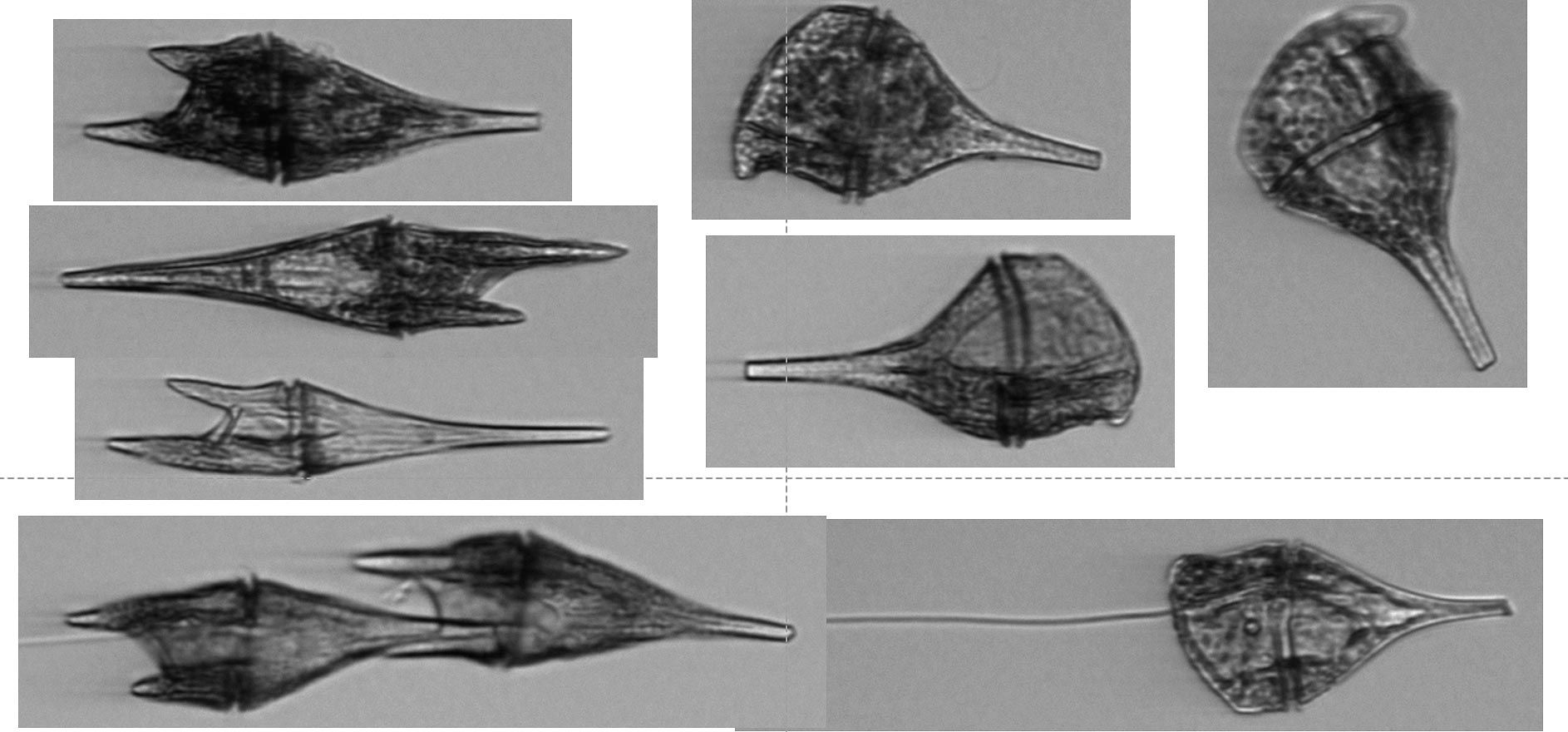
The new way of assessing ocean microbiomes – collections of microscopic plants, animals, and other organisms living in given habitats – vastly improves scientists’ ability to perform diagnostics on the oceans. In the case of this study, researchers were able to use genetic information to identify the most important factor governing how many organisms are in the ocean in surface waters off the California coast and where they are distributed. They found that nutrient supply shapes the profile of microbial life in the California Current even more than temperature. This conclusion is one that could not have been reached using traditional means.
The CalCOFI Program and Genetic Profiling
James likened the process to scanning the barcodes of all the products in a grocery store to obtain an inventory of them. James’ advisor Andrew Allen launched the effort, titled the NOAA CalCOFI Ocean Genomics Project (NCOG), in 2014, starting with water samples gathered during cruises of the iconic CalCOFI surveys, a quarterly program that Scripps has co-managed since 1949. The samples collected in two-liter bottles were filtered, and the filters were frozen and brought back to the lab. The scientists then profiled all DNA they found in those samples in the manner that commercial DNA testing companies identify people’s genetic profiles, identifying all the microorganisms in the samples. They also estimated how many specimens of all the identified species were in the sample.
The method is an improvement upon traditional techniques such as light microscopy, which capture sentinel species commonly found in seawater or on bulk indicator measurements such as how much chlorophyll is in the water. In comparison to metabarcoding, those methods just give broad strokes-level information of what life lives where. Metabarcoding allows for more precise identification of species and the acquisition of more data with the same effort.
CalCOFI was created just after World War II to help officials and the fishing industry understand what caused the sudden collapse of sardine populations off the West Coast. The program conducts quarterly cruises at an array of stations off the coast. There, scientists repeat a suite of physical and biogeochemical measurements revealing ecological conditions. From the surveys, scientists have collected a history of the marine environment unequaled in the world.
“It’s interesting that 70 years ago, CalCOFI couldn’t have even imagined that you could sample two liters of seawater and get comprehensive data on the marine microbial community,” said James, “but a major future goal of this study is to achieve the initial goals that CalCOFI set out to accomplish, which is to understand the processes that drive the success and failure of our regional fisheries. This cutting-edge research may be used to answer 70-year-old questions.”
Reference: “Influence of nutrient supply on plankton microbiome biodiversity and distribution in a coastal upwelling region” by Chase C. James, Andrew D. Barton, Lisa Zeigler Allen, Robert H. Lampe, Ariel Rabines, Anne Schulberg, Hong Zheng, Ralf Goericke, Kelly D. Goodwin and Andrew E. Allen, 4 May 2022, Nature Communications.
DOI: 10.1038/s41467-022-30139-4
Study co-authors include Lisa Zeigler Allen, Robert Lampe, Ariel Rabines, Anne Schulberg, and Andrew Allen, who have joint appointments at Scripps Oceanography and JCVI; Andrew Barton, who has joint appointments at Scripps Oceanography and UC San Diego’s Division of Biological Sciences; Hong Zheng of JCVI; Ralf Goericke of Scripps Oceanography; and Kelly Goodwin of NOAA’s Atlantic Oceanographic and Meteorological Laboratory and Southwest Fisheries Science Center.
Funding: National Science Foundation, National Oceanic and Atmospheric Administration, Gordon and Betty Moore Foundation
Never miss a breakthrough: Join the SciTechDaily newsletter.
Follow us on Google and Google News.