

Close Menu
    Facebook X (Twitter) Instagram
    SciTechDaily
    • Biology
    • Chemistry
    • Earth
    • Health
    • Physics
    • Science
    • Space
    • Technology
    Facebook X (Twitter) Pinterest YouTube RSS
    SciTechDaily
    Home»Health»Revolutionizing Disease Prediction: Mount Sinai’s New Approach for Diverse Populations
    Health

    Revolutionizing Disease Prediction: Mount Sinai’s New Approach for Diverse Populations

    By The Mount Sinai Hospital / Mount Sinai School of MedicineDecember 20, 2023No Comments3 Mins Read
    Facebook Twitter Pinterest Telegram LinkedIn WhatsApp Email Reddit
    Share
    Facebook Twitter LinkedIn Pinterest Telegram Email Reddit
    World DNA Genetics Concept
    A team from the Icahn School of Medicine at Mount Sinai has developed “BridgePRS,” a new statistical technique to improve disease prediction for non-European individuals, especially those of African descent. This method addresses the limitations of current polygenic risk scores, which are less accurate for non-European ancestries, and marks a significant step towards personalized medicine and reducing healthcare inequities. Credit: SciTechDaily.com

    Statistical technique enhances genetic disease prediction in non-European populations, addressing healthcare equity.

    A team of scientists from Icahn School of Medicine at Mount Sinai has developed a groundbreaking statistical technique, “BridgePRS,” to enhance disease prediction in people of non-European ancestry, particularly those of African descent. This development represents a substantial step towards reducing healthcare inequities and a future of more personalized and precise medical interventions based on genetic information. Details of their work were published today (December 20, 2023) in Nature Genetics.

    Addressing Healthcare Inequity With Enhanced Polygenic Risk Scores

    Current polygenic risk scores (PRS), essential tools for predicting disease risk encoded in our DNA, are predominantly based on genetic data from individuals of European ancestry. This bias makes them less accurate for people of African or Asian ancestry, exacerbating health care inequity among different ethnic groups.

    The researchers embarked on this study to improve disease prediction from genetics in non-European individuals. A key goal of personalized medicine is disease prevention, yet current PRS are weak predictors, especially in non-European populations.
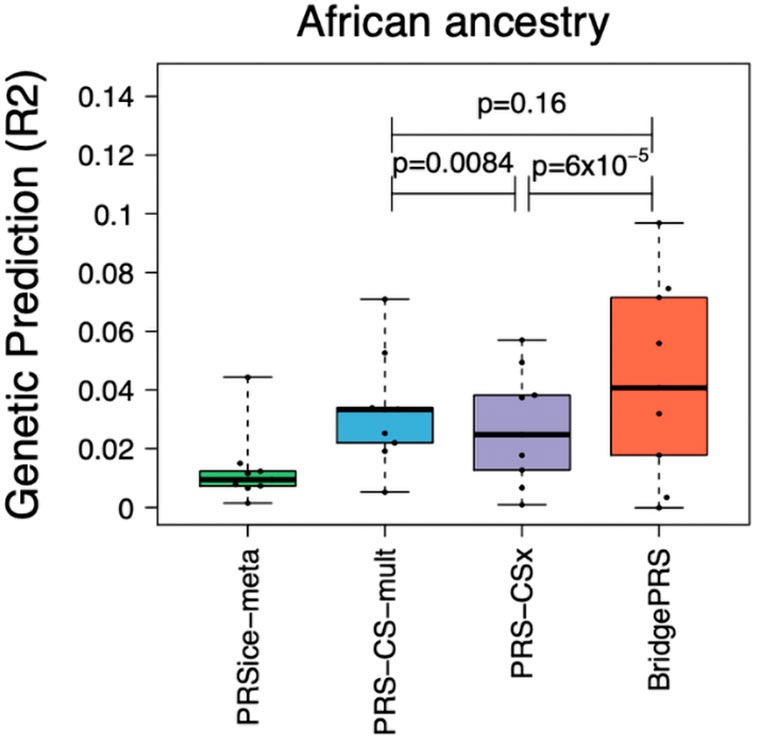
    BioMe Cohort
    BridgePRS improves prediction of African ancestry individuals in the New York BioMe cohort. Credit: Icahn School of Medicine at Mount Sinai

    Bridging the Gap in Genetic Disease Prediction

    “While we need more genetic data from diverse ancestries, our method combines existing data to help maximize disease prediction across all people,” explained Clive Hoggart, Ph.D., Assistant Professor of Genetics and Genomic Sciences and lead author of the paper. “The biology causing diseases is remarkably similar across ancestries, enabling this advancement.”

    “We hope that our method opens up scientific investigation of disease risk in diverse populations worldwide,” stated Paul O’Reilly, Ph.D., Associate Professor of Genetics and Genomic Sciences and senior author. “Disease prevalence and the importance of different biological pathways can vary globally. Understanding these differences is crucial for advancing disease prediction and treatment.”

    The field of optimizing disease prediction through PRS Is highly competitive, fostering rapid advancements. Dr. O’Reilly notes, “Our BridgePRS method is particularly promising for predicting disease in individuals of African ancestry, a group with rich genetic diversity that can offer novel insights into human diseases.”

    While recognizing the potential of genetics and DNA in predicting future disease and the role of PRS in precision medicine, it’s vital to understand that the biology causing diseases does not differ significantly across ancestry groups or races.

    Reference: “BridgePRS leverages shared genetic effects across ancestries to increase polygenic risk score portability” by Clive J. Hoggart, Shing Wan Choi, Judit García-González, Tade Souaiaia, Michael Preuss and Paul F. O’Reilly, 20 December 2023, Nature Genetics.
    DOI: 10.1038/s41588-023-01583-9

    The remaining authors, all with Icahn Mount Sinai except where indicated, are Shing Wan Choi, Ph.D. (Regeneron Genetics Center), Judit García-González, Ph.D., Tade Souaiaia, Ph.D. (Suny Downstate Health Sciences), and Michael Preuss, Ph.D.

    The study was funded by grant number R01MH122866 from the National Institute of Mental Health and grant number R01HG012773 from the National Human Genome Research Institute.

    Never miss a breakthrough: Join the SciTechDaily newsletter.
    Follow us on Google and Google News.

    Genetics Mount Sinai Hospital Mount Sinai School of Medicine
    Share. Facebook Twitter Pinterest LinkedIn Email Reddit

    Related Articles

    New AI Can Predict Which Diseases Your DNA Might Spark

    How a Single Gene Mutation is Rewriting the Book on Intellectual Disability

    Most “Pathogenic” Genetic Variants Have a Low Risk of Actually Causing Disease

    Study of Suicide Attempts Confirms Genetic Underpinnings Not Driven by Underlying Psychiatric Disorders

    New Gene Therapy Developed That Could Be Effective Against Many Types of Cancer

    Researchers Discover New Drugs That Inhibit a “Master Switch” in a Deadly Non-Hodgkin’s Lymphoma

    Warning: High Caffeine Consumption May Increase Risk of Blinding Eye Disease

    Warning: Lower IQ Related to Chemicals in Consumer Products During Pregnancy

    Study Shows Deep Brain Stimulation Is Effective Treatment for Most Severe Depression

    Leave A Reply Cancel Reply

    • Facebook
    • Twitter
    • Pinterest
    • YouTube

    Don't Miss a Discovery

    Subscribe for the Latest in Science & Tech!

    Trending News

    New Pill Lowers Stubborn Blood Pressure and Protects the Kidneys

    Humans May Have Hidden Regenerative Powers, New Study Suggests

    Scientists Just Solved the Mystery of Why Crabs Walk Sideways

    Doctors Are Surprised by What This Vaccine Is Doing to the Heart

    This Popular Supplement May Boost Your Brain, Not Just Your Muscles

    Scientists Say This Simple Supplement May Actually Reverse Heart Disease

    Warming Oceans Could Trigger a Dangerous Methane Surge

    This Simple Movement Could Be Secretly Cleaning Your Brain

    Follow SciTechDaily
    • Facebook
    • Twitter
    • YouTube
    • Pinterest
    • Newsletter
    • RSS
    SciTech News
    • Biology News
    • Chemistry News
    • Earth News
    • Health News
    • Physics News
    • Science News
    • Space News
    • Technology News
    Recent Posts
    • Researchers Discover Efficient New Way To Split Hydrogen From Water for Energy
    • This Korean Skincare Ingredient Could Help Fight Deadly Superbugs
    • Giant Squid Detected off Western Australia in Stunning Deep-Sea Discovery
    • Popular Sugar-Free Sweetener Linked to Liver Disease, Study Warns
    • Why Weight Loss Isn’t Enough for Everyone at Risk of Diabetes
    Copyright © 1998 - 2026 SciTechDaily. All Rights Reserved.
    • Science News
    • About
    • Contact
    • Editorial Board
    • Privacy Policy
    • Terms of Use

    Type above and press Enter to search. Press Esc to cancel.