
Close Menu
    Facebook X (Twitter) Instagram
    SciTechDaily
    • Biology
    • Chemistry
    • Earth
    • Health
    • Physics
    • Science
    • Space
    • Technology
    Facebook X (Twitter) Pinterest YouTube RSS
    SciTechDaily
    Home»Science»Rewriting History: Egypt’s New Kingdom Started Later Than We Thought
    Science

    Rewriting History: Egypt’s New Kingdom Started Later Than We Thought

    By Ben-Gurion University of the NegevNovember 10, 20252 Comments3 Mins Read
    Facebook Twitter Pinterest Telegram LinkedIn WhatsApp Email Reddit
    Share
    Facebook Twitter LinkedIn Pinterest Telegram Email Reddit
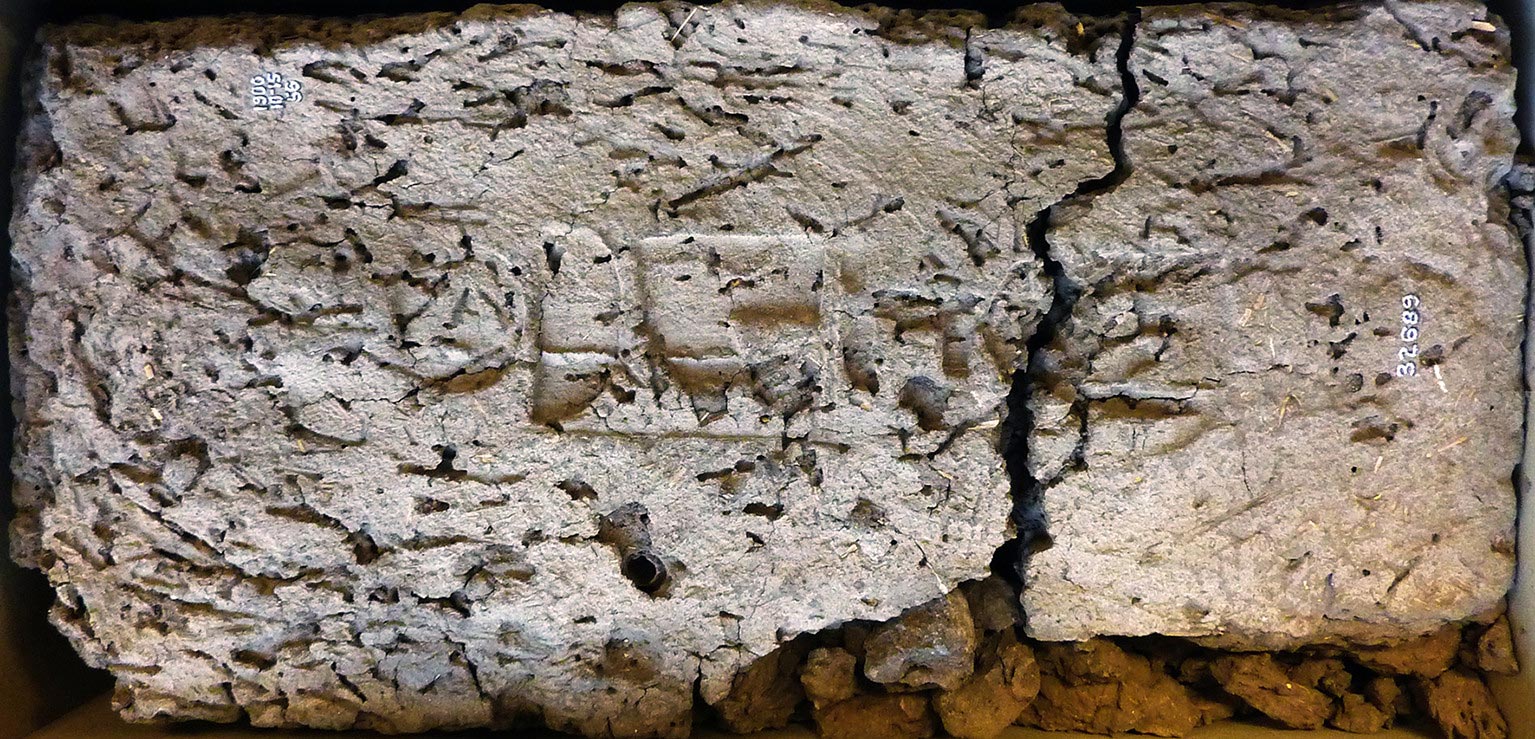
    Mudbrick EA 32689 From the Temple of Ahmose at Abydos
    Mudbrick EA 32689 (British Museum) from the Temple of Ahmose at Abydos, showing the stamped prenomen (throne name) Nebpehtire of Pharaoh Ahmose. Its radiocarbon dates support a low chronology for the beginning of the 18th Dynasty. Credit: H.J. Bruins, 2018 © The Trustees of the British Museum, London. Shared under a Creative Commons CC BY-NC-SA 4.0 license.

    The first study granted access to artifacts in British museums for radiocarbon dating has examined the transition between the Second Intermediate Period and the New Kingdom of Ancient Egypt.

    One of the most powerful volcanic eruptions of the past 10,000 years occurred on the Greek island of Thera (Santorini) in the Aegean Sea, yet its precise date, sometime in the late 17th or 16th century BCE, has long been debated. Volcanic ash from the eruption spread widely across the eastern Mediterranean, leaving behind clues that have puzzled archaeologists for decades. A central question has been how this major geological event aligns with the established timeline of Egyptian rulers.

    Researchers from Ben-Gurion University of the Negev and the University of Groningen have now provided new evidence through the first radiocarbon dates linked to King Ahmose, the pharaoh who reunified Upper and Lower Egypt and founded the New Kingdom.
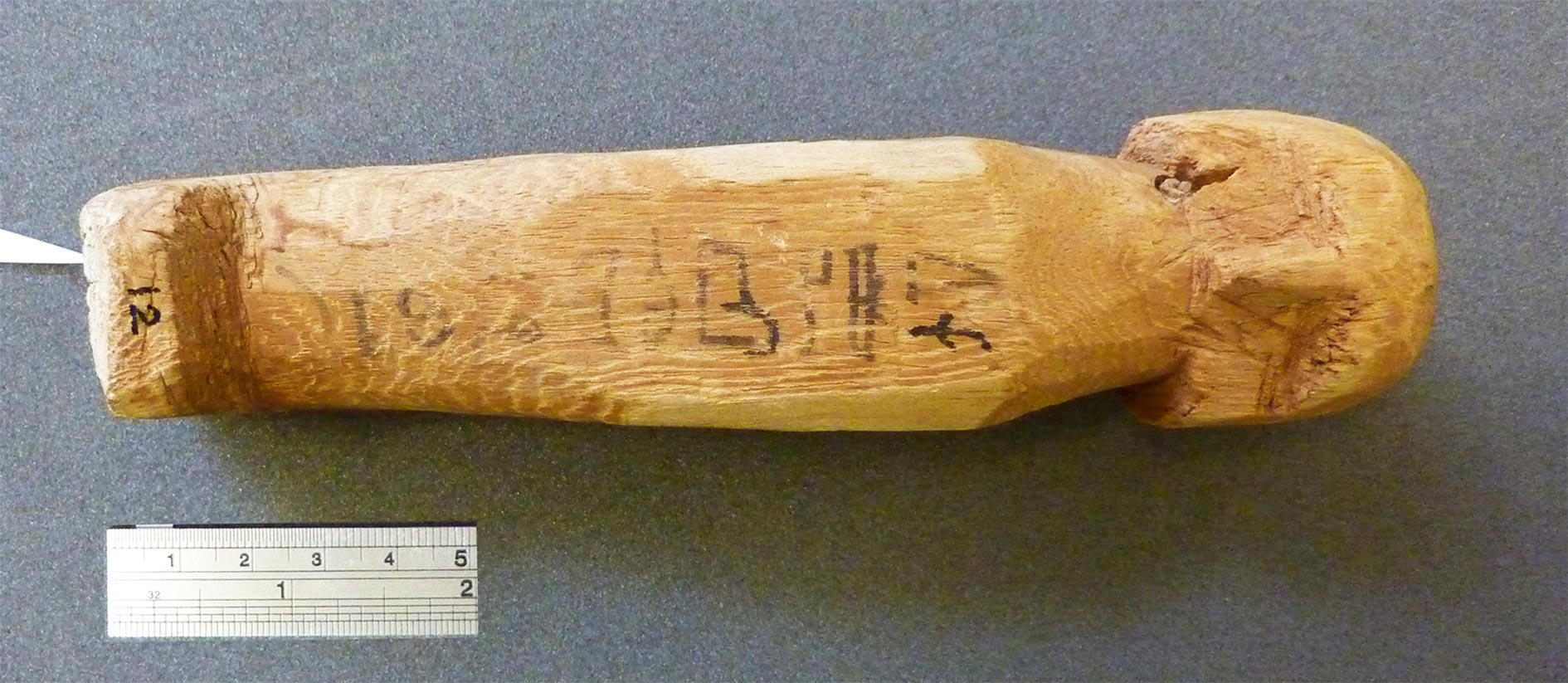
    Shabti UC 40179 From Ancient Thebes
    Shabti UC 40179 from ancient Thebes, which can be related to the beginning of the 18th Dynasty. Its radiocarbon date supports a low chronology for the reigns of Nebpehtire Ahmose and his son Amenhotep I. Credit: H.J. Bruins (2017), published with permission from the Petrie Museum of Egyptian and Sudanese Archaeology (University College London) under a CC BY license.

    Their analysis indicates that the eruption took place earlier, during the Second Intermediate Period, before the rise of the New Kingdom. The findings strongly support a “low” (younger) chronology for the start of the 18th Dynasty, an adjustment that has significant implications for understanding Egypt’s interactions with neighboring cultures across the region.

    Their findings were recently published in PLOS One.

    Rare museum access for sample collection

    Prof. Hendrik J. Bruins of the Jacob Blaustein Institutes for Desert Research at BGU’s Sde Boker Campus and Prof. Johannes van der Plicht of the University of Groningen in the Netherlands were granted exceptional permission to collect artifact samples for radiocarbon testing at the British Museum and the Petrie Museum in London. Under museum supervision, they sampled a mudbrick from the Ahmose Temple at Abydos (British Museum), a linen burial cloth associated with Satdjehuty (British Museum), and six wooden stick shabtis from Thebes (Petrie Museum).
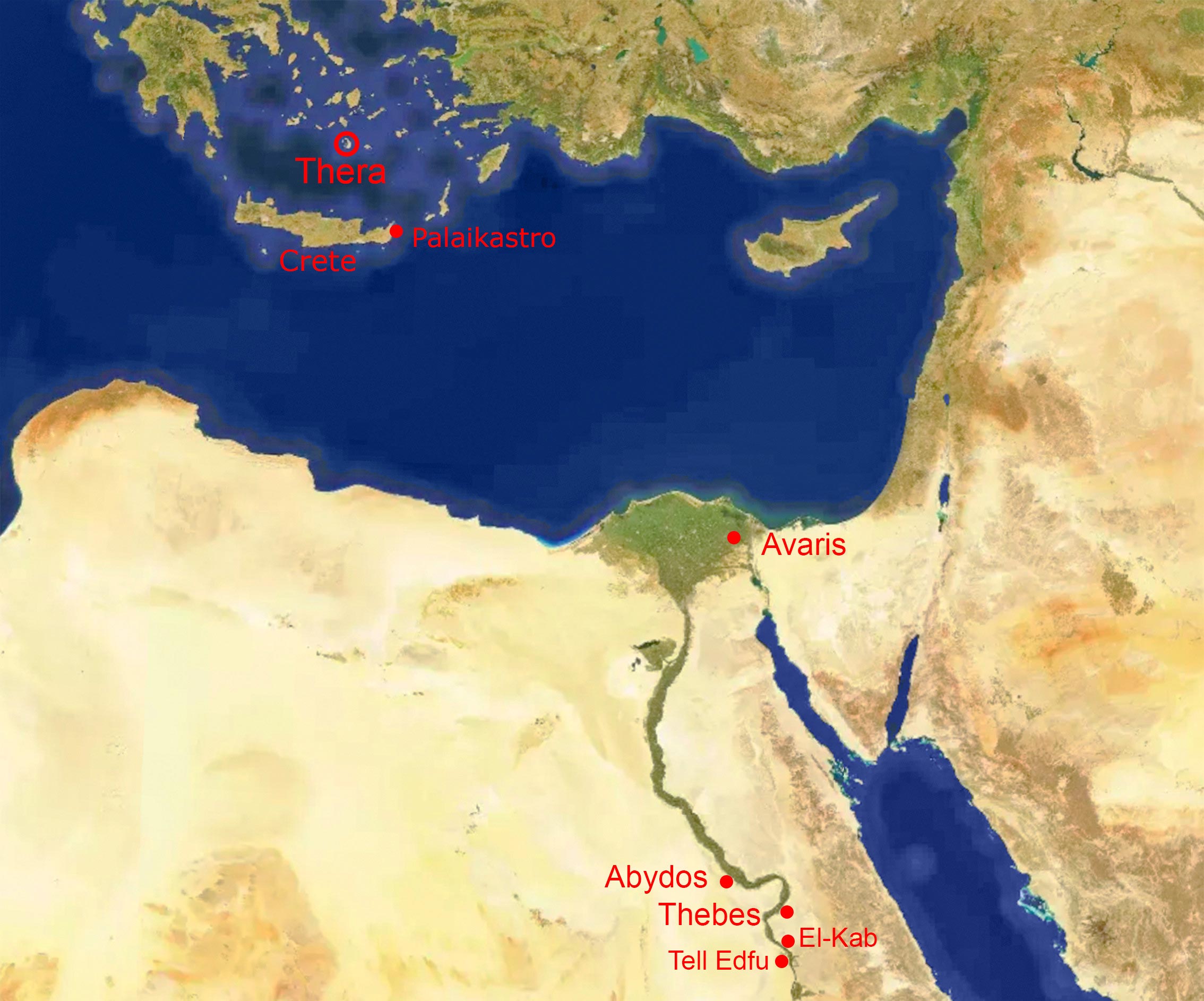
    Map of Thera Eruption Sites and Key Egyptian Locations
    The eastern Mediterranean region and Egypt, showing the location of the Thera (Santorini) volcano and other places mentioned in the text. Credit: Based on Mapcarta, the open map with CC BY license © OpenStreetMap, Mapbox, and Mapcarta

    They discovered that, contrary to traditional archaeological understandings, the volcanic eruption did not occur during the Egyptian New Kingdom, but occurred earlier, during the Second Intermediate Period. Radiocarbon dates of the Santorini eruption are significantly older than the first-ever radiocarbon dates concerning Pharaoh Ahmose and the other artifacts investigated of the 17th to early 18th Dynasty.

    “Our findings indicate that the Second Intermediate Period lasted considerably longer than traditional assessments, and the New Kingdom started later,” says Prof. Hendrik J. Bruins.

    Reference: “The Minoan Thera eruption predates Pharaoh Ahmose: Radiocarbon dating of Egyptian 17th to early 18th Dynasty museum objects” by Hendrik J. Bruins and Johannes van der Plicht, 10 September 2025, PLOS ONE.
    DOI: 10.1371/journal.pone.0330702

    Never miss a breakthrough: Join the SciTechDaily newsletter.
    Follow us on Google and Google News.

    Archaeology Ben-Gurion University of The Negev Egyptology Geology Radiocarbon Dating
    Share. Facebook Twitter Pinterest LinkedIn Email Reddit

    Related Articles

    Mystery of Easter Island’s Moai: Unearthing the Meaning of the Ancient Monoliths

    Scientists Use X-Rays and Infrared Light to Explore Egyptian Mummy Bones [Video]

    When Did Animals Leave Their First Footprint on Earth?

    Egyptologist Discovers Mysterious Head of a Pharaoh

    Paleontologists Provide New Perspective on Triassic Period, Emergence of Dinosaurs

    Scientists Identify a Mineral Signature for Finding Burgess Shale-Type Fossils

    DNA Sequencing Solves 4,000-Year-Old Egyptian Mummy Mystery

    The Stonehenge Hidden Landscapes Project Reveals a Major New Prehistoric Stone Monument

    Humans Implicated in Africa’s Deforestation 3,000 Years Ago

    2 Comments

    1. Robert on November 11, 2025 11:30 am

      Some researchers hold religious views that tie the eruption to the story of Moses. This result casts further doubt on that chronology and shows religious themes as compilations from different eras. Recorded history has no Moses in the time of Ramesses II and at the same time, the history the last of the 18th dynasty was actively erased by Horemheb and through continuing generations under the Amun. Not until Carter’s discovery of Tutankhamun did the world hear about Akhenaten.

      Reply
    2. Charles on November 16, 2025 5:38 am

      Radiocarbon dating has been calibrated for consistency with the accepted chronology of that time period, so that only allows for small adjustments from artifacts such as the Ahmose piece.

      The New Kingdom started very, very late and had nothing to do with the Thera eruption.

      Reply
    Leave A Reply Cancel Reply

    • Facebook
    • Twitter
    • Pinterest
    • YouTube

    Don't Miss a Discovery

    Subscribe for the Latest in Science & Tech!

    Trending News

    The Universe Is Expanding Too Fast and Scientists Can’t Explain Why

    “Like Liquid Metal”: Scientists Create Strange Shape-Shifting Material

    Early Warning Signals of Esophageal Cancer May Be Hiding in Plain Sight

    Common Blood Pressure Drug Shows Surprising Power Against Deadly Antibiotic-Resistant Superbug

    Scientists Uncover Dangerous Connection Between Serotonin and Heart Valve Disease

    Scientists Discover a “Protector” Protein That Could Help Reverse Hair Loss

    Bone-Strengthening Discovery Could Reverse Osteoporosis

    Scientists Uncover Hidden Trigger Behind Stem Cell Aging

    Follow SciTechDaily
    • Facebook
    • Twitter
    • YouTube
    • Pinterest
    • Newsletter
    • RSS
    SciTech News
    • Biology News
    • Chemistry News
    • Earth News
    • Health News
    • Physics News
    • Science News
    • Space News
    • Technology News
    Recent Posts
    • The Most Powerful Neutrino Ever Detected May Have a Surprising Cosmic Source
    • Newton’s 300-Year-Old Law Passes Its Biggest Cosmic Test Yet
    • Monster Storms on Jupiter Unleash Lightning Beyond Anything on Earth
    • Scientists Overcome Major Quantum Bottleneck, Potentially Transforming Teleportation and Computing
    • Quantum Physics’ Strangest Problem May Hold the Key to Time Itself
    Copyright © 1998 - 2026 SciTechDaily. All Rights Reserved.
    • Science News
    • About
    • Contact
    • Editorial Board
    • Privacy Policy
    • Terms of Use

    Type above and press Enter to search. Press Esc to cancel.