

NASA’s RockOn! program adapted to a virtual format this year, enabling over 100 students to create more than 70 experiments. A sounding rocket launch from Wallops on June 24 will carry many of these payloads into space, with others set to fly on a high-altitude balloon in the fall.
After being developed via a virtual learning experience, more than 70 experiments built by university students across the United States are ready for flight on NASA suborbital flight vehicles.
The launch of a NASA Terrier-Improved Orion suborbital sounding rocket carrying some of the students’ experiments will be conducted at 8 a.m. EDT, Thursday, June 24, from NASA’s Wallops Flight Facility in Virginia. The rocket launch is expected to be seen from the eastern shore of Virginia and Maryland and southern Delaware.
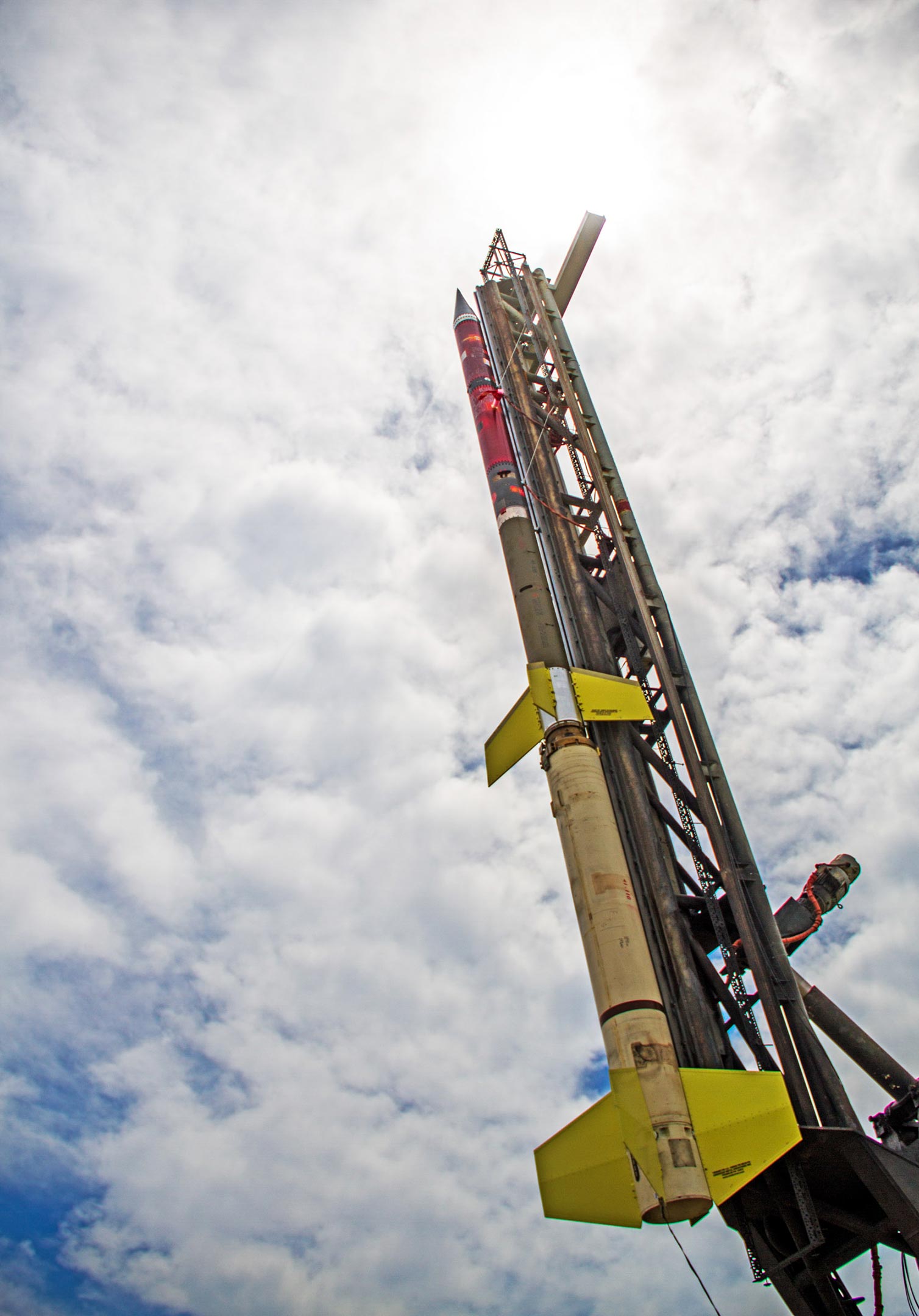
“One of the great attributes of the NASA suborbital flight vehicles is the ability to support educational flight activities,” said Giovanni Rosanova, chief of the NASA Sounding Rockets Program Office at Wallops. “Despite the challenges that dealing with COVID-19 presented, everyone came together to make this launch happen this year after having to postpone the project in 2020.”
Live coverage of the mission is scheduled to begin at 7:40 a.m. on the Wallops YouTube site. Launch updates also are available via the Wallops Facebook and Twitter sites. The Wallops NASA Visitor Center will not be open for launch viewing.
“Typically, students from across the country descend upon Wallops days before launch to learn about rocketry and building experiments for spaceflight through the week-long RockOn! workshop,” said Chris Koehler, director of the Colorado Space Grant Consortium. “This year to maintain social distancing due to COVID-19, the workshop was conducted virtually.”
“Conducting the workshop virtually presented many challenges. However, everyone involved stepped up to the plate to make this a successful program,” Koehler said.
This year RockOn! had 102 participants. Colorado Space Grant sent the participants the materials needed to participate in the workshop and build their experiments. The participants then shipped their experiments to Colorado for checkout and integration. A team from Colorado then delivered the experiments to Wallops for the launch.
During past in-person workshops, participants have worked in groups of three to build experiments. Koehler said, “One big advantage of the virtual process is that participants worked in small teams or individually at their own pace.”
The virtual process enabled more experiments to be successfully developed than in previous years, resulting in more flight-ready projects than could be accommodated on the rocket. Therefore, 34 of the experiments will fly on the High-Altitude Student Platform through the Louisiana Space Consortium on a NASA scientific balloon in Fall 2021 from Ft. Sumner, New Mexico.
The 36-foot-long (11-meter-long) two-stage rocket will carry 32 experiments (measuring acceleration, humidity, pressure, temperature, and radiation counts) from the RockOn! Program, 8 experiments in the RockSat-C program and more than 60 small cubes with experiments developed by middle school and high school students as part of the Cubes in Space program, a partnership between idoodlelearning inc., Wallops and the Colorado Space Grant Consortium.
Conducted with the Colorado and Virginia Space Grant Consortia, RockOn! is in its thirteenth year and RockSat-C its twelfth year.
Participants in RockOn! receive instruction on the basics required to develop a scientific payload for flight on a suborbital rocket. After learning the basics in RockOn!, students may then participate in RockSat-C, where during the school year they design and build a more complicated experiment for rocket flight.
The sounding rocket will fly the student experiments to nearly 73 miles (117 kilometers) altitude. The experiments will land via parachute in the Atlantic Ocean where they will be recovered by boat.
The RockOn! and RockSat-C programs are supported by the NASA Sounding Rocket Program. RockOn! also is supported by NASA’s Office of STEM Engagement and NASA’s National Space Grant College and Fellowship Program in partnership with the Colorado and Virginia Space Grant Consortia, as well as the program participants.
NASA’s Sounding Rocket Program is conducted at the agency’s Wallops Flight Facility, which is managed by NASA’s Goddard Space Flight Center in Greenbelt, Maryland. NASA’s Heliophysics Division manages the sounding rocket program for the agency.
Never miss a breakthrough: Join the SciTechDaily newsletter.
Follow us on Google and Google News.