
Close Menu
    Facebook X (Twitter) Instagram
    SciTechDaily
    • Biology
    • Chemistry
    • Earth
    • Health
    • Physics
    • Science
    • Space
    • Technology
    Facebook X (Twitter) Pinterest YouTube RSS
    SciTechDaily
    Home»Space»Saturn’s Magnetic Shield Isn’t What Scientists Expected
    Space

    Saturn’s Magnetic Shield Isn’t What Scientists Expected

    By Lancaster UniversityApril 12, 2026No Comments4 Mins Read
    Facebook Twitter Pinterest Telegram LinkedIn WhatsApp Email Reddit
    Share
    Facebook Twitter LinkedIn Pinterest Telegram Email Reddit
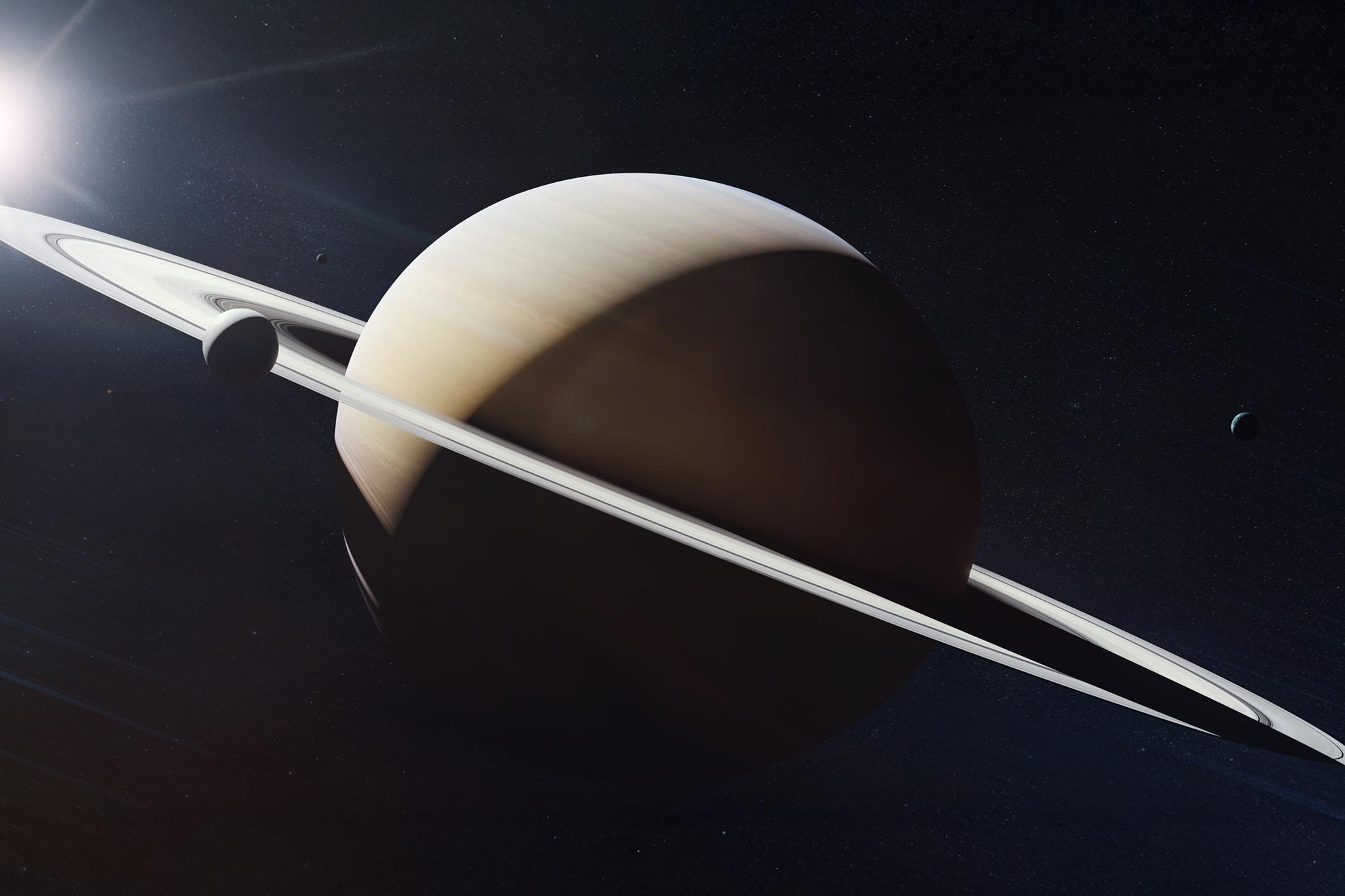
    Saturn Planet in Space
    Data from the Cassini mission has revealed an unexpected distortion in Saturn’s magnetosphere, suggesting that fast-spinning giant planets behave very differently from Earth. Credit: Shutterstock 

    Saturn’s magnetic shield behaves in a way that defies Earth-based expectations.

    Scientists analyzing data from the Cassini-Huygens mission have identified an unexpected feature in Saturn’s magnetic shield.

    According to the team, the finding shows that giant planets follow a different set of rules than Earth when it comes to how their magnetospheres behave.

    The study, published in Nature Communications, includes Dr. Licia Ray and Dr. Sarah Badman from Lancaster University, along with Dr. Chris Arridge, formerly of Lancaster.

    Cassini was launched to explore Saturn and its system, including its rings, moons, and surrounding space environment. The mission was a collaboration between NASA, the European Space Agency (ESA), and the Italian space agency (ASI), and the spacecraft orbited Saturn from 2004 to 2017.
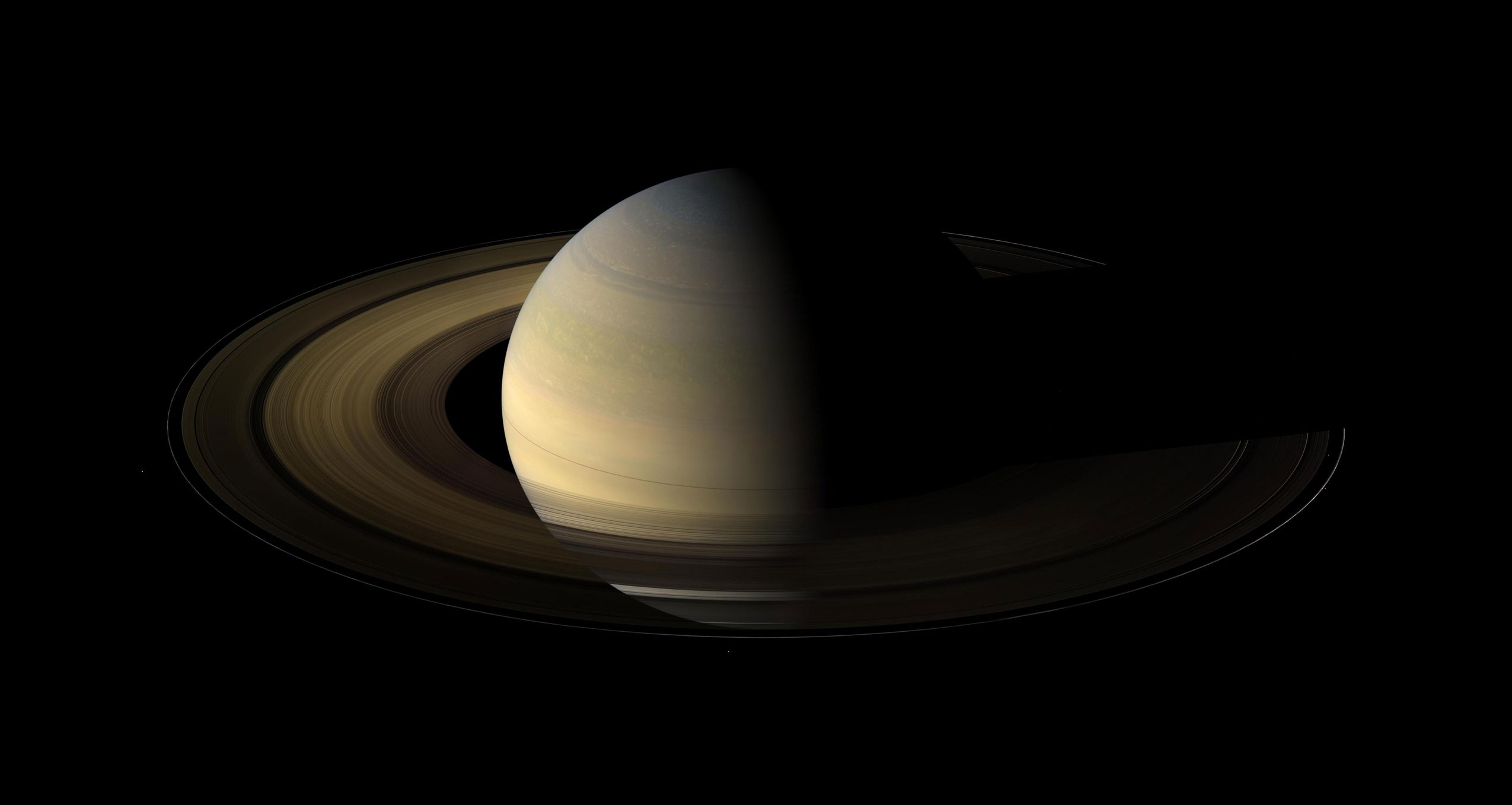
    Cassinis View of Saturn During Its 2009 Equinox
    Cassini’s view of Saturn during its 2009 equinox shows both the northern and southern hemispheres equally sunlit, with the north pole half in shadow. Since then, the sun has risen fully over the north, while the south has slipped into winter shadow. Credit: NASA/JPL-Caltech/Space Science Institute/Hampton University

    The new findings support a long-standing idea that the rapid rotation of large planets like Saturn can outweigh the influence of the solar wind, the stream of charged particles from the Sun, in shaping their “magnetospheres.”

    A magnetosphere is the region around a planet where its magnetic field protects it from the solar wind. Near the poles, however, funnel-shaped openings known as “magnetospheric cusps” allow charged particles from the Sun to enter the atmosphere.

    A Surprising Shift in Saturn’s Magnetic Structure

    Researchers examined Cassini data collected between 2004 and 2010 to pinpoint the position of Saturn’s magnetospheric cusp. They found a clear contrast with similar measurements at Earth.

    Saturn’s powerful rotation appears to “drag” the cusp away from noon, shifting it toward the afternoon side. On average, it sits between 13:00 and 15:00 local time and can extend as far as 20:00. This duskward shift shows that a planet’s rotation rate can significantly reshape its surrounding space environment.
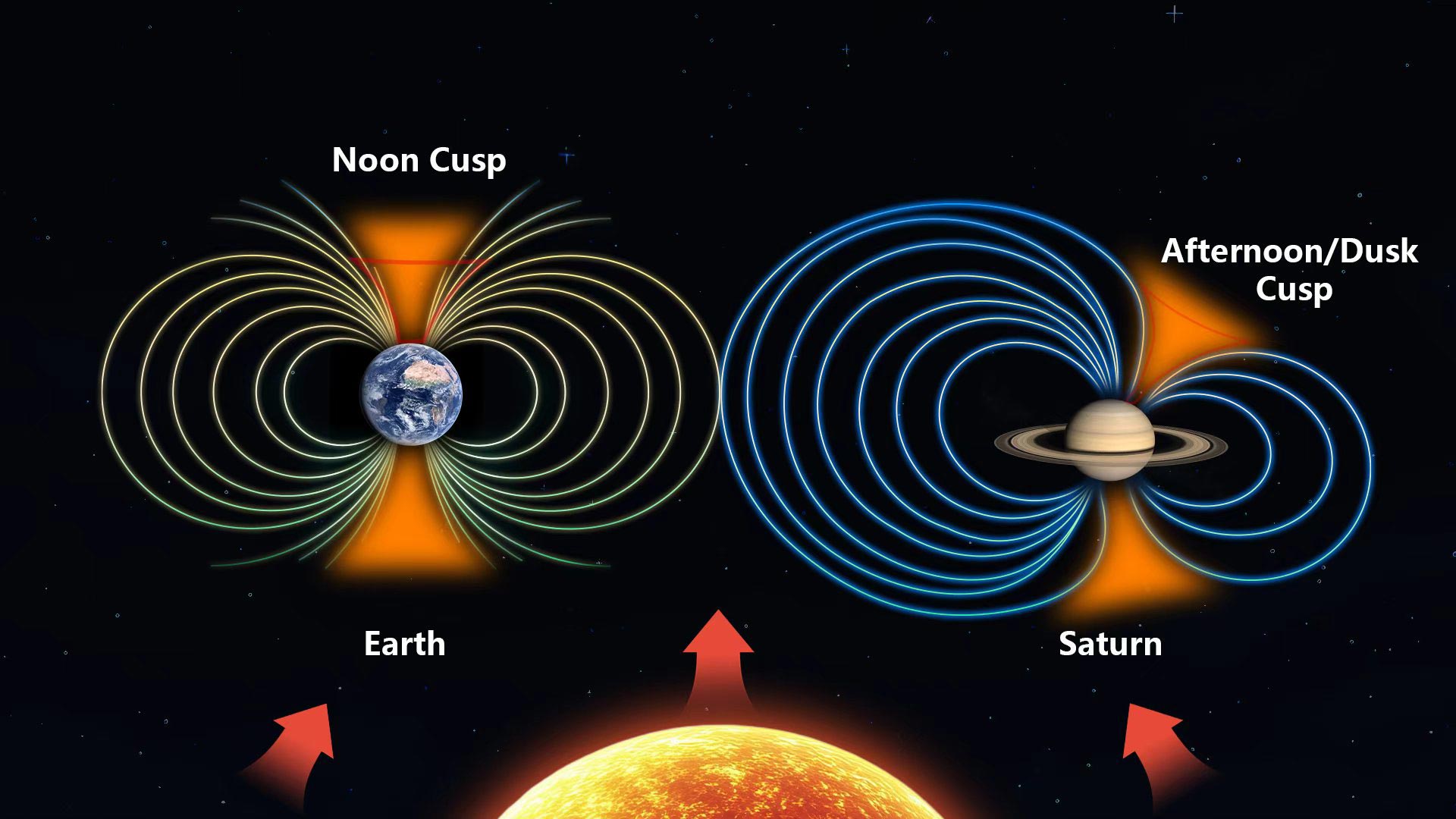
    Saturn’s Magnetosphere Compared to Earth’s
    Schematic showing the position of Saturn’s cusp compared to Earth’s. Credit: SUSTech

    This displacement changes how scientists model key processes such as magnetic reconnection, high-energy particle acceleration, and the generation of Saturn’s auroras.

    Dr. Licia Ray of Lancaster University said, “This result allows us to move forward with new and improved theories on how planetary magnetospheres interact with the solar wind.”

    Why Saturn Behaves Differently From Earth

    Earth rotates much more slowly than gas giants like Saturn. With a 24-hour day, its magnetosphere is mainly controlled by the balance between solar wind pressure and the planet’s magnetic field. This balance keeps the cusp aligned near local noon.

    Saturn, by contrast, completes a rotation in about 10.7 hours. Its magnetosphere also contains large amounts of ionized material from its moon Enceladus. Together, these factors mean that Saturn’s magnetic field and rapidly rotating plasma must counter the solar wind.

    Dr. Ray said: “In particular, the afternoon cusp locations have implications for how we interpret Saturn’s bright aurora and where we expect magnetic reconnection, an explosive process that accelerates particles to very high energies of keV and more, to occur. It also highlights the rich science that can still be done with Cassini data more than eight years after the end of mission.”

    Reference: “Dawn-dusk Asymmetrical Distribution of Saturn’s Cusp” by Y. Xu, Z. H. Yao, C. S. Arridge, B. Zhang, J. J. Chen, S. V. Badman, L. C. Ray, A. J. Coates, S.-Y. Ye, T. S. Qin, Z. Q. Zheng, W. R. Dunn and Y. Wei, 32 March 2026, Nature Communications.
    DOI: 10.1038/s41467-026-69666-9

    Never miss a breakthrough: Join the SciTechDaily newsletter.
    Follow us on Google and Google News.

    Geophysics Lancaster University Magnetosphere Saturn Solar Wind
    Share. Facebook Twitter Pinterest LinkedIn Email Reddit

    Related Articles

    Something Is Warping Saturn’s Magnetic Field and It’s Not What You Think

    Icequakes Likely Rumble Along Geyser-Spitting Fractures on Saturn’s Icy Moon Enceladus

    Scientists Discover New Physics Missing From Existing Models of Magnetic Reconnection

    “Helium Rain Is Real!” – Experiments Validate the Possibility of Helium Rain Inside Jupiter and Saturn

    Scientists Model Saturn’s Interior – Thick Layer of Helium Rain May Influence the Planet’s Magnetic Field

    Encased in an Icy Shell, the Ocean on Saturn’s Moon Enceladus Appears to Be Churning

    Kraken Mare – a Sea of Liquid Methane on Saturn’s Largest Moon, Titan – Estimated to Be 1,000 Feet Deep

    Interplanetary Storm Chasing – New Explanation for Mysterious Hexagonal Storm on Saturn

    Impact May Have Deformed Saturn’s Moon Iapetus

    Leave A Reply Cancel Reply

    • Facebook
    • Twitter
    • Pinterest
    • YouTube

    Don't Miss a Discovery

    Subscribe for the Latest in Science & Tech!

    Trending News

    New “Nanozyme Hypothesis” Could Rewrite the Story of Life’s Origins

    Anatomy Isn’t Finished: The Human Body Still Holds Secrets

    “Pretty Close to Home”: The Hidden Earthquake Threat Beneath Seattle

    The Surprising Reason You Might Want To Sleep Without a Pillow

    Scientists Say This Natural Hormone Reverses Obesity by Targeting the Brain

    35-Million-Year-Old Mystery: Strange Arachnid Discovered Preserved in Amber

    Is AI Really Just a Tool? It Could Be Altering How You See Reality

    JWST Reveals a “Forbidden” Planet With a Baffling Composition

    Follow SciTechDaily
    • Facebook
    • Twitter
    • YouTube
    • Pinterest
    • Newsletter
    • RSS
    SciTech News
    • Biology News
    • Chemistry News
    • Earth News
    • Health News
    • Physics News
    • Science News
    • Space News
    • Technology News
    Recent Posts
    • Saturn’s Magnetic Shield Isn’t What Scientists Expected
    • Hidden Oceans of Magma Could Be Protecting Alien Life
    • After Decades of Searching, Astronomers Finally Track Down the Universe’s Missing Hydrogen
    • Scientists Capture Hidden Electron Patterns Inside Quantum Materials
    • New Study Challenges Alzheimer’s Theories: It’s Not Just About Plaques
    Copyright © 1998 - 2026 SciTechDaily. All Rights Reserved.
    • Science News
    • About
    • Contact
    • Editorial Board
    • Privacy Policy
    • Terms of Use

    Type above and press Enter to search. Press Esc to cancel.