
Close Menu
    Facebook X (Twitter) Instagram
    SciTechDaily
    • Biology
    • Chemistry
    • Earth
    • Health
    • Physics
    • Science
    • Space
    • Technology
    Facebook X (Twitter) Pinterest YouTube RSS
    SciTechDaily
    Home»Technology»Science Made Simple: What Is a Stellarator?
    Technology

    Science Made Simple: What Is a Stellarator?

    By U.S. Department of EnergyMay 23, 2021No Comments3 Mins Read
    Facebook Twitter Pinterest Telegram LinkedIn WhatsApp Email Reddit
    Share
    Facebook Twitter LinkedIn Pinterest Telegram Email Reddit
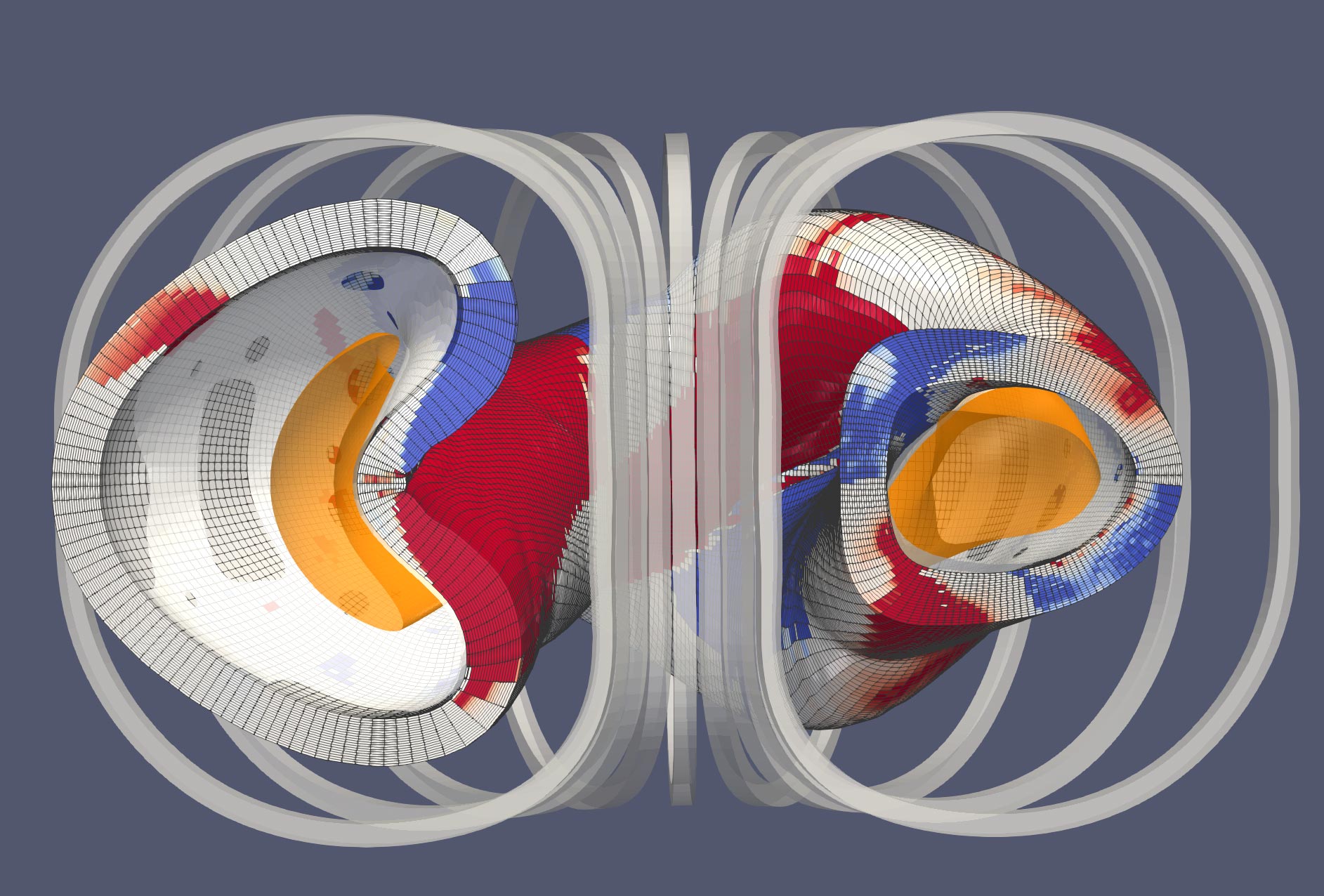
    Schematic Image of Permanent Magnet Stellarator
    Schematic image of permanent magnet stellarator with plasma in yellow. Red and blue indicate permanent magnets with simplified coils surrounding the vessel. Credit: Coaxing Zhu

    What Is a Stellarator?

    Fusion power may be able to provide the world with clean, safe, and renewable power. One of the technologies scientists believe could lead to real-world fusion power is the stellarator. In the simplest terms, a stellarator is a machine that uses magnetic fields to confine plasma in the shape of a donut, called a torus. These magnetic fields allow scientists to control the plasma particles and create the right conditions for fusion reactions. Stellarators use extremely strong electromagnets to generate twisting magnetic fields that wrap the long way around the donut shape.

    Stellarators have several advantages over tokamaks, the other main technology that scientists are exploring for fusion power. Stellarators require less injected power to sustain the plasma, have greater design flexibility, and allow for simplification of some aspects of plasma control. However, these benefits come at the cost of increased complexity, especially for the magnetic field coils.

    To advance stellarator design, scientists have turned to high-performance computing and state-of-the-art plasma theory. These tools have helped researchers optimize the Helically Symmetric Experiment (HSX) stellarator in Wisconsin and the Wendelstein 7-X stellarator in Germany.
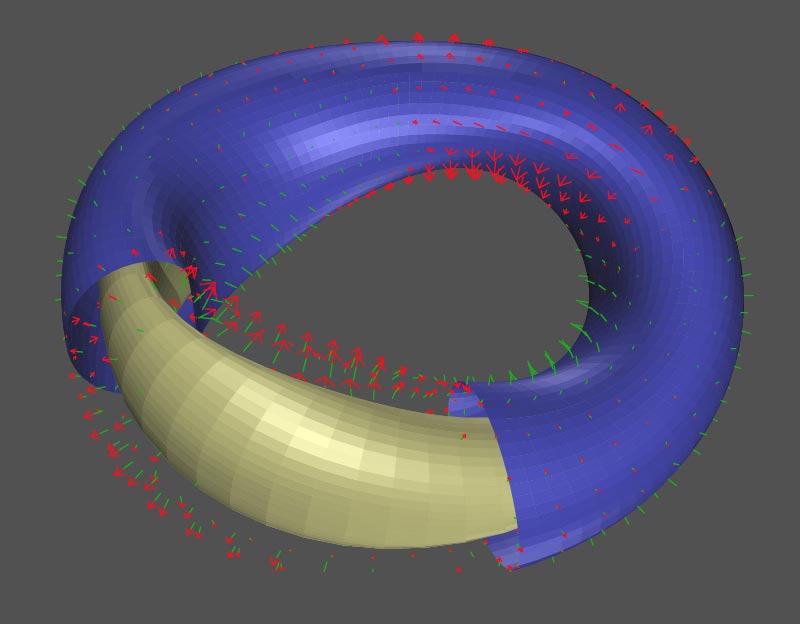
    Magnetic Surface Schematic
    Schematic image of permanent magnet stellarator with plasma in yellow and magnetic surface in blue. Credit: Michael Drevlak

    Stellarator Facts

    • The stellarator concept was invented by Lyman Spitzer at Princeton University in 1951.
    • Much of the early development of stellarators in the 1950s occurred at a laboratory that is now DOE’s Princeton Plasma Physics Laboratory. The work was so difficult that the scientist in charge nicknamed it “Project Matterhorn.”
    • Stellarators use external coils to generate a twisting magnetic field to control the plasma instead of inducing electric currents inside the plasma like a tokamak.
    • Making stellarator coils is a challenge because it requires manufacturers to construct large-bore wire coils with millimeter precision.
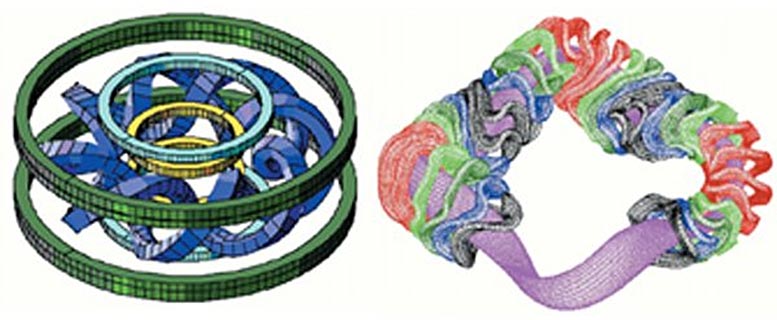
    Conventional and Optimized Stellarators
    Conventional (left) and optimized (right) stellarators both use complex electromagnetic coils to confine plasmas using three-dimensional magnetic fields in the shape of a torus without relying on induced plasma currents to sustain the plasma. Credit: Image courtesy of D. Anderson, University of Wisconsin at Madison

    DOE Office of Science & Stellarators

    The Department of Energy Office of Science, Fusion Energy Sciences (FES) program is an important supporter of research and development on stellarators. The FES program has two broad goals: expand our understanding of matter at very high temperatures and densities, and build the knowledge needed to develop a fusion energy source. Stellarators may offer an alternative to the tokamak as a future way to produce fusion energy. Stellarator research is also important to help scientists better understand foundational plasma theory. The FES program is particularly looking at how to improve the magnetic fields that control the plasma in stellarators. FES also collaborates on the W7-X facility in Germany to study technologies for producing fusion power and conducting fusion experiments. In the future, FES plans to develop control schemes to maintain stable plasmas in stellarators.

    Acknowledgments

    Matthew Lanctot (U.S. DOE FES Program Manager)

    Never miss a breakthrough: Join the SciTechDaily newsletter.
    Follow us on Google and Google News.

    DOE Energy Fusion Energy Fusion Reactor
    Share. Facebook Twitter Pinterest LinkedIn Email Reddit

    Related Articles

    Science Made Simple: What Is Deuterium-Tritium Fusion Reactor Fuel?

    Compact Fusion Power Plant Concept Uses State-of-the-Art Physics To Improve Energy Production

    Harnessing the Power of the Sun on Earth: Major Advance in Stellarator Performance for Fusion Energy

    Science Made Simple: What Is Plasma Confinement?

    Faster Fusion Reactor Calculations Thanks to AI

    Korean Artificial Sun – KSTAR Fusion Reactor – Sets New World Record

    How to Armor Future Fusion Reactors to Protect Against One of the Harshest Environments Ever Produced on Earth

    ITER Fusion Reactor Tokamak Assembly Begins – World’s Largest International Scientific Collaboration

    Cutting-Edge W7-X Nuclear Fusion Device Overcomes Obstacles

    Leave A Reply Cancel Reply

    • Facebook
    • Twitter
    • Pinterest
    • YouTube

    Don't Miss a Discovery

    Subscribe for the Latest in Science & Tech!

    Trending News

    AI Could Detect Early Signs of Alzheimer’s in Under a Minute – Far Before Traditional Tests

    What if Dark Matter Has Two Forms? Bold New Hypothesis Could Explain a Cosmic Mystery

    This Metal Melts in Your Hand – and Scientists Just Discovered Something Strange

    Beef vs. Chicken: Surprising Results From New Prediabetes Study

    Alzheimer’s Breakthrough: Scientists Discover Key Protein May Prevent Toxic Protein Clumps in the Brain

    Quantum Reality Gets Stranger: Physicists Put a Lump of Metal in Two Places at Once

    Scientists May Have Found the Key to Jupiter and Saturn’s Moon Mystery

    Scientists Uncover Brain Changes That Link Pain to Depression

    Follow SciTechDaily
    • Facebook
    • Twitter
    • YouTube
    • Pinterest
    • Newsletter
    • RSS
    SciTech News
    • Biology News
    • Chemistry News
    • Earth News
    • Health News
    • Physics News
    • Science News
    • Space News
    • Technology News
    Recent Posts
    • Living With Roommates Might Be Changing Your Gut Microbiome Without You Knowing
    • Simple and Cheap Blood Test Could Detect Cancer and Other Diseases Before Symptoms Appear
    • Century-Old Cleaning Chemical Linked to 500% Increased Risk of Parkinson’s Disease
    • What if Your Memories Never Happened? Physicists Take a New Look at the Boltzmann Brain Paradox
    • Students Found an Ancient Star That Shouldn’t Be in the Milky Way
    Copyright © 1998 - 2026 SciTechDaily. All Rights Reserved.
    • Science News
    • About
    • Contact
    • Editorial Board
    • Privacy Policy
    • Terms of Use

    Type above and press Enter to search. Press Esc to cancel.